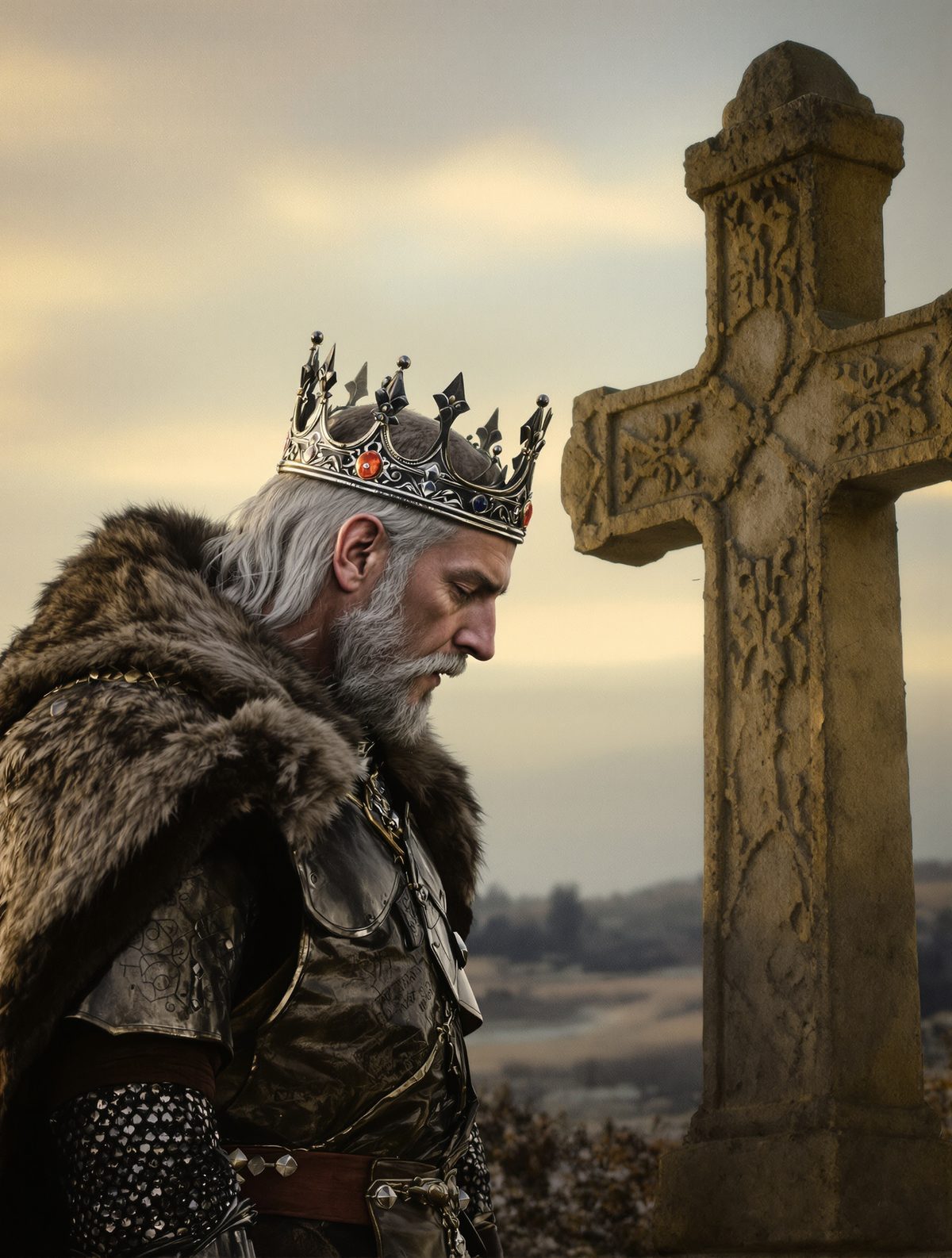
In the winter of 1290, a tale of profound devotion unfolded across the English countryside. It was a journey marked not by conquest or conflict, but by a king's love and his wife's enduring legacy. In life, Queen Eleanor of Castile stood stalwart by King Edward I; in death, she made perhaps her most poignant journey: twelve days and nearly 200 miles to her final resting place. Her husband—an otherwise formidable ruler known as 'Longshanks'—walked quietly, solemnly, beside her coffin. Along the way, he erected a monument at every stop, making a path of remembrance etched in English history.
The Heart of a King: An Unlikely Love Story
To many, Edward I of England conjured images of a king as iron-willed as his nickname suggests. Known for his military prowess and legal reforms that shaped medieval England, Edward's rule was marked by expansion and unyielding determination. However, a softer, often overshadowed aspect of his reign was his deep and abiding love for his wife, Eleanor of Castile.
Married in 1254, the union of Edward and Eleanor began as a political arrangement. Over time, what could have been an affair of state flourished into a partnership marked by mutual respect, affection, and companionship. Despite the era's norm of royal marriages being produced and produced in prolific progeny, the bond between King Edward and Queen Eleanor was sincere. She was his trusted advisor, an astute political mind in her own right, accompanying him on crusades and managing estates sprawling from England to lands acquired from her Spanish heritage.
Their relationship was rare, even by modern standards: a king and queen united in both ambition and personal affection, whose love story remains one of the most touching narratives in royal history.
A Kingdom in Mourning: The Death of a Queen
The cold winds of November 1290 blew particularly bitter as news spread of Queen Eleanor's death in Harby, Nottinghamshire. Having fallen ill earlier that year, Eleanor's passing left the kingdom awash in mourning. She was only 49 when she died, yet her influence and benevolence had reached far greater expanses than her age might suggest.
Edward, a man no stranger to loss yet fiercely private in his grief, ordered his queen’s body transported to London for burial, a journey that would traverse nearly two hundred miles of flower-strewn landscapes now touched with the stark desolation of winter. The procession bore not only the queen's physical remains but a nation's collective sorrow.
That a king—Edward, no less—chose to accompany his wife's coffin on this arduous journey speaks volumes of their bond. His grief manifested not in private despair but in a very public devotion. Each day of travel concluded with a solemn pause, where Edward planned for intricate stone crosses to serve as eternal sentinels of their love.
The Journey of the Body: Crosses Greeting the Dawn
The entourage bearing Eleanor's coffin began its journey from Harby to Westminster Abbey on November 21, 1290. Every night, they would stop, and Edward directed a memorial cross be constructed in her honor, adding majesty to her already regal legacy.
Twelve monumental crosses were originally commissioned to be built, signifying the final resting places of her daily journey. These "Eleanor Crosses," of which only three fully remain today—at Geddington, Hardingstone, and Waltham Cross—acted as intricate litanies of love, prayerful pauses along an unprecedented royal procession.
"The presence of these crosses," noted one chronicler, "serves as both homage and heartache, woven into the very fabric of the English soul."
Each cross, intricately carved and towering, was designed differently. These were not mere markers but intricate sculptures that held the tale of a timeless love forever in stone. The survival of these crosses through the centuries speaks to the enduring nature of Edward and Eleanor's story—a symbol of love that triumphed over the transient constraints of time and mortality.
The Legacy Left Behind: Stones and Memories
The completion of this poignant journey led Eleanor's remains to Westminster Abbey, where she was interred with the reverence befitting a queen. Her tomb, masterfully crafted, stands as a testament to her influence during life and the deep regard in which she was held. The journey and the magnificent stone crosses that marked it were Edward's eternal tribute to a partnership without parallel at the heart of an often turbulent reign.
These crosses breathed Eleanor's story into the landscape of medieval England. Each surviving cross remains so: not merely stone and mortar but vibrant echoes of a love story that defined an era. Their existence reminds us that beneath the crowns and battles, the alliances and treaties, was a narrative of heart—a king and his queen marking their path through history with endearingly human symbols of affection.
Reflections for Today: Love's Enduring Imprint
As we traverse the ages from medieval England to our contemporary world, the devotion Edward I showed to Eleanor of Castile prompts reflection within ourselves. Their story reminds us that love transcends even the weightiest of crowns. In an era where royal marriages often served as strategic machinations, Edward's path remains a powerful narrative: an epic journey underscored by genuine affection, commanding greater respect than any conquest or treaty.
In looking to the past, we find shape and understanding for our own tales of devotion. The Eleanor Crosses, still standing amid the bustle of modern life, serve as a poignant reminder that, even amid power and pageantry, the true stories worth telling are those of simple yet profound humanity.
Let us take a moment to consider the relics of love we leave behind, whether grand like the Eleanor Crosses or subtle like a passing breeze—each capable of withstanding the test of time, echoing the heart's eternal rhythm.