For forty years, the most powerful woman in Britain vanished every night at the stroke of midnight. Palace staff would notice the Queen's private apartments fall silent, her personal protection officers would exchange knowing glances, and the corridors of Buckingham Palace would echo with an absence that no one dared to question. What Her Majesty did during those precious twenty minutes remained one of the monarchy's most intimate secrets—until decades later, when the truth emerged about a ritual so profoundly human it would reshape how we understand the woman behind the crown.
The Mystery That Puzzled Palace Staff
From the early 1950s through the 1990s, night shift workers at Buckingham Palace became accustomed to a peculiar routine. At precisely midnight, Queen Elizabeth II would slip away from her private quarters, moving through the palace's labyrinthine corridors with the quiet confidence of someone who knew every creaking floorboard by heart. No ladies-in-waiting accompanied her. No protection officers followed at a discreet distance. Even her beloved corgis remained behind in the royal apartments.
The pattern was so consistent that staff could set their watches by it. Where does she go? became the whispered question among housekeepers, footmen, and night security. Some speculated about secret meetings with government officials. Others wondered if the Queen retreated to a private chapel for midnight prayers. The truth, as it turned out, was far more extraordinary in its simplicity.
Palace protocol dictated that Her Majesty's movements, even within her own home, should be monitored for security reasons. Yet this nightly disappearance became an unspoken exception—a twenty-minute window when the Queen of England belonged entirely to herself.
The Sacred Solitude of Water
The revelation came decades later from Charles Henderson, a retired footman who had served the royal household for over thirty years. In his memoirs, Henderson finally disclosed what palace staff had long suspected but never dared to investigate: Queen Elizabeth II spent those mysterious midnight hours swimming alone in the palace pool, a ritual that began in her twenties and continued well into her seventies.
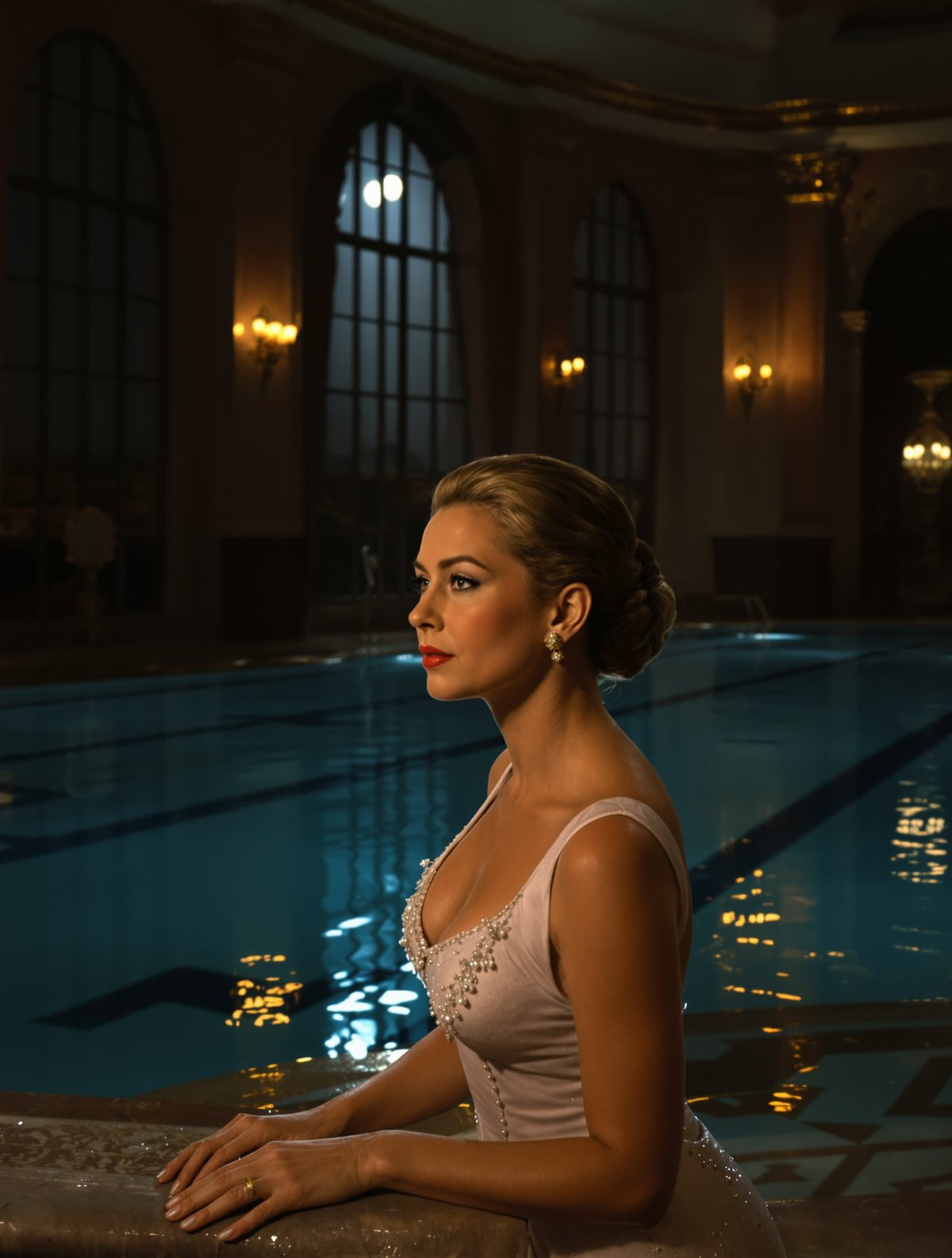
The indoor swimming pool at Buckingham Palace, installed during the 1930s renovations, sits tucked away in the palace's lower level. Originally built for the health and recreation of the royal family, it had become, by the 1950s, the Queen's private sanctuary. Every night, she would descend the marble steps, change into a simple swimsuit, and slip into the heated water with no ceremony or fanfare.
According to Henderson's account, the Queen would swim steady laps for exactly twenty minutes—no more, no less. The pool's underwater lighting cast dancing reflections on the tiled walls, creating an almost ethereal atmosphere. Here, surrounded by water and silence, the woman who spent her days carrying the weight of a nation's expectations could simply exist as herself.
The ritual was sacred not because of any religious significance, but because it represented something far rarer in royal life: genuine solitude. No state boxes to review, no audiences to grant, no ceremonial duties to perform. Just the rhythmic motion of swimming and the blessed absence of obligation.
A Crown Too Heavy for Sleep
To understand why these midnight swims became so crucial to the Queen's wellbeing, one must consider the extraordinary pressures she faced during her early decades on the throne. The 1950s through 1990s encompassed some of the most challenging periods of her reign: the Suez Crisis, the troubles in Northern Ireland, economic upheavals, and the constant evolution of the Commonwealth.
Palace insiders from that era describe a monarch who rarely allowed herself to show strain publicly, yet privately struggled with the isolation that comes with absolute duty. The Queen's day typically began at 7:30 AM with a review of state papers and rarely ended before midnight. Her schedule was packed with audiences, ceremonies, and the endless administrative work of constitutional monarchy.
Sleep, it seemed, often eluded her. Rather than lying awake with the day's concerns, the Queen discovered that physical exhaustion from swimming helped quiet her mind. The repetitive nature of laps provided a meditative quality that no amount of formal relaxation could match.
Dr. Margaret Rhodes, the Queen's cousin and close confidante, later observed that Her Majesty possessed an almost supernatural ability to compartmentalize stress, but noted that this skill required outlets. The midnight swimming ritual served as a pressure valve, allowing the Queen to release tensions that would have been inappropriate to express in any public forum.
The water didn't care about constitutional crises or Commonwealth concerns. It simply supported her, held her, and asked nothing in return except the honesty of physical effort.
The End of an Era
The midnight swimming ritual gradually came to an end in the 1990s, not through choice but through the inevitable march of time. As the Queen entered her seventies, concerns about safety during unsupervised nighttime activities finally outweighed the benefits of absolute solitude. Palace physicians, who had long been aware of the swimming habit, gently suggested modifications to the routine.
By the late 1990s, the Queen's swimming had shifted to more conventional hours, though she continued the practice well into her eighties. The pool remained important to her fitness regimen, but those magical midnight moments—when a reigning monarch could exist as simply a woman moving through water—became memories.
Staff members who had witnessed those years described a subtle change in palace rhythms after the midnight swims ended. The Queen seemed more restless during state functions, less patient with ceremonial delays. It was as if losing that sanctuary of solitude had removed a crucial element from her ability to cope with royal life.
Henderson's revelation about the swimming ritual helped explain something that palace watchers had long noticed: the Queen's remarkable stamina during public engagements, her ability to remain gracious under pressure, and her seemingly inexhaustible capacity for duty. Those twenty minutes of freedom each night had provided the foundation for forty years of exemplary service.
Lessons in Leadership and Humanity
The story of Queen Elizabeth II's secret swimming ritual reveals something profound about leadership, duty, and the human need for sanctuary. In an age where public figures live under constant scrutiny, the Queen's midnight swims remind us that even the most dedicated leaders require moments of genuine solitude to maintain their effectiveness.
Perhaps most remarkably, the Queen managed to carve out this personal space without ever compromising her public duties. Her swimming ritual wasn't an escape from responsibility—it was what made sustained responsibility possible. The discipline of maintaining this routine for four decades speaks to a level of self-awareness that enabled one of history's longest reigns.
Today, as we witness a new generation taking on royal duties, the legacy of those midnight swims offers a powerful lesson. True service requires not the elimination of self-care, but its thoughtful integration into a life of purpose. Queen Elizabeth II understood that taking care of herself wasn't selfish—it was essential to taking care of her realm.
In our current era of constant connectivity and public transparency, the Queen's ability to maintain this private ritual for decades seems almost miraculous. It reminds us that dignity, privacy, and personal sanctuary aren't luxuries—they're necessities for anyone carrying significant responsibility. The woman who would become Britain's longest-serving monarch found her strength not just in duty and service, but in twenty minutes of midnight water that belonged to no one but herself.