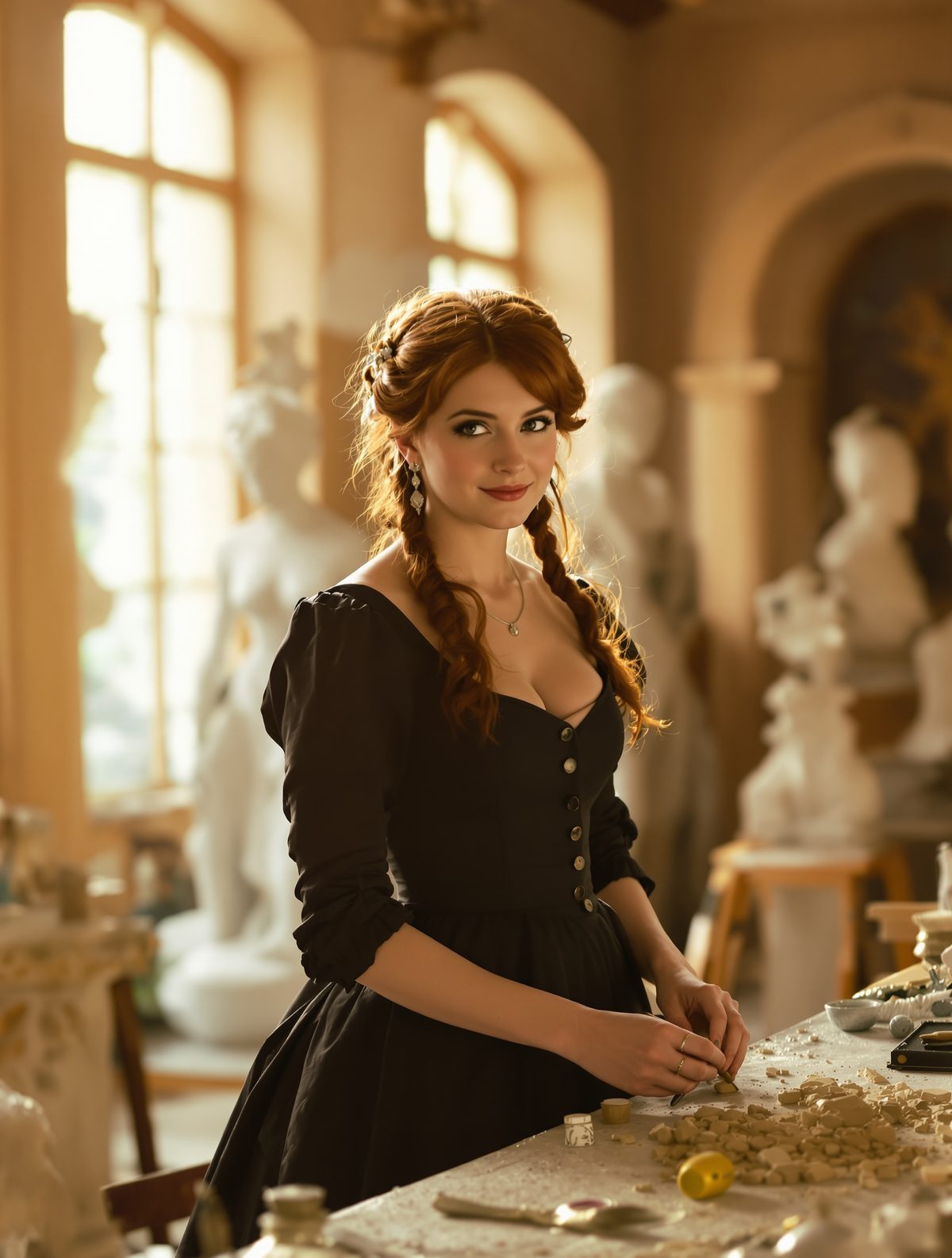
In the rigidly structured world of Victorian royalty, where every princess was expected to embroider, paint watercolours, and marry well, one remarkable woman dared to break free from the golden cage. Princess Louise, Queen Victoria's sixth child and fourth daughter, shocked her contemporaries not through scandal or romance, but through sheer artistic talent and an audacious double life that would make any modern undercover celebrity blush.
While her sisters dutifully attended court functions and accepted suitable matches, Louise was quietly revolutionising what it meant to be a royal artist. She didn't just dabble in the acceptable feminine pursuits of sketching and watercolours—she wielded chisels, worked with clay, and created sculptures that would grace public galleries without anyone knowing they were crafted by royal hands.
The Rebel Princess in a Corseted Court
Born in 1848, Princess Louise Caroline Alberta entered a world where royal women were ornamental figures, expected to be seen, admired, and married off to strengthen political alliances. Queen Victoria, despite being one of history's most powerful female rulers, held surprisingly conventional views about her daughters' roles. The Queen believed that royal ladies should be accomplished in the arts—but only as refined amateurs, never as serious professionals.
Louise, however, possessed an artistic fire that couldn't be contained within the drawing rooms of Buckingham Palace. From an early age, she demonstrated exceptional talent that went far beyond the gentle sketching deemed appropriate for princesses. Her sculptures showed a raw power and technical skill that demanded proper training—the kind only available in professional art schools where no princess had ever dared to venture.
The royal household of the 1870s was a world of intense scrutiny, where every royal movement was chronicled, every acquaintance vetted, and every activity deemed either suitable or scandalous. For Louise to pursue serious artistic training meant breaking not just protocol, but challenging the very foundations of what Victorian society expected from its royal women.
The Great Deception: Art School Under Cover
What Louise did next was nothing short of revolutionary. Determined to receive proper artistic education, she embarked on an elaborate deception that would have made any secret agent proud. Adopting a false name and commoner's clothing, the princess enrolled at the National Art Training School (now the Royal College of Art) in South Kensington.
Imagine the scene: Queen Victoria's daughter, accustomed to being curtseyed to and addressed as "Your Royal Highness," sitting alongside middle-class students, her identity hidden beneath ordinary clothes and an assumed name. She studied sculpture under the renowned French artist Jules Dalou, who had no idea he was instructing royalty. The princess who had grown up surrounded by some of the world's finest art collections now learned her craft elbow-to-elbow with students who had scraped together fees to pursue their artistic dreams.
The logistics of maintaining this double life were staggering. Louise had to coordinate her palace duties with her class schedule, explain her frequent absences to suspicious courtiers, and somehow keep clay dust from under her fingernails during formal dinners. Every day brought the risk of discovery—a recognition by a fellow student, a slip in her carefully practiced manner, or simply being spotted by someone from court life.
When Royal Art Met Public Acclaim
The true test of Louise's artistic abilities came when her work was exhibited in public galleries. Her sculptures, created under her assumed identity, were displayed alongside those of professional artists and judged purely on their merit. The art world, unaware they were critiquing a princess's work, responded with genuine admiration.
One of her most significant achievements was a memorial sculpture that received considerable attention from both critics and the public. The work demonstrated not just technical proficiency, but the kind of emotional depth and artistic vision that separated serious artists from talented amateurs. Gallery visitors praised the unknown artist's skill, never imagining they were admiring the handiwork of Queen Victoria's daughter.
The irony was delicious: while Louise sat through formal court presentations and diplomatic receptions, art critics across London were discussing her work in newspapers and journals. The princess who was expected to be merely decorative was creating decoration—and being celebrated for it by people who would have been tongue-tied in her royal presence.
Her sculptures weren't confined to galleries, either. Louise created works that would later be placed in public spaces, meaning that ordinary Britons—her future subjects—encountered and appreciated her art in their daily lives, completely unaware of its royal origins.
The Secret's Impact on Palace Life
Maintaining such an elaborate deception inevitably created tensions within the royal household. While the exact extent of who knew about Louise's double life remains unclear, it's certain that some members of her inner circle must have been complicit in the arrangements. Trusted servants, perhaps a sympathetic sibling, and definitely her later supporters in the artistic community would have formed a network of conspirators helping to protect her secret.
Queen Victoria herself seemed to have had mixed feelings about her daughter's artistic pursuits. The Queen appreciated Louise's talent and was proud of her accomplishments, but was also deeply concerned about the propriety of her methods. The idea of a princess mingling anonymously with common students would have horrified the monarch, even as she grudgingly admired the results.
Louise's secret career also highlighted the broader restrictions placed on royal women of the era. Her need for deception wasn't born from shame about her abilities—quite the opposite. It stemmed from a society so rigid in its expectations that even exceptional talent had to be hidden if it didn't conform to prescribed roles.
The princess's artistic success under an assumed name proved what many suspected but few dared say: that royal women were capable of far more than their constrained lives allowed them to demonstrate.
A Legacy That Transcends Time
When Louise's true identity as the artist behind these celebrated works eventually became known, it sent shockwaves through both the art world and society circles. The revelation forced Victorian Britain to confront uncomfortable questions about talent, opportunity, and the artificial limitations placed on women—even royal ones.
Her courage in pursuing her artistic vision, despite the enormous personal and social risks, paved the way for future generations of royal women to explore their own capabilities more freely. Louise demonstrated that being born into privilege didn't negate the desire for personal achievement and recognition based on merit rather than birth.
Today, as we watch modern royals like King Charles (himself an accomplished artist) openly pursue creative endeavours, or see working members of the Royal Family take on professional roles, we can trace a direct line back to Princess Louise's pioneering rebellion. Her secret art career wasn't just about creating beautiful sculptures—it was about carving out space for authenticity and personal fulfillment within the constraints of royal duty.
Princess Louise's clandestine artistic achievements remind us that even in the most gilded of cages, the human spirit finds ways to soar. Her story speaks to anyone who has ever felt constrained by others' expectations, showing that sometimes the most profound act of rebellion is simply being genuinely, unapologetically talented.