
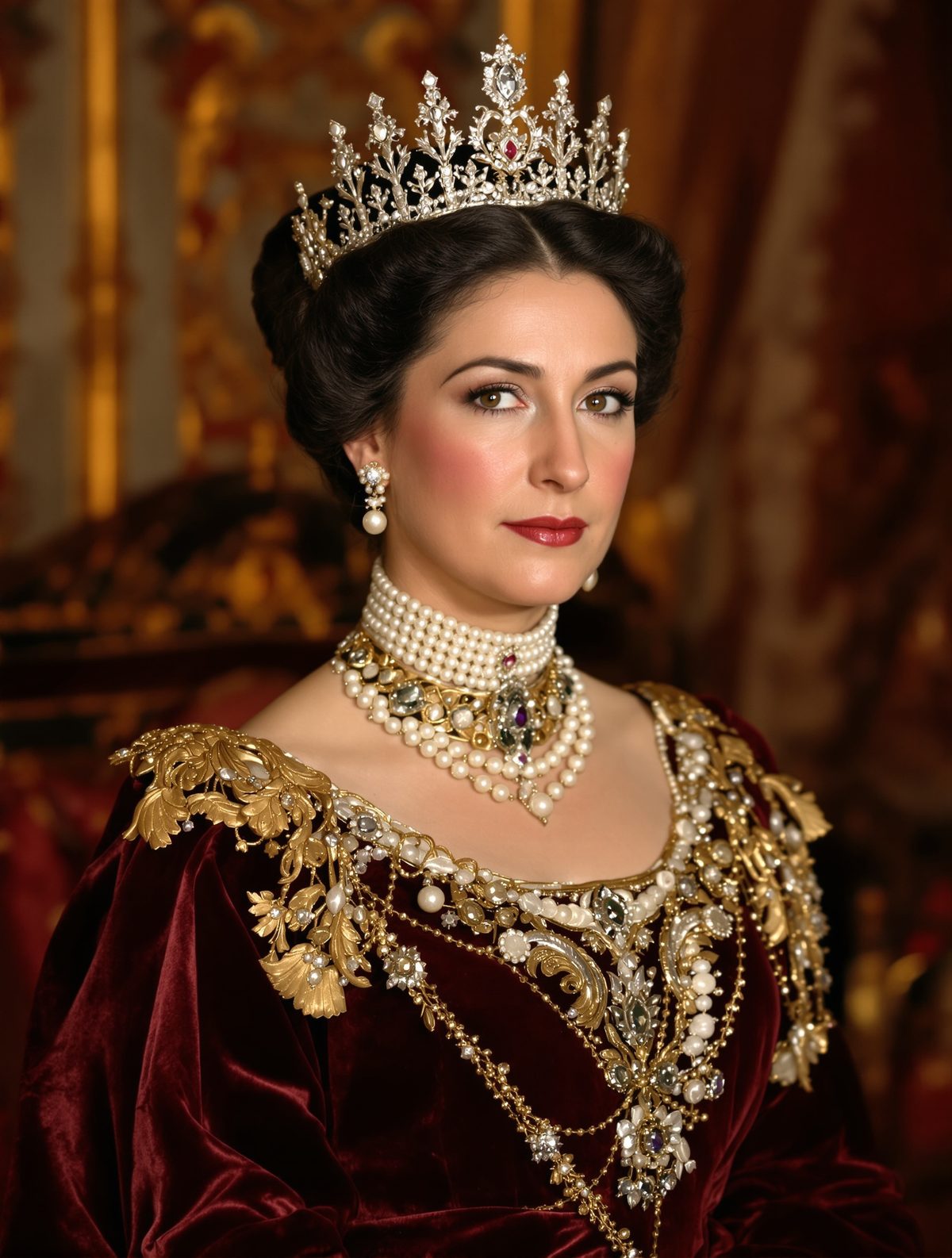
The gasps that echoed through the marble halls of Buckingham Palace on that autumn evening in 1903 could have shattered crystal. Queen Alexandra, resplendent in her emerald silk gown and diamond tiara, had just entered the state dining room for a formal dinner with foreign dignitaries. But it wasn't her usual elegant bearing that captured every eye in the room—it was the small, perfectly formed star tattooed prominently on the bridge of her nose. The sight was so unprecedented, so utterly scandalous by Edwardian standards, that even the usually unflappable King Edward VII momentarily lost his composure, his face flushing crimson beneath his carefully waxed mustache.
A Queen's Shocking Arrival
The early 1900s were a time of rigid social conventions, particularly within the rarefied atmosphere of the British royal court. Queen Alexandra, born Princess Alexandra of Denmark, had always been known for her impeccable taste and fashion-forward sensibilities. She was, after all, the woman who popularized the Alexandra fringe hairstyle and made high necklines fashionable to conceal a small scar from childhood surgery. Her influence on Edwardian fashion was immense, with ladies across the Empire copying her every sartorial choice.
But this was different. This was a permanent marking on the face of the Queen Empress, visible to every subject, every diplomat, every photographer who might capture her image for posterity. In an era when even a glimpse of ankle was considered risqué, a facial tattoo was simply unthinkable—particularly for a woman who represented the moral authority of the British Empire.
The court's reaction was swift and severe. Ladies-in-waiting whispered behind their fans, ministers shifted uncomfortably in their formal wear, and the foreign ambassadors present struggled to maintain their diplomatic composure. King Edward, known for his own indulgences and relatively progressive attitudes, was reportedly "thunderstruck" by his wife's appearance, according to contemporary court records.
The King's Mortification
Edward VII, despite his reputation as a pleasure-loving monarch who had waited decades to inherit the throne, understood the weight of royal symbolism better than most. His own youthful indiscretions had taught him that royal actions carried consequences far beyond the palace walls. The sight of his queen bearing what appeared to be a permanent disfigurement—for that is how the court would have viewed it—represented a potential crisis of unprecedented proportions.
The King's immediate concern wasn't merely personal embarrassment, though that surely played a role. The British monarchy in the early 20th century was still establishing its modern identity, balancing centuries-old traditions with the changing expectations of a new era. Queen Victoria's lengthy reign had ended just two years earlier, and Edward was acutely aware that every royal gesture was scrutinized for signs of moral decline or unseemly modernization.
Contemporary accounts suggest that Edward demanded a private audience with his wife immediately following the dinner, though the exact nature of their conversation remains lost to history. What we do know is that by the following morning, the truth behind Alexandra's shocking appearance had begun to emerge—and it was far more poignant than anyone at court could have imagined.
A Sister's Desperate Love
The real story behind Queen Alexandra's mysterious star tattoo lay not in rebellion or vanity, but in the deepest wells of familial devotion. Princess Dagmar of Denmark, Alexandra's beloved younger sister, was dying of tuberculosis—the white death that claimed so many lives in the pre-antibiotic era. Dagmar, who had become Empress Maria Feodorovna of Russia through her marriage to Tsar Alexander III, was facing her final months with the courage typical of the Danish royal family.
In a gesture that modern readers might recognize but Victorian society found incomprehensible, Dagmar had chosen to mark her remaining time with a small star tattoo on her nose—perhaps as a symbol of hope, perhaps as a statement of defiance against her fate. The exact motivation remains unclear, but what is certain is that when Alexandra learned of her sister's decision, she was determined to share in this final, intimate act of solidarity.
The bond between the Danish sisters had always been extraordinary. Despite their marriages into different royal houses—Alexandra to the future King of England, Dagmar to the Tsar of Russia—they had maintained a correspondence that spanned decades and continents. Their letters, some of which survive in royal archives, reveal a relationship built on mutual support, shared memories of their childhood in Copenhagen, and an unwavering loyalty that transcended the political complexities of their adopted countries.
The Heartbreaking Truth Revealed
When the full circumstances became known to the royal household, the atmosphere shifted dramatically from scandal to sympathy. Alexandra's shocking breach of protocol was revealed as an act of profound love—a queen's willingness to risk her reputation, her husband's displeasure, and the stability of the monarchy itself for the sake of a dying sister.
The tattoo, it emerged, had been applied during a secret visit Alexandra had made to see Dagmar, traveling incognito through Europe to spend what both sisters knew might be their final weeks together. In the privacy of a St. Petersburg palace, with only the most trusted servants as witnesses, Alexandra had submitted to the tattoo artist's needle, choosing to bear the same mark as her beloved sister.
The gesture was both deeply personal and culturally significant. In an age when royal women were expected to sacrifice personal desires for duty and protocol, Alexandra's choice represented a rare moment of individual agency. She had chosen love over convention, family over formality, human connection over royal expectation.
Historical records suggest that once King Edward understood the true motivation behind his wife's actions, his anger transformed into something approaching admiration. The man who had spent his youth chafing against his mother's rigid expectations perhaps recognized in his wife's gesture an echo of his own struggles between personal desire and royal duty.
Legacy of Love and Loss
Princess Dagmar's death came just months after Alexandra's return to London, making the Queen's tattoo both a memorial and a testament to the power of sisterly love. The small star, initially seen as a shocking breach of royal protocol, gradually came to be understood within the court as a mark of the deepest human devotion.
Remarkably, Alexandra chose to keep the tattoo for the remainder of her life, despite the initial controversy it caused. Court photographs from later years show the Queen with the star still visible, though palace protocol ensured it was rarely discussed publicly. The tattoo became part of her identity, a permanent reminder of a love that transcended royal conventions and international boundaries.
Today, as we witness modern royals navigating the balance between personal expression and public duty, Queen Alexandra's hidden star tattoo takes on new significance. Her choice to prioritize family love over royal protocol echoes in contemporary discussions about authenticity, mental health, and the human cost of public service. In an age when tattoos have become mainstream and royal family members speak openly about personal struggles, Alexandra's act of rebellion seems less shocking than profoundly moving—a reminder that behind the crowns and ceremonies, the deepest royal story has always been simply, powerfully human.