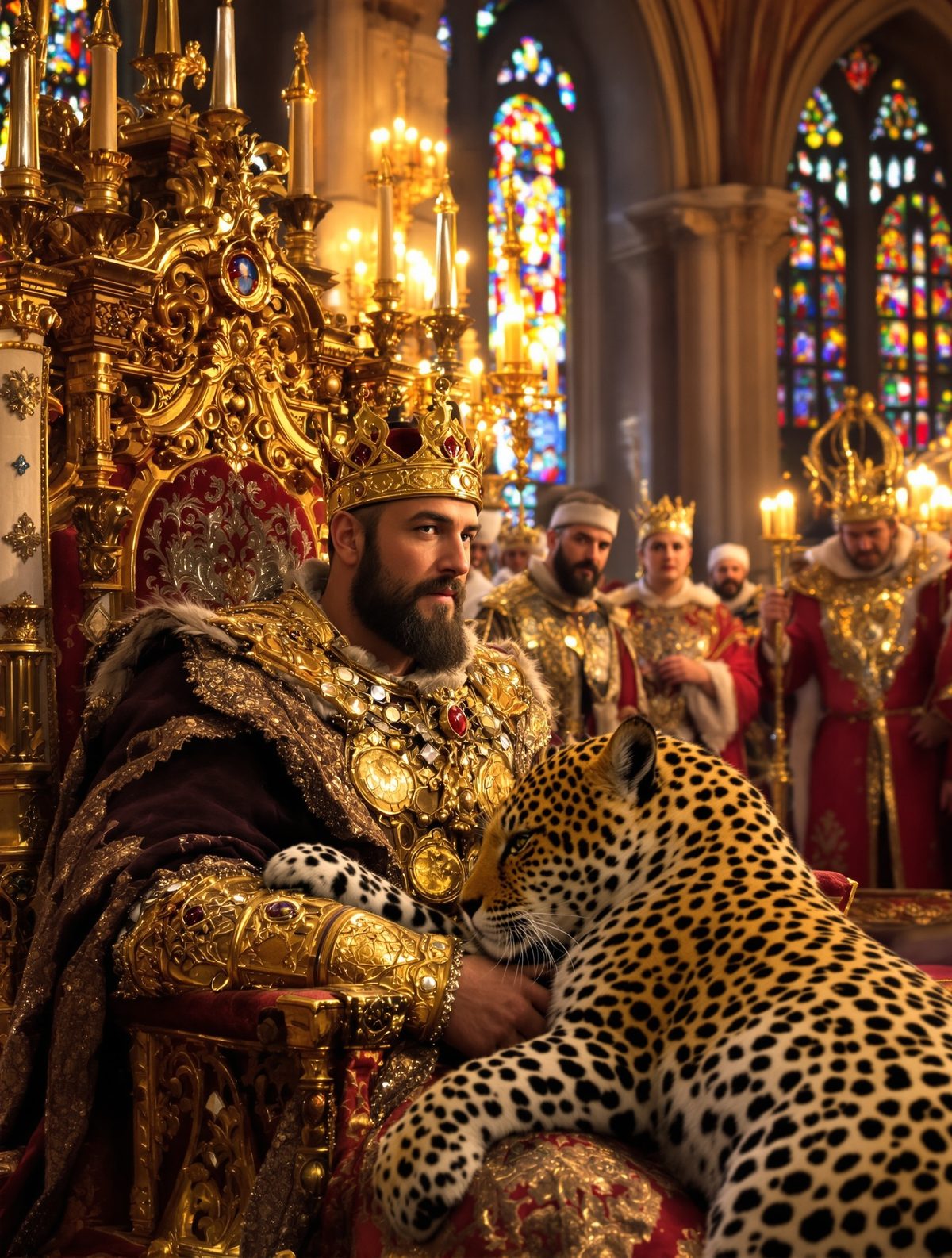
Picture this: you're a medieval courtier, dressed in your finest robes, approaching the throne room of Westminster Palace for an audience with your king. But as the great doors swing open, instead of the usual pageantry and ceremony, you're greeted by the low, rumbling growl of a fully-grown leopard lounging beside the royal throne. Welcome to the extraordinary and terrifying world of King Edward II's court in the 1320s, where political turmoil took a backseat to one monarch's obsession with his most unusual companion.
A King's Dangerous Obsession
Edward II was never what anyone would call a conventional monarch. Born in 1284, he ascended to the throne in 1307 with grand expectations placed upon his shoulders—expectations he would consistently fail to meet. While his nobles grew increasingly frustrated with his military failures and political misjudgments, Edward found solace in pursuits that scandalized the medieval court. Among these was his passionate love for exotic animals, particularly his prized leopard.
The exact origins of Edward's feline companion remain shrouded in mystery, though records from the royal household suggest the leopard arrived at Westminster Palace sometime in the early 1320s. Whether it came as a diplomatic gift from foreign dignitaries or was acquired through the king's own exotic animal dealers, the beast quickly became Edward's most treasured possession. Unlike the hunting hounds or falcons typically associated with royal courts, this was a predator that commanded both respect and absolute terror.
What made Edward's relationship with his leopard so extraordinary was the unprecedented freedom he granted the animal. Rather than keeping it confined to the royal menagerie or chained in secure quarters, the king allowed his spotted companion to roam the corridors of Westminster Palace at will. Contemporary accounts describe how the leopard would pad silently through the great halls, its powerful muscles rippling beneath its distinctive coat, while terrified servants pressed themselves against tapestried walls.
Terror in the Throne Room
The true extent of the chaos became apparent during formal court proceedings. Edward, seemingly oblivious to—or perhaps delighting in—the terror his pet inspired, would conduct royal audiences with the leopard sprawled beside his throne. Imagine the scene: bishops, earls, and foreign ambassadors forced to approach the seat of English power while a wild predator watched their every move with keen, predatory eyes.
The psychological impact on the court was profound. Chroniclers of the time noted how even the most battle-hardened knights would visibly tremble when entering the throne room. The usual pomp and ceremony of medieval court life gave way to an atmosphere of barely controlled panic. Courtiers who had once jostled for position near the king now found urgent business elsewhere in the palace, leaving Edward increasingly isolated with only his feline friend for company.
The situation reached such extremes that many nobles simply refused to attend court altogether. Royal business ground to a halt as essential meetings were postponed indefinitely, not due to political crisis or foreign invasion, but because the king's advisors were too frightened to enter the same room as his beloved pet. Even experienced diplomats, accustomed to navigating the treacherous waters of international politics, found themselves completely unprepared for the unique challenge of conducting negotiations under the watchful gaze of a leopard.
The Church Intervenes
As word of Edward's unusual arrangement spread beyond the palace walls, it inevitably reached the ears of England's most powerful religious figures. The medieval Church held enormous sway over royal affairs, and the Archbishop of Canterbury found himself in the unprecedented position of having to address a king's choice of pet as a matter of national importance.
Church officials viewed the situation through the lens of medieval theology, which often associated exotic predators with darkness and ungodly influences. The presence of such a creature in the sacred halls of royal power was seen as deeply inappropriate, if not blasphemous. The Archbishop's demand for the leopard's removal carried significant weight—this was not merely a suggestion but a formal ecclesiastical intervention in royal affairs.
The religious opposition to Edward's leopard reflected broader tensions between the monarchy and the Church during this turbulent period. Edward II's reign was marked by constant conflicts with various powerful factions, and his refusal to conform to expected royal behavior—including his choice of companions, both human and animal—only served to further alienate potential allies. The leopard became a symbol of everything the establishment found troubling about their unconventional king.
A Kingdom in Chaos
While Edward lavished attention on his exotic pet, his kingdom faced serious challenges that demanded royal focus. The 1320s were a period of significant political upheaval, with Scottish independence struggles, conflicts with France, and growing domestic unrest requiring decisive leadership. Instead, England found itself with a monarch who seemed more interested in his menagerie than in matters of state.
The leopard incident perfectly encapsulated Edward's problematic reign. Here was a king who possessed the resources and authority to maintain one of the most magnificent courts in Europe, yet chose to use that power in ways that alienated and terrified his own supporters. The exotic pet served as a physical barrier between Edward and his nobility—perhaps intentionally so, as the king may have found his animal companion more trustworthy than his human courtiers.
Contemporary records suggest that the leopard's reign of terror at Westminster Palace lasted several months before pressure from both religious and secular authorities finally forced Edward to relocate his pet. Whether the animal was moved to more secure quarters, returned to the royal menagerie, or disposed of entirely remains unclear. What is certain is that the incident left lasting impressions on all who witnessed it, becoming part of the growing catalog of Edward's eccentric behavior that would eventually contribute to his downfall.
Legacy of the Royal Predator
The story of Edward II's leopard offers a fascinating glimpse into the personal character of one of England's most controversial monarchs. In an age when royal behavior was expected to follow strict protocols and traditions, Edward's decision to share his throne room with a wild predator represented a dramatic break from convention that shocked medieval society to its core.
This episode also highlights the complex relationship between personal passion and public responsibility that continues to challenge royalty today. Edward's love for his exotic companion, while genuine, demonstrated a troubling disregard for the comfort and safety of those around him. Modern royal families still grapple with balancing personal interests against public expectations, though thankfully with less dangerous pets involved.
The leopard of Westminster Palace ultimately serves as a powerful metaphor for Edward II's entire reign—beautiful, exotic, and utterly unsuited to the environment in which it found itself. Like his beloved pet, Edward himself was a king who never quite fit the role thrust upon him, causing chaos and fear among those who should have been his greatest supporters. In the end, both the leopard and the king would find that even royal privilege has its limits, and that true power lies not in inspiring fear, but in earning respect and loyalty through wisdom and strength of character.