In the pre-dawn darkness of June 2nd, 1953, while London slept in anticipation of the most momentous royal ceremony in decades, a lone figure slipped through the shadows of Westminster Abbey. Princess Mary, the Royal Family's eldest member and only daughter of King George V, had made an extraordinary decision that would ultimately save her niece's coronation from potential disaster.
What possessed the 56-year-old Princess Royal to embark on this clandestine mission reveals not only her deep sense of duty but also the weight of responsibility that pressed upon the entire royal household as they prepared to witness Elizabeth's transformation from princess to Queen.
A Princess's Sleepless Night
Princess Mary had always been known for her meticulous nature and unwavering dedication to royal protocol. As the daughter of one monarch and aunt to another, she understood better than most the gravity of coronation ceremonies. The weeks leading up to Elizabeth's big day had been filled with endless rehearsals, fittings, and preparations, yet something troubled the Princess Royal enough to lose sleep over it.
The official rehearsals had been conducted with military precision, but they had also been crowded affairs with dozens of officials, clergy, and royal family members present. Mary worried that in all the pomp and circumstance, crucial details might have been overlooked. Her concerns weren't unfounded—the 1953 coronation was to be the first televised ceremony of its kind, with millions of viewers worldwide scrutinizing every moment.
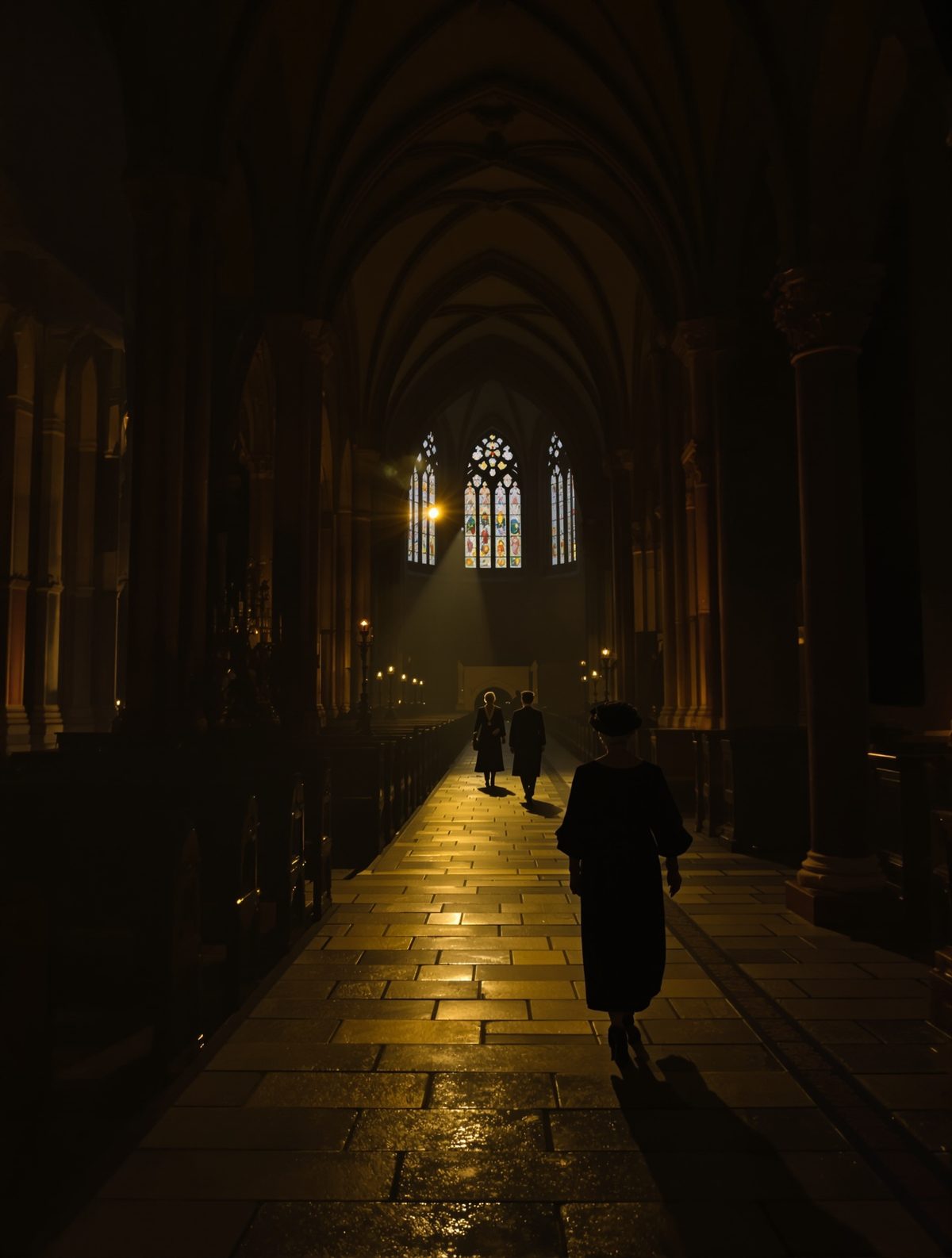
At precisely 2 AM, Mary made her way through the Abbey's ancient corridors, her footsteps echoing in the hallowed silence. She had obtained special permission from the Dean of Westminster, though even he was unaware of the true purpose of her nocturnal visit. Officially, she claimed she needed a quiet moment of reflection before the ceremony. In reality, she intended to walk through every step of the coronation procession herself.
The Midnight Discovery
Dressed in a simple dark coat and carrying only a small torch, Princess Mary began her solitary rehearsal. She started from the Abbey's Great West Door, retracing the exact path that Queen Elizabeth would take in just hours. The ancient building, stripped of its usual crowds and ceremony, held an almost mystical quality in the darkness.
As Mary made her way down the nave, her experienced eye caught details that had been missed during the bustling official preparations. The carpet placement seemed slightly askew in one section, and the positioning of certain ceremonial elements appeared less than perfect. But it was when she reached the area near the Coronation Theatre that she made her crucial discovery.
Walking carefully in the dim light, Mary suddenly felt the stone beneath her feet shift ominously. One of the ancient floor stones, worn smooth by centuries of royal ceremonies, had worked loose from its setting. In the daylight, surrounded by elaborate carpeting and ceremonial decorations, this dangerous flaw had gone completely unnoticed.
The implications were staggering. Had Queen Elizabeth stepped on this loose stone while wearing the heavy St. Edward's Crown and elaborate coronation robes, she could have stumbled or fallen in front of the watching world. The potential for injury, humiliation, or worse was too terrible to contemplate.
Racing Against Dawn
Princess Mary's discovery set off a chain of events that demonstrated the royal household's ability to handle crisis with characteristic discretion and efficiency. Without hesitation, she contacted the Abbey's works department and senior palace officials. The challenge was monumental—how to repair a centuries-old stone floor with just hours remaining before the most important ceremony of the decade.
A small team of craftsmen was hastily assembled, sworn to secrecy about the nature of the emergency repair. Working by lamplight in the early hours of Coronation Day, they carefully lifted the loose stone, cleaned and re-set its foundation, and secured it back into place. The entire operation had to be completed before the first officials arrived for final preparations around dawn.
The timing was impossibly tight, but the team worked with the kind of dedication that only comes when the stakes are impossibly high. As the first rays of sunlight began to filter through the Abbey's ancient windows, the craftsmen were putting the finishing touches on their invisible repair. The carpet would be re-laid, the ceremonial elements repositioned, and no one would be any the wiser.
Princess Mary remained at the Abbey throughout the emergency repair, her trained eye ensuring that every detail was perfect. Her knowledge of royal protocol proved invaluable as the team worked to restore not just the stone, but the entire ceremonial area to its intended state.
The Secret Keeper
What makes Princess Mary's midnight intervention even more remarkable is how completely the secret was kept. In an age before social media and with a press corps that still maintained respectful boundaries around royal privacy, the story of the emergency repair never leaked. The coronation proceeded without a hitch, with millions of viewers witnessing what appeared to be a flawlessly executed ceremony.
Queen Elizabeth herself was never told about the potential danger until years later. On Coronation Day, she walked confidently down the Abbey's nave, stepped gracefully around the Coronation Theatre, and took her place on the throne without ever knowing how close she had come to disaster. The newly repaired stone held firm beneath the weight of history and ceremony.
Princess Mary, meanwhile, took her designated place among the royal family, watching with satisfaction as her niece was crowned Queen. To observers, she appeared as composed and dignified as always, giving no hint of her dramatic early morning adventure or the relief she must have felt seeing Elizabeth's safe passage to the throne.
The few officials who knew the truth were bound by an unspoken code of royal discretion. The craftsmen were quietly rewarded for their exceptional service, and the Dean of Westminster ensured that the Abbey's floor received a comprehensive inspection in the weeks following the coronation.
A Legacy of Vigilance
Princess Mary's midnight mission reveals something profound about the nature of royal duty and the often-unseen efforts that ensure the monarchy's ceremonial perfection. Her willingness to lose sleep, to question established preparations, and to take personal responsibility for her niece's safety exemplifies the dedication that has long characterized the House of Windsor.
This story also highlights the collaborative effort required to maintain royal ceremonies. From the Princess Royal's vigilant eye to the craftsmen's skilled hands, the successful coronation depended on individuals at every level understanding their role in preserving both tradition and safety.
Today, as we witness the continued evolution of the British monarchy, Princess Mary's midnight vigil reminds us that behind every flawless royal ceremony lies countless hours of preparation, concern, and sometimes dramatic last-minute interventions. The traditions we see played out in public are supported by private acts of devotion and service that rarely receive recognition but remain essential to the monarchy's enduring success.
The loose stone that could have changed history was repaired by dawn, but the story of its discovery stands as a testament to the lengths the royal family will go to protect both the dignity of the Crown and the safety of those who wear it. In Princess Mary's case, duty called at 2 AM, and she answered without hesitation—just as any true royal should.