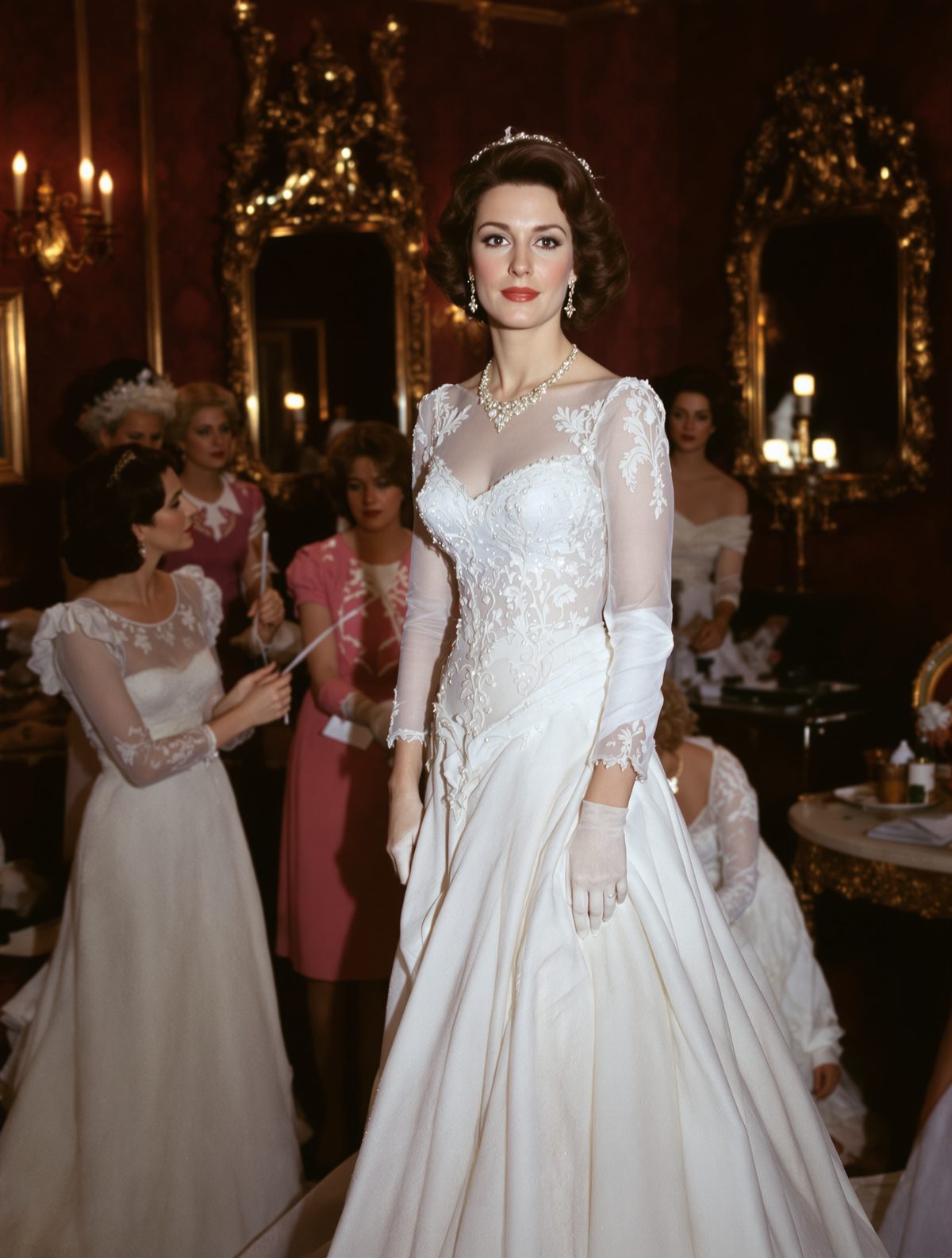
The sound that echoed through the fitting room at Buckingham Palace on November 11, 1973, was unmistakable—the devastating rrrrrip of silk splitting completely in two. Princess Anne stood motionless as her wedding dress, three days before her marriage to Captain Mark Phillips, fell apart at the seams. What happened next would become one of the most telling moments about the Princess Royal's unflappable character, even as her chief seamstress collapsed in a dramatic faint.
The Dress That Nearly Wasn't
Princess Anne's wedding gown was already making headlines before disaster struck. Designed by Maureen Baker of Susan Small, the dress represented a departure from the elaborate confections typically favored by royal brides. Anne had specifically requested something "practical and elegant"—a reflection of her no-nonsense personality that would later define her decades of royal service.
The design featured medieval-inspired elements with a high neckline, long fitted sleeves, and a modest train measuring just over six feet—a far cry from the dramatic sweeping trains of previous royal weddings. The silk was adorned with seed pearls and silver thread embroidery, with a detachable train that could be removed for the reception. It was, in every sense, a dress that embodied Anne's practical approach to royal duty.
But on that fateful November morning, as Anne raised her arms during what was meant to be the final fitting, the carefully constructed bodice gave way entirely. The split ran from the neckline to the hem, leaving the dress in tatters. Royal protocol had no contingency plan for such a disaster with Westminster Abbey already prepared and 500 wedding guests expecting to witness a flawless ceremony.
Drama in the Palace Fitting Room
The reaction in the room was swift and dramatic. According to palace insiders, the chief seamstress—who had been working tirelessly on the dress for months—took one look at the destruction and promptly fainted. Other members of the dressmaking team stood frozen in horror, unsure whether to attend to their collapsed colleague or salvage what remained of the royal gown.
Princess Anne's response, however, was characteristically composed. Rather than dissolve into tears or panic—reactions that might have been forgiven under such circumstances—she reportedly surveyed the damage with the same calm demeanor she would later bring to her equestrian competitions and countless royal engagements. Her first request was practical: tea and biscuits for everyone in the room.
"Right then," she's reported to have said, displaying the sort of unruffled composure that would become her trademark, "I suppose we'd better start again." This moment of crisis revealed the steely determination that would later make her one of the hardest-working members of the royal family, completing more engagements annually than almost any other royal.
Racing Against Royal Time
With just 72 hours until the ceremony, the palace dressmaking team faced an seemingly impossible task. Creating a wedding dress of royal standards typically requires months of meticulous work, involving multiple fittings, hand-sewn embellishments, and careful attention to every detail that would be scrutinized by millions of television viewers worldwide.
The team worked in shifts around the clock, with seamstresses taking turns to ensure continuous progress on the replacement gown. Palace staff quietly arranged for additional supplies of silk, pearls, and silver thread, while maintaining absolute secrecy about the crisis. The last thing the royal family needed was newspaper headlines about wedding dress disasters just days before the ceremony.
Princess Anne herself proved to be remarkably accommodating during this frantic period, making herself available for fittings at unusual hours and remaining patient despite the obvious stress affecting everyone around her. Her cooperation during these emergency sessions demonstrated a pragmatic approach to royal duty that would characterize her entire career.
The backup dress was completed with mere hours to spare before the wedding day, though it reportedly required one final fitting in the early hours of November 14th. The seamstresses, working on adrenaline and determination, managed to recreate every detail of the original design, ensuring that none of the wedding guests would ever know about the near-disaster that had unfolded behind palace doors.
A Royal Wedding Saved
On November 14, 1973, Princess Anne walked down the aisle of Westminster Abbey in a dress that was technically just three days old, though it appeared flawless to the 500 million television viewers watching worldwide. The ceremony proceeded without incident, with Anne's practical elegance earning praise from fashion critics who had no idea they were admiring the product of a frantic 72-hour recreation effort.
The wedding dress crisis remained largely unknown to the public for years, only emerging through the later reminiscences of palace staff and royal biographers. This secrecy was typical of the palace's approach to managing royal crises—maintaining the illusion of seamless perfection while frantically problem-solving behind the scenes.
The original damaged dress was quietly disposed of, though some pieces of the fabric were reportedly retained in the royal archives. The replacement dress, meanwhile, was carefully preserved and has occasionally been displayed in royal exhibitions, where visitors admire its elegant simplicity without knowing its dramatic last-minute origins.
The Making of a Royal Character
This wedding dress disaster and Anne's response to it proved remarkably predictive of her future approach to royal duties. Throughout her decades of service, Princess Anne has become known for her practical, no-nonsense attitude and her ability to handle unexpected situations with characteristic calm.
Her reaction to the dress crisis—focusing on solutions rather than drama, ensuring others were cared for, and maintaining perspective about what truly mattered—would be repeated countless times throughout her royal career. Whether dealing with attempted kidnappings, equestrian accidents, or challenging royal engagements, Anne has consistently demonstrated the same unflappable composure she showed that November morning in 1973.
The incident also highlighted the incredible skill and dedication of the palace staff, who worked tirelessly to ensure the royal wedding proceeded flawlessly. Their ability to recreate an intricate royal wedding dress in just three days remains a testament to the exceptional standards maintained by royal household craftspeople.
Today, as we watch newer generations of royals navigate their own wedding preparations and public duties, Princess Anne's wedding dress disaster serves as a reminder that even the most carefully planned royal events can face unexpected challenges. What matters is not the perfection of the plan, but the grace and determination with which problems are addressed. In that respect, Princess Anne's response to her wedding dress crisis perfectly encapsulated the qualities that would make her one of the most respected and hardworking members of the royal family—proving that sometimes our greatest challenges reveal our truest character.