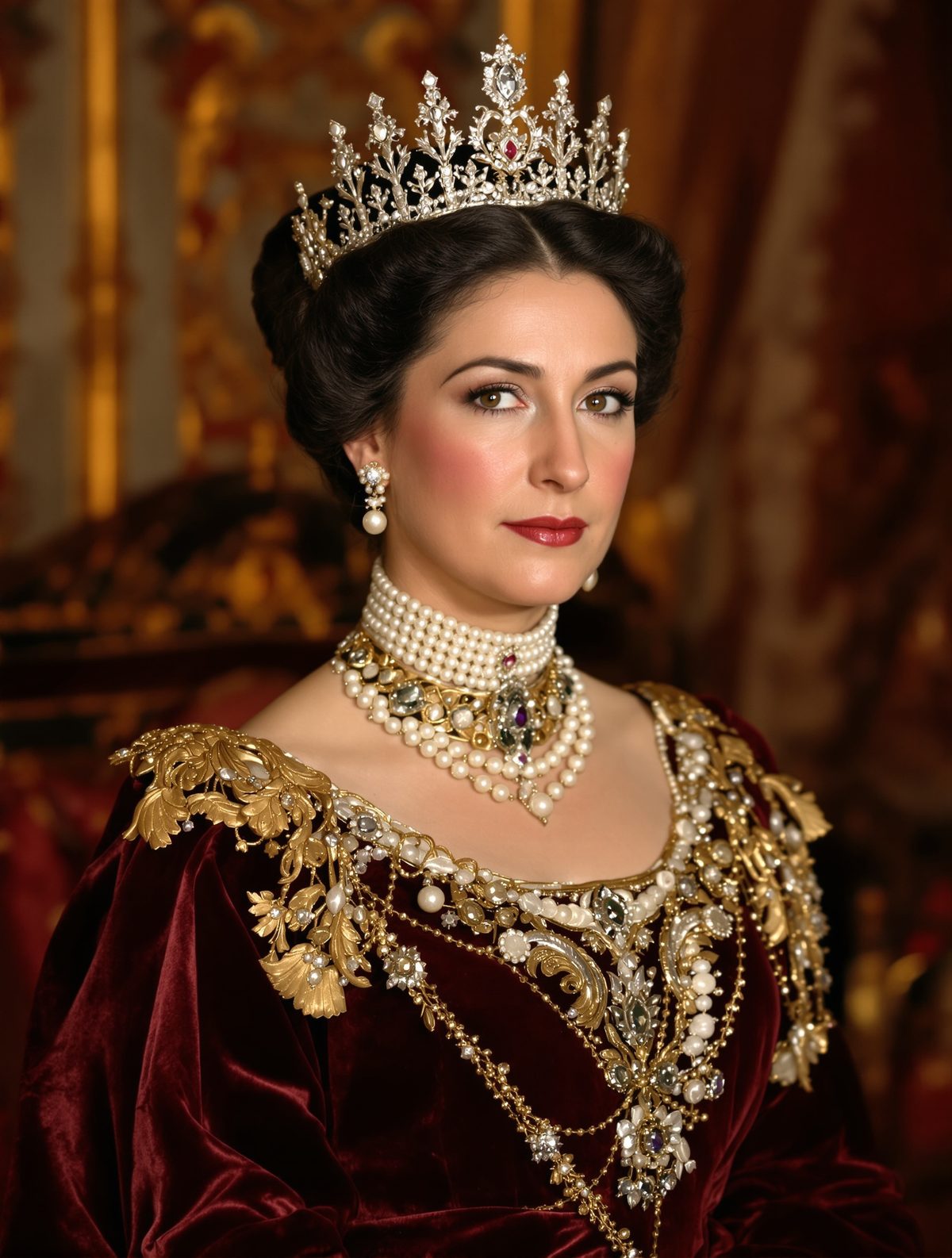
The morning of 12 June 1866 should have been the happiest day of Princess Mary Adelaide's life. At thirty-two, Queen Victoria's plump cousin had finally found love with the handsome Duke of Teck. But as three frantic seamstresses tugged desperately at the laces of her wedding corset in the private chambers of Kew Palace, the princess faced a nightmare that would have sent lesser royals fleeing to their smelling salts. The custom-made corset, crafted by London's finest corsetière to sculpt her famously generous figure into Victorian ideals of feminine beauty, simply would not close.
The Princess Who Defied Victorian Beauty Standards
Princess Mary Adelaide of Cambridge was never what Victorian society expected in a royal princess. Standing nearly six feet tall and weighing considerably more than the willowy ideal of the era, she had earned the rather unkind nickname "Fat Mary" from the London press. Her cousin Queen Victoria, hardly svelte herself, once described Mary Adelaide as "unfortunately very large" in her private correspondence.
But what Mary Adelaide lacked in conventional beauty, she more than made up for in personality. Vivacious, charitable, and possessed of infectious warmth, she had captured the hearts of the British public through her tireless charity work in London's East End. Unlike many royals of the era who maintained rigid formality, Mary Adelaide was known for her genuine connections with people from all walks of life.
Her size, however, remained a constant source of anxiety in an age when tight-lacing was not merely fashion but moral imperative. Victorian ladies were expected to achieve wasp waists of eighteen inches or less, regardless of their natural build. For a princess whose waist measured considerably more, the pressure was enormous.
A Wedding Morning Crisis
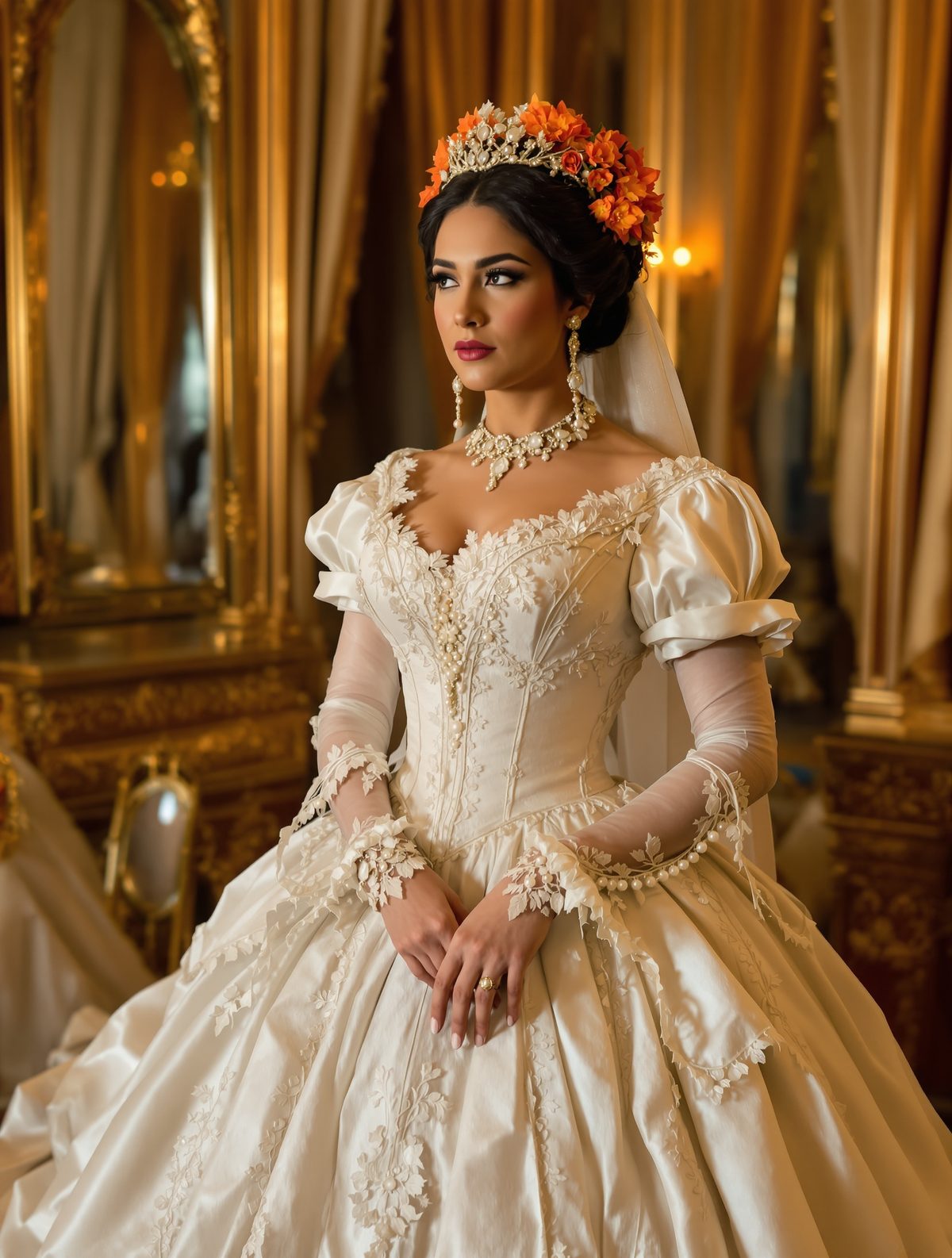
The wedding dress itself was a masterpiece of Victorian craftsmanship. Created by the royal couturiers, it featured layers of ivory silk, Honiton lace, and thousands of seed pearls. But the foundation of any Victorian wedding ensemble was the corset—and Mary Adelaide's had been specially engineered to work what amounted to sartorial magic.
The corset had been fitted multiple times during the months leading up to the wedding, but the princess's nerves—and perhaps her appetite during the stressful pre-wedding period—had apparently shifted her measurements just enough to create disaster. As the morning progressed and guests began arriving at St. George's Chapel, Windsor, the situation in the bridal chambers grew increasingly desperate.
According to accounts from her lady-in-waiting, three of London's most experienced seamstresses worked in shifts, attempting various strategies to make the corset meet. They tried different lacing techniques, adjusted the positioning, and even considered emergency alterations. But with Queen Victoria herself waiting and hundreds of distinguished guests filling the chapel, time was running perilously short.
A Scandalous Decision
What happened next would be whispered about in drawing rooms across London for months to come. Rather than delay the ceremony or attempt frantic modifications that might damage the dress, Princess Mary Adelaide made a decision that shocked even her progressive sensibilities: she would walk down the aisle with her corset partially unlaced.
Her lady-in-waiting reportedly gasped at the suggestion. In an era when showing one's ankles was considered risqué, the idea of appearing in public—let alone at one's own royal wedding—without being properly corseted was nearly unthinkable. The corset wasn't merely underwear; it was the foundation of respectable feminine presentation.
But Mary Adelaide, perhaps drawing on the confidence that had made her such an effective charity patron, refused to let sartorial failure ruin her long-awaited wedding day. The seamstresses did what they could, lacing the corset as tightly as possible and using strategic pinning to ensure the dress would still fit properly. Additional petticoats were arranged to camouflage any irregularities in her silhouette.
Walking Down the Aisle
When Princess Mary Adelaide finally appeared at the chapel entrance, few in the congregation could have guessed the drama that had unfolded behind the scenes. The wedding dress, despite the corset catastrophe, looked magnificent. Her naturally regal bearing and the joy radiating from her face as she spotted her waiting groom carried her through the ceremony with grace and dignity.
The Duke of Teck, a minor German prince who had won Mary Adelaide's heart through genuine affection rather than political necessity, seemed entirely smitten with his bride regardless of any sartorial imperfections. Their wedding was noted by contemporary observers as unusually warm and personal for a royal ceremony of the era.
However, the fashion-conscious ladies of the court were quick to notice that something seemed different about the bride's silhouette. While they couldn't quite put their finger on what was amiss, the whispers began almost immediately. It wasn't until weeks later, when details of the corset crisis leaked through the palace servants' network, that the full scandal emerged.
The Aftermath and Legacy
The reaction to Princess Mary Adelaide's corset scandal revealed the rigid expectations placed upon royal women in Victorian society. Some society matrons declared themselves "mortified" on behalf of the royal family, while others praised the princess's practical approach to an impossible situation. The press, with typical Victorian delicacy, made oblique references to the bride's "natural and unstudied grace" while hinting at underlying drama.
Queen Victoria herself, when eventually informed of the crisis, reportedly took a surprisingly pragmatic view. Having struggled with her own weight fluctuations throughout her life, she understood the pressures her cousin faced. More importantly, she recognized that Mary Adelaide's quick thinking had avoided a far more serious scandal—a delayed or cancelled royal wedding would have created international embarrassment.
The incident also highlighted the absurd extremes of Victorian fashion expectations. That a princess should be expected to achieve an eighteen-inch waist regardless of her natural build, and that failure to do so could threaten her wedding day, struck many as fundamentally unreasonable.
Princess Mary Adelaide went on to become one of the most beloved royals of her generation, known particularly for her charitable work and her role as mother to the future Queen Mary. Her corset scandal, initially a source of embarrassment, eventually became part of her legend—proof that she valued substance over superficial perfection.
Today, as we watch modern royals navigate their own relationships with public scrutiny and body image, Princess Mary Adelaide's wedding morning crisis feels remarkably contemporary. Her decision to prioritize her happiness and her commitments over impossible beauty standards offers a surprisingly modern lesson wrapped in Victorian silk and scandal. Sometimes the most royal thing you can do is simply refuse to let other people's expectations define your most important moments.