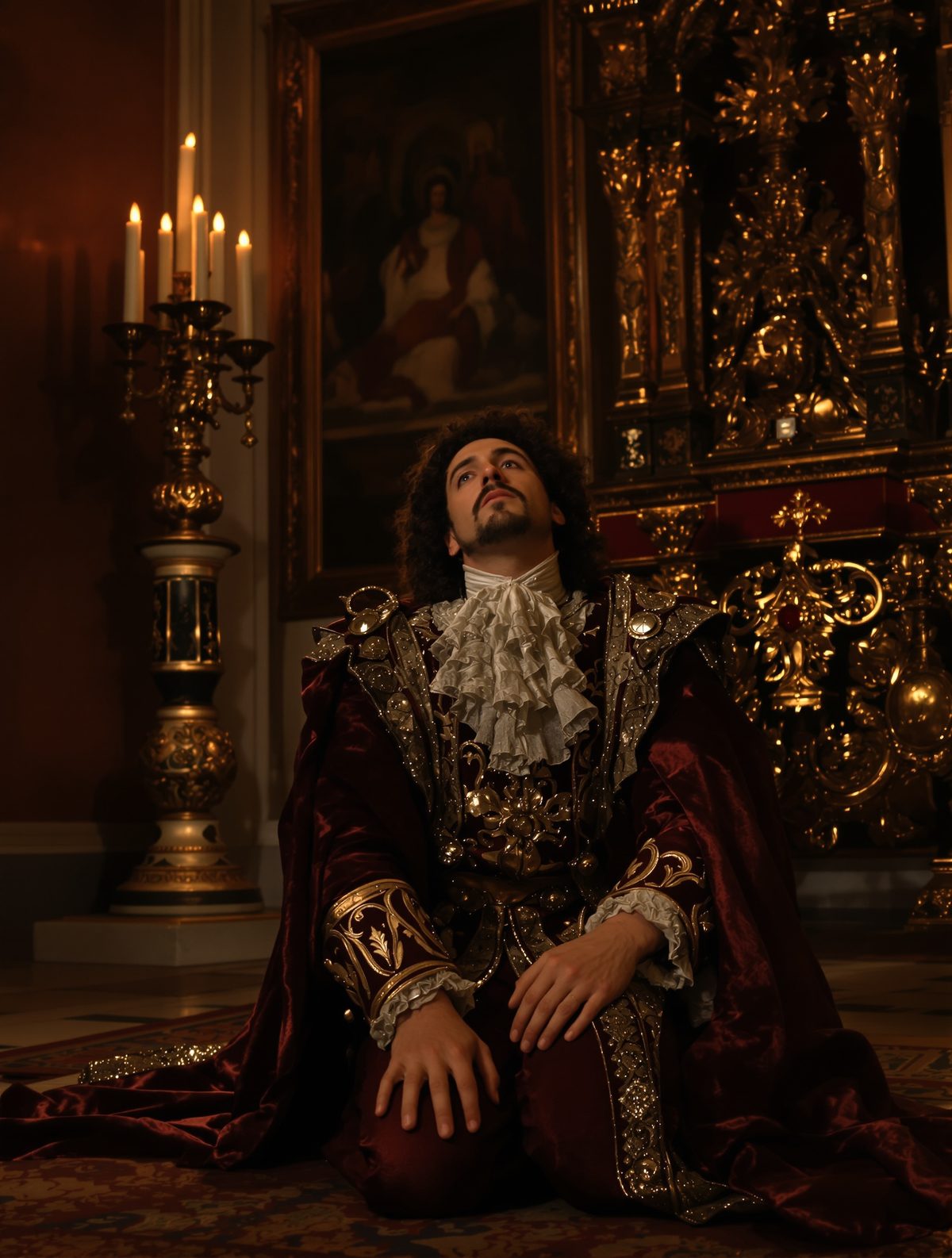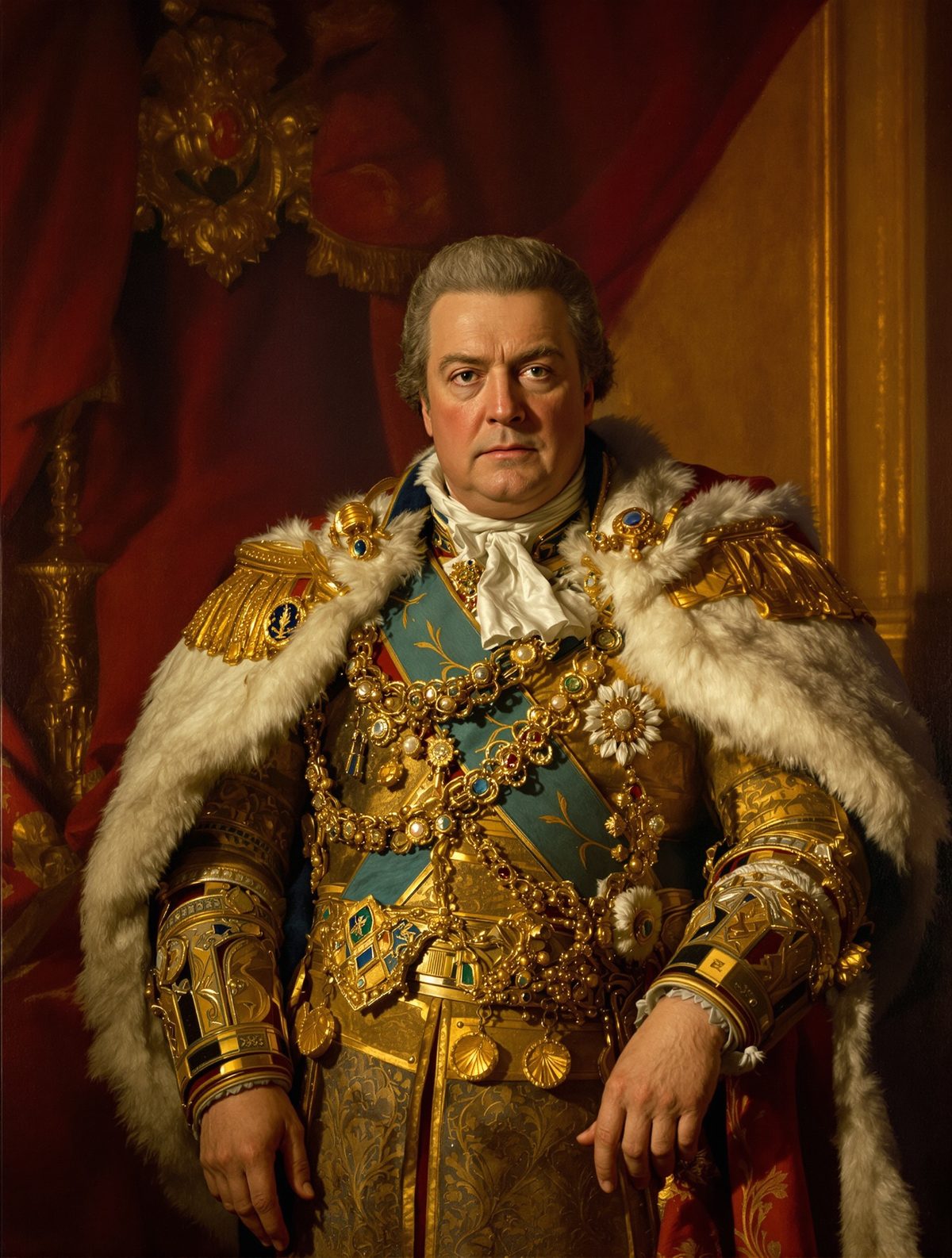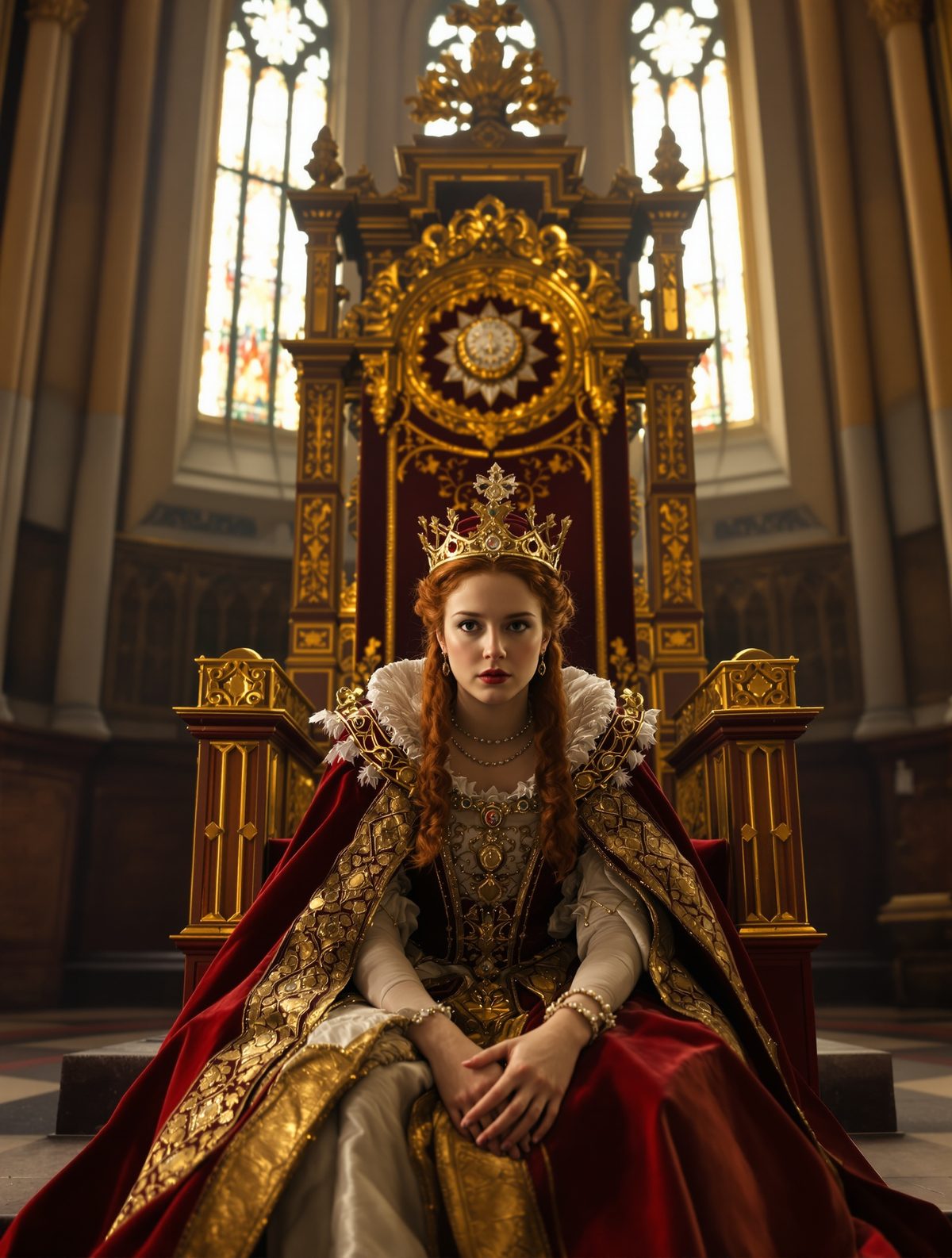
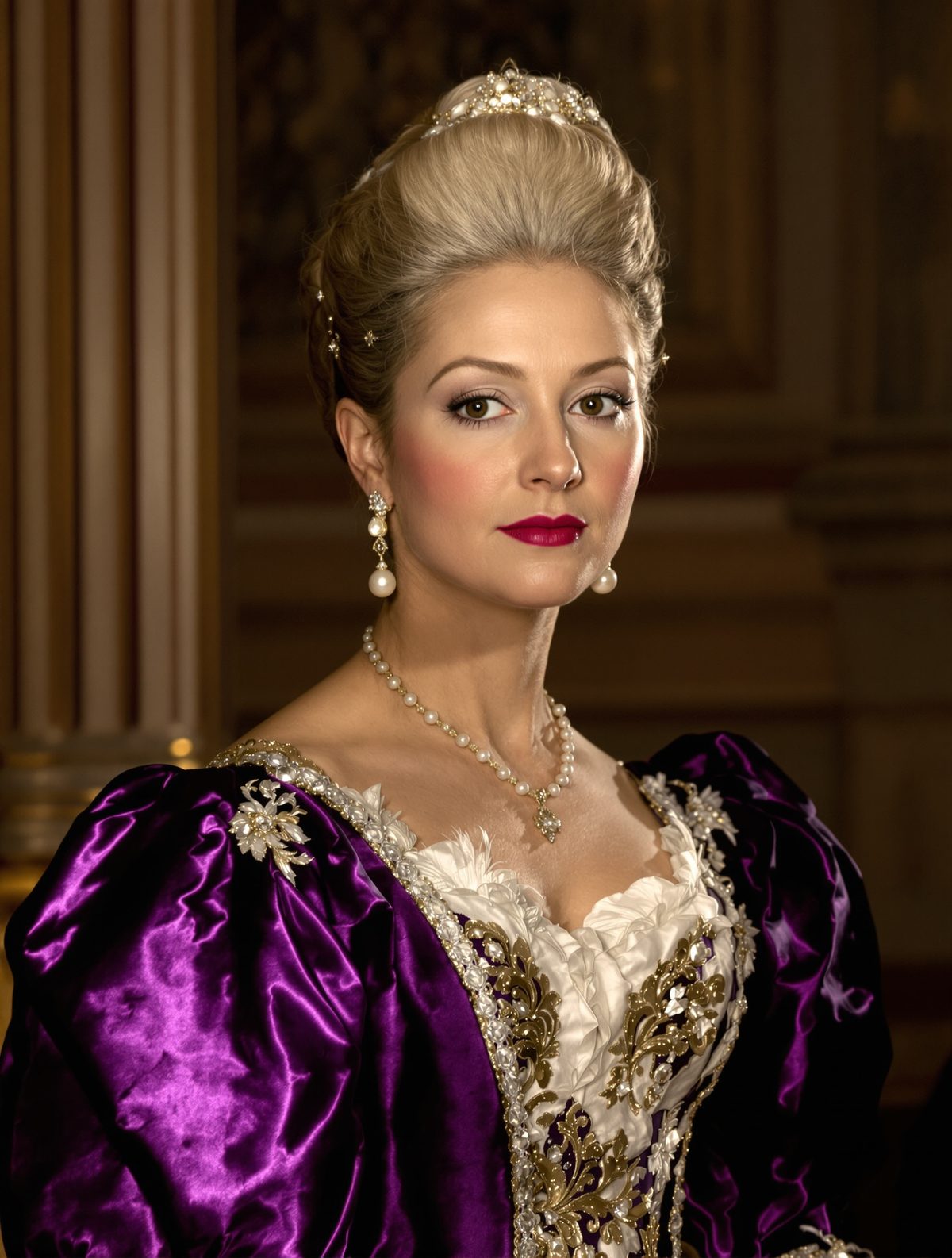
When Princess Augusta of Brunswick stepped from her gilded carriage at Westminster Abbey on September 22, 1761, a collective intake of breath rippled through the assembled nobility. There, in defiance of centuries of royal tradition, stood the Dowager Princess of Wales draped in sumptuous deep purple silk—a color that had no place at a coronation according to the rigid protocols of Georgian court dress. As she swept toward the abbey doors to witness her eldest son George III's crowning, Augusta knew she had just committed one of the most audacious acts of sartorial rebellion in royal history.
The Sacred Rules of Coronation Dress
In 1761, royal fashion wasn't simply about looking magnificent—it was a carefully choreographed language of power, hierarchy, and tradition. For coronations, the unwritten but iron-clad rules demanded that royal ladies appear in cloth of gold or pristine white silk, colors that symbolized purity, divine blessing, and the sacred nature of the monarchy. These weren't mere suggestions; they were protocols hammered into the consciousness of every aristocratic family for generations.
Purple, by stark contrast, carried entirely different connotations. Since Roman times, it had been the color of imperial authority and sovereign power—traditionally reserved for the monarch alone. For anyone else to wear purple at a coronation was tantamount to making a statement about their own importance, their own claim to authority. It was, quite literally, a power play draped in silk.
The court of George III operated under these ancient rules with Germanic precision. The new king, just twenty-three years old and still finding his footing on the throne, had already shown himself to be a stickler for proper protocol. His coronation was meant to project stability, legitimacy, and respect for tradition after the tumultuous final years of his grandfather George II's reign. Every detail mattered, from the positioning of peers to the precise shade of ermine trim.
A Mother's Calculated Defiance
Princess Augusta's choice of purple wasn't an accident or a moment of fashion-forward thinking—it was a deliberate and calculated decision by one of the most politically astute women of her generation. As the widow of Frederick, Prince of Wales, and mother to the new king, Augusta had spent years navigating the treacherous waters of court politics. She understood better than most that clothing was power, and power was something she had no intention of surrendering quietly.
Born Augusta of Saxe-Gotha, she had arrived in England as a teenage bride in 1736, thrust into a royal family notorious for its bitter internal feuds. The Hanoverians were legendary for their family quarrels, and Augusta had learned early that survival meant asserting yourself or being swept aside. By choosing purple for her son's coronation, she was sending an unmistakable message: she might be the Dowager Princess, but she remained a force to be reckoned with.
The gown itself was reportedly a masterpiece of Georgian craftsmanship. Fashioned from the finest silk that shimmered between deep violet and royal purple depending on the light, it featured intricate silver embroidery and was cut in the formal court style with wide panniers that would have required careful maneuvering through Westminster Abbey's ancient doorways. Every element of the dress spoke to Augusta's status and wealth—and her refusal to fade into the background.
The Queen Mother's Fury
If Augusta thought her sartorial statement would pass unnoticed, she was gravely mistaken. Queen Caroline of Ansbach, the formidable Queen Mother and Augusta's longtime rival, was reportedly incandescent with rage upon witnessing the purple gown. The two women had maintained an icy relationship for years, rooted in the complex dynamics of a royal family where mothers-in-law and daughters-in-law competed for influence over kings and future kings.
Caroline, known for her intelligence and political acumen, immediately grasped the implications of Augusta's choice. This wasn't just about fashion—it was about precedence, about who held the real power behind the throne of the young king. The Queen Mother had dressed impeccably in cloth of gold, following every protocol to the letter, only to be upstaged by Augusta's audacious purple.
Court observers noted the tension crackling between the two women throughout the ceremony. While no direct confrontation occurred within the sacred walls of Westminster Abbey, the frost between them was palpable. Letters and diaries from the period suggest that Caroline viewed Augusta's dress choice as nothing short of a declaration of war—a public humiliation designed to assert Augusta's superior position as the king's own mother.
Ripples Through the Royal Court
The purple gown scandal sent shockwaves through Georgian society that extended far beyond the immediate royal family. Court fashion was watched and copied throughout the kingdom, and Augusta's bold choice inspired both admiration and horror among the nobility. Some saw it as a refreshing break from stuffy tradition, while others viewed it as dangerous precedent-setting that threatened the very foundations of royal protocol.
The incident highlighted the unique challenges faced by royal women in the Georgian era. Unlike their male counterparts, whose power was more clearly defined through titles and official roles, royal ladies had to navigate influence through more subtle means—marriage alliances, fashion choices, and social positioning. Augusta's purple gown was perhaps the most public example of how clothing could become a weapon in these carefully orchestrated power struggles.
Fashion historians have since noted that the 1761 coronation marked a subtle shift in royal dress codes. While no one immediately followed Augusta's lead in wearing purple to state occasions, the rigid color restrictions began to loosen slightly in subsequent years. Her rebellion, scandalous as it seemed at the time, may have opened the door for future generations of royal women to express more individuality in their formal wear.
The young King George III himself appears to have navigated the controversy with diplomatic silence, neither publicly condemning his mother's choice nor explicitly endorsing it. This careful neutrality suggests he understood the delicate balance required to maintain family harmony while upholding royal tradition—a balance that would challenge him throughout his long reign.
Legacy of a Royal Rebel
Princess Augusta's purple gown remains one of the most memorable fashion moments in British royal history, precisely because it represented something far more significant than a simple wardrobe choice. In an era when royal women were expected to be ornamental figures who followed rather than led, Augusta used fashion as a form of political expression, claiming her place in history through sheer force of personality and strategic thinking.
Today's royal watchers might recognize echoes of Augusta's rebellious spirit in modern royal fashion choices—from Diana's off-the-shoulder revenge dress to Meghan's bold color choices at formal events. The tradition of royal women using fashion to make statements, to assert their independence, or to challenge expectations has deep roots in moments like Augusta's coronation scandal.
The 1761 coronation ultimately became remembered as much for what the guests wore as for the ceremony itself, a testament to Augusta's understanding that sometimes the most powerful statements are made not through words, but through the simple act of walking into a room wearing exactly what you choose to wear, regardless of what others expect. In a world where royal protocol could feel suffocating, Princess Augusta's purple gown stood as a silk-wrapped declaration of independence—one that still resonates through the corridors of royal fashion history more than two centuries later.