
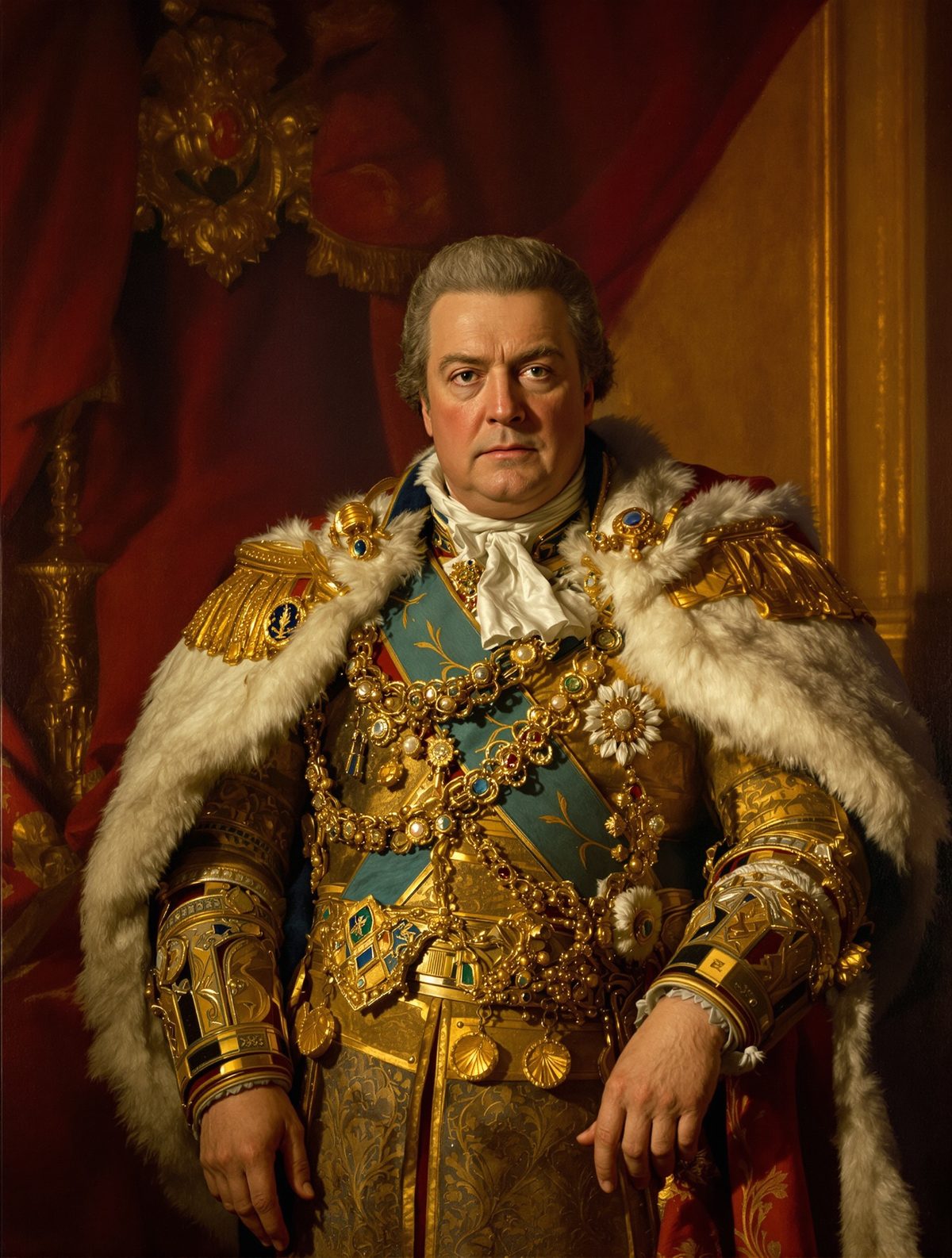
Picture this: thousands of nobles, dignitaries, and commoners have gathered at Westminster Abbey on a crisp September morning in 1831. The Archbishop of Canterbury stands ready in his ceremonial robes, the Crown Jewels gleam under flickering candlelight, and the ancient ritual of coronation awaits. But there's one rather significant problem — the king is nowhere to be found. In fact, King William IV has barricaded himself inside his chambers at Windsor Castle, declaring he simply cannot go through with becoming monarch of the British Empire.
What followed was perhaps the most extraordinary case of royal stage fright in British history, a three-hour standoff that nearly derailed a coronation and revealed the deeply human anxieties lurking beneath the crown's golden exterior.
The Reluctant King's Morning of Reckoning
William IV had never expected to be king. Born the third son of King George III, he had spent most of his life as a naval officer, earning the nickname "the Sailor King" through decades of service on the high seas. When his older brother George IV died childless in 1830, the crown passed to William at the age of 64 — making him one of the oldest people ever to assume the British throne for the first time.
The morning of September 8, 1831, should have marked his triumphant transformation from reluctant heir to anointed sovereign. Instead, it became a day that courtiers would whisper about for decades to come. According to palace records and contemporary accounts, William awoke in a state of overwhelming panic. The reality of what lay ahead — the solemn ceremony, the sacred oaths, the weight of an empire's expectations — crashed down upon him like a North Sea storm.
Servants reported hearing the king pacing frantically in his private apartments, muttering about his unworthiness and the impossibility of filling his late brother's shoes. When his valet knocked to begin the elaborate morning ritual of dressing the sovereign for his coronation, William reportedly shouted through the door that he would not be requiring any assistance that day — or any day, for that matter.
A Castle Under Siege
What happened next reads like something from a theatrical farce, yet it was all too real for the dozens of officials, clergy, and courtiers who found themselves in an impossible situation. The king had effectively locked himself away, pushing furniture against his chamber doors and refusing all entreaties to emerge.
At Westminster Abbey, the Archbishop of Canterbury, William Howley, found himself in the unprecedented position of conducting a coronation without a king. The great and good of British society had assembled — peers in their ceremonial robes, foreign ambassadors, members of Parliament, and curious members of the public who had secured coveted seats. Yet the central figure of the entire ceremony remained stubbornly absent.
Palace officials frantically dispatched messengers between Windsor Castle and Westminster, trying to coordinate what was rapidly becoming a constitutional crisis. How long could they delay? What excuse could possibly be given to the assembled throngs? The situation grew more desperate by the hour, with some courtiers reportedly suggesting they might need to consider whether William had effectively abdicated before even being crowned.
The Archbishop, displaying remarkable patience and perhaps understanding the magnitude of the moment, agreed to wait. And wait he did — for three long hours while the greatest ceremony of state ground to a halt because of one man's very human moment of terror.
Queen Adelaide's Cup of Courage
If there was a hero in this royal drama, it was undoubtedly Queen Adelaide, William's devoted wife. Born Princess Adelaide of Saxe-Meiningen, she had married William in 1818 when he was still merely the Duke of Clarence, never imagining she would one day need to coax a king out of his bedroom to attend his own coronation.
Contemporary accounts suggest that Adelaide approached her husband's locked door not with the pomp and ceremony that usually surrounded royal interactions, but with the gentle practicality of a devoted spouse. She is said to have prepared his favorite tea — a simple domestic gesture that spoke volumes about their relationship — and settled in for what she clearly understood would require patience rather than proclamations.
Through the heavy oak doors, Adelaide spoke to William not as subjects speak to kings, but as partners speak to each other in moments of crisis. While the exact nature of her "promise" remains unclear in historical records, court observers noted that she spent considerable time reassuring the king about his capabilities and the support he would receive.
Whatever combination of gentle persuasion, practical comfort, and marital wisdom she employed, it worked. After three hours of negotiations conducted through locked doors, William finally emerged — disheveled, nervous, but ready to face his destiny.
From Panic to Pageantry
The transformation that followed was remarkable. Once William had been convinced to leave his chambers, the full machinery of royal ceremony swung into action with impressive efficiency. The king was quickly dressed in his coronation robes, the royal procession was hastily reorganized, and word was sent to Westminster Abbey that the ceremony could finally proceed.
Remarkably, most of the assembled crowd never learned the true reason for the delay. Official explanations spoke vaguely of "final preparations" and "matters of state" that had required the king's urgent attention. The British talent for maintaining dignified appearances in the face of chaos served the monarchy well that day.
When William IV finally arrived at Westminster Abbey, observers noted that while he appeared nervous, he conducted himself with appropriate gravity throughout the ancient ceremony. The man who had cowered behind locked doors that morning stood tall as the crown was placed upon his head and the assembled peers cried "God Save the King!"
The Human Crown
William IV's coronation day panic offers us a fascinating glimpse behind the carefully constructed facade of royal infallibility. Here was a king who understood, perhaps too acutely, the enormous responsibilities that came with the crown. His terror was not that of a coward, but of a man who grasped the magnitude of what he was undertaking.
The incident also reveals the crucial role that royal spouses have always played — not just as ceremonial consorts, but as the human anchors who keep their partners grounded when the weight of monarchy threatens to overwhelm. Queen Adelaide's patient intervention saved not just a coronation, but quite possibly the monarchy's reputation during a delicate period of British history.
Today, as we witness modern royals navigating the pressures of public life and constitutional duty, William IV's moment of panic feels remarkably contemporary. The anxiety, the self-doubt, the need for reassurance from loved ones — these are thoroughly human experiences that transcend centuries and crowns. Perhaps the most remarkable thing about the monarchy's endurance is not its grandeur, but its ability to accommodate such beautifully human moments of vulnerability, even on the most important days in its history.