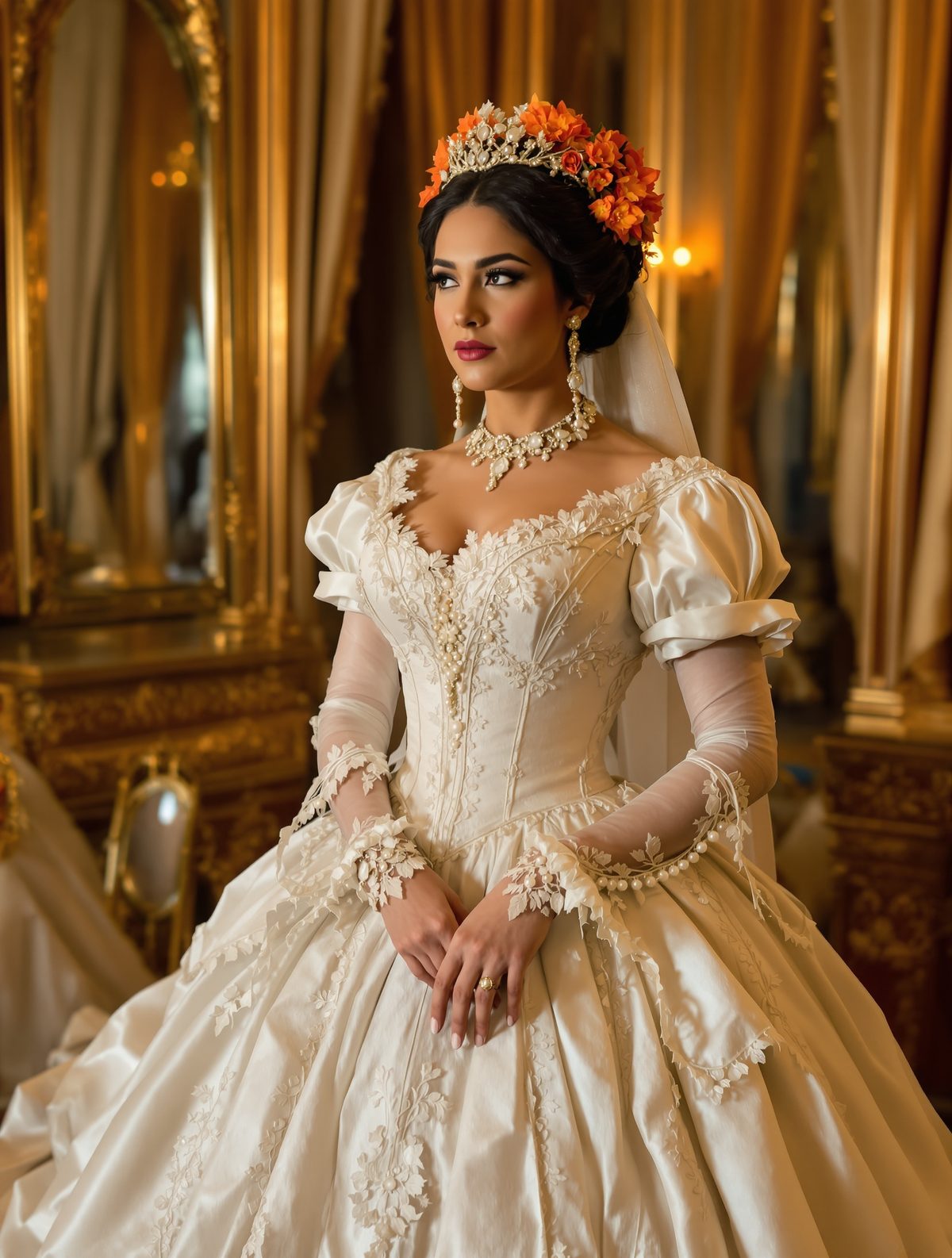
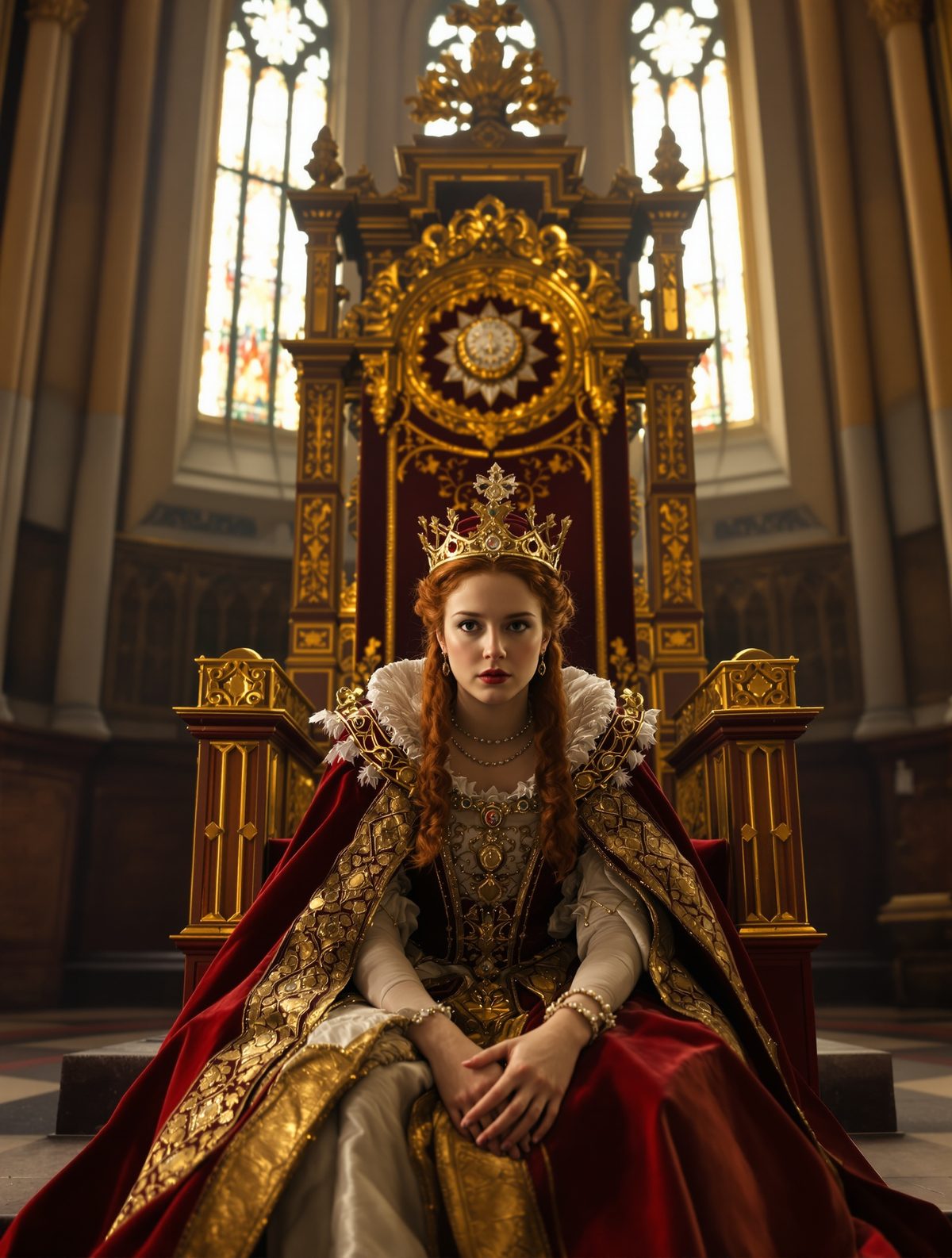
The golden throne stood majestically in Westminster Abbey on that bitter January morning in 1559, adorned with centuries of royal symbolism and waiting to witness another historic coronation. But beneath its ornate carved legs, hidden from the assembled bishops and courtiers preparing for the grand ceremony, crouched the trembling figure of England's 25-year-old queen-to-be. Elizabeth Tudor, who would become one of history's most formidable monarchs, was at that moment simply a terrified young woman, clutching her late father's ring and wrestling with the crushing weight of destiny.
A Crown Born from Chaos
To understand Elizabeth's terror that coronation morning, one must first grasp the extraordinary circumstances that brought her to the throne. The England she inherited was a nation torn apart by religious upheaval, economic uncertainty, and political instability. Her half-sister Mary's five-year reign had earned her the moniker "Bloody Mary" for her brutal persecution of Protestants, burning nearly 300 heretics at the stake in her desperate attempt to return England to Catholicism.
Elizabeth herself had lived under the constant shadow of suspicion and death. Declared illegitimate at age two when her father Henry VIII executed her mother, Anne Boleyn, she had spent her childhood navigating the treacherous waters of Tudor court politics. During Mary's reign, she had been imprisoned in the Tower of London on suspicion of plotting against the Crown—the same fortress where her mother had met her fate.
Now, suddenly thrust into queenship at 25, Elizabeth faced a kingdom where Catholics viewed her as a bastard usurper, Protestants expected her to undo Mary's Catholic restoration, and European powers circled like vultures, ready to exploit any sign of weakness. The young woman hiding beneath that throne carried not just the weight of a crown, but the fate of a nation hanging in the balance.
The Morning That Nearly Changed History
According to accounts from her ladies-in-waiting, Elizabeth had appeared composed during the weeks leading up to her coronation. She had processed through London's streets the day before to thunderous cheers, had received the homage of her nobles with apparent confidence, and had seemed every inch the regal sovereign her subjects desperately needed. But the morning of January 15, 1559, revealed the frightened young woman beneath the carefully constructed royal facade.
When her attendants arrived to help her dress in the elaborate coronation robes—layers of crimson velvet, ermine, and cloth of gold that would have been almost unbearably heavy—they found the queen's chambers empty. Panic spread through the royal apartments as servants searched frantically for their missing sovereign. Time was of critical importance; Westminster Abbey was filled with peers of the realm, foreign ambassadors, and church dignitaries, all waiting for a ceremony that had been planned down to the smallest detail.
It was one of her most trusted ladies-in-waiting who finally discovered Elizabeth's hiding place. There, beneath the very throne where she would soon swear the most solemn oaths of kingship, the future Gloriana was curled in terror, her father's ring—a tangible link to the last monarch she had truly trusted—pressed against her lips. The whispered words "I cannot do this alone" revealed the profound isolation and fear that gripped her in that moment.
The Power Behind the Throne
What followed was a masterclass in the often-overlooked influence of the women who surrounded England's queens. Elizabeth's ladies-in-waiting were not merely ornamental courtiers; they were her confidantes, advisors, and emotional anchors in a world where showing weakness could prove fatal. These women—many of whom had served through the dangerous transitions between Henry VIII's children—understood both the necessity of Elizabeth's courage and the very human nature of her fear.
Rather than simply coaxing their mistress out with platitudes about duty and destiny, they employed a more sophisticated strategy. They reminded Elizabeth of her extraordinary education—she was fluent in French, Italian, Latin, and Greek, more learned than most of the bishops who awaited her. They spoke of her father's own moments of doubt and how he had overcome them. Most crucially, they helped her understand that admitting fear was not weakness but wisdom; even the greatest monarchs had felt the terrible burden of absolute responsibility.
The practical challenge of extracting a queen in full coronation regalia from beneath a throne while maintaining both her dignity and the secrecy of the moment speaks to the remarkable competence of these women. They managed to repair any damage to her elaborate dress, restore her composure, and ensure she arrived at Westminster Abbey with no one the wiser about the morning's drama.
From Terror to Triumph
The transformation that occurred between Elizabeth's moment of panic and her appearance in Westminster Abbey remains one of the most remarkable examples of royal self-mastery in British history. Contemporary accounts describe her entry into the abbey as nothing short of magnificent. She walked with measured steps, her bearing regal and confident, giving no hint of the terror that had gripped her mere hours before.
The coronation ceremony itself was a delicate political balancing act. Elizabeth had chosen to be crowned by Owen Oglethorpe, the Bishop of Carlisle, after the Archbishop of Canterbury and other senior prelates refused to participate in what they saw as a Protestant usurpation. Even the religious service was carefully crafted to avoid alienating either Catholic or Protestant subjects—a diplomatic finesse that would characterize her entire reign.
When the moment came for Elizabeth to take her coronation oath, her voice rang clear and strong throughout the ancient abbey. The woman who had whispered of her inability to rule alone just hours before now proclaimed her dedication to her people with unwavering conviction. It was, perhaps, the first great performance of what would become a 45-year reign built on the careful management of her public image.
The Making of the Virgin Queen
That moment of vulnerability beneath the coronation throne may have been pivotal in shaping the monarch Elizabeth would become. The terror she experienced—and conquered—that morning taught her invaluable lessons about the difference between private fear and public strength, between human weakness and royal necessity. Throughout her reign, she would repeatedly demonstrate an almost supernatural ability to transform personal uncertainty into public confidence.
The ring she clutched that morning, inherited from Henry VIII, became one of her most treasured possessions. She would often turn it on her finger during difficult moments, a private ritual that connected her to the father whose approval she had spent her life seeking. That physical link to Tudor power served as both comfort and reminder—she was not, despite her fears, truly alone.
The ladies-in-waiting who discovered and rescued her that morning would remain among her closest confidantes throughout her reign. Their discretion about the incident—it was not widely known until long after Elizabeth's death—demonstrated the loyalty that would become one of her greatest political assets. She had learned that showing vulnerability to the right people at the right moment could strengthen rather than weaken her position.
The frightened young woman who hid beneath her throne on that January morning in 1559 would go on to defeat the Spanish Armada, establish England as a major European power, and preside over a golden age of culture that produced Shakespeare, Marlowe, and countless other luminaries. Yet perhaps her greatest achievement was learning to carry the burden of monarchy without losing her essential humanity—a lesson that began with cowering beneath a throne and admitting she could not face her destiny alone. Today's royals, facing the relentless scrutiny of modern media and the weight of ancient traditions, might well understand the terror that gripped their Tudor predecessor on her coronation morning.