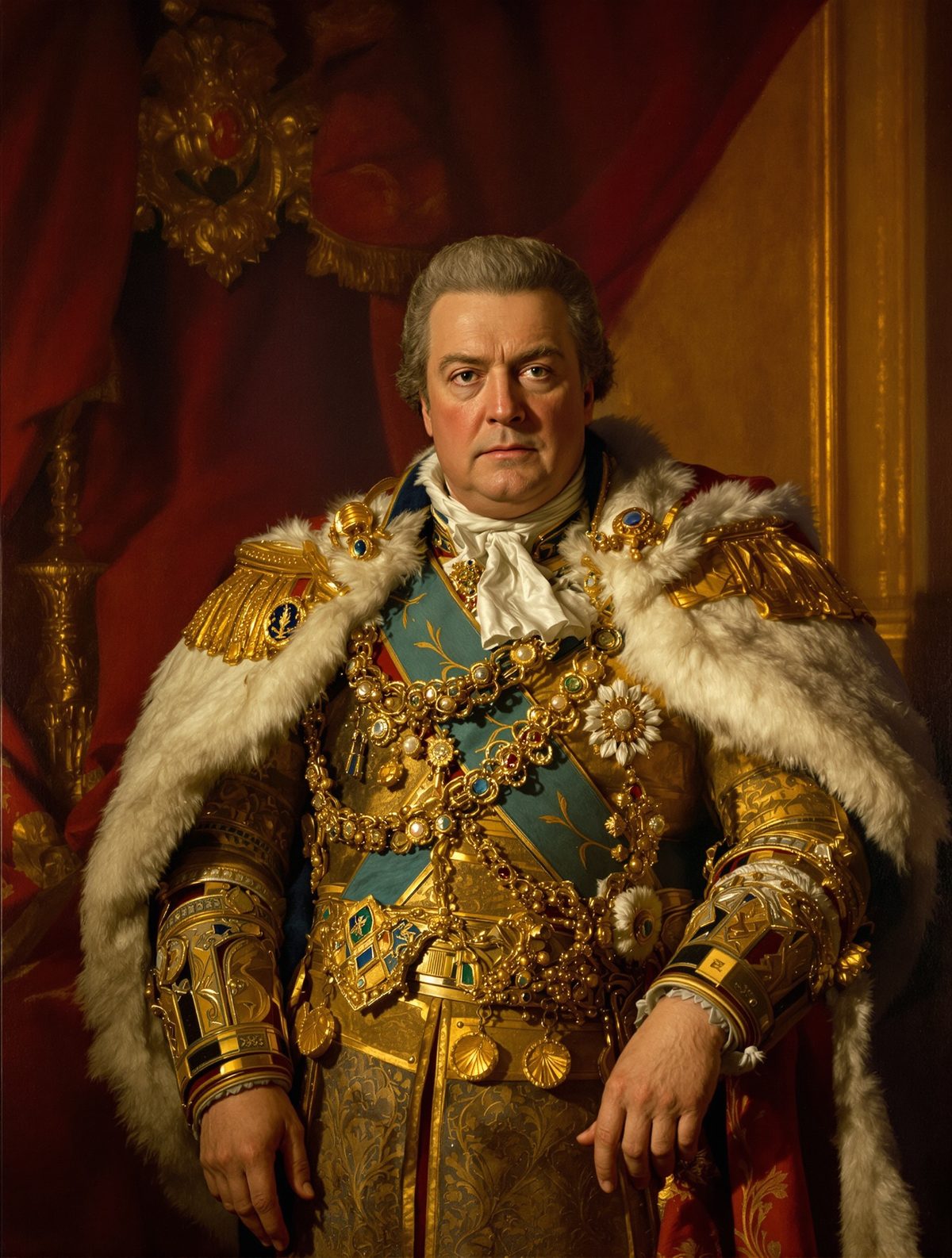
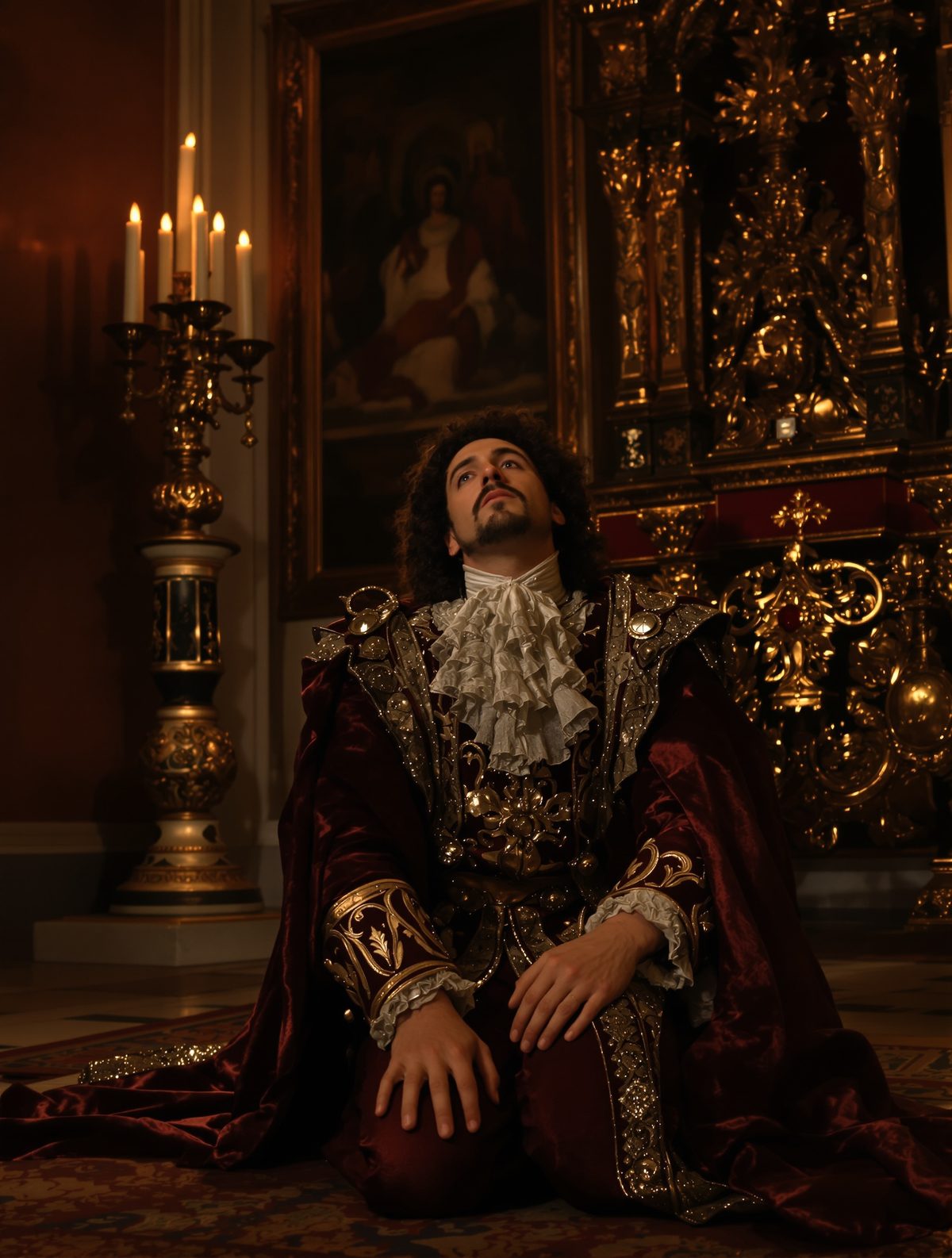
The heavy oak doors of Whitehall Palace's private chapel were firmly bolted shut on that fateful morning in 1686, but the whispered Latin prayers and the sweet scent of incense couldn't be contained. Behind those locked doors, King James II of England was doing something that would horrify his Protestant subjects and ultimately cost him his crown: celebrating Catholic Mass in the very heart of Protestant England. When curious—and increasingly suspicious—courtiers pressed their ears to keyholes and peered through cracks in the ancient wood, they witnessed a scene that would ignite the powder keg of religious tension that had been building for decades.
A King's Dangerous Secret
James II had always been a man of contradictions. The younger brother of the beloved Charles II, he had converted to Catholicism in the 1660s—a decision that should have barred him from ever wearing the English crown. Yet when Charles died without legitimate heir in 1685, James ascended to the throne of a fiercely Protestant nation that had spent over a century defining itself in opposition to Catholic Europe.
Initially, James had promised to respect the established Church of England and maintain the Protestant settlement that had governed the realm since his great-niece Elizabeth I. But promises made in public were one thing; the private convictions of a devout Catholic king were quite another. Within months of his coronation, James began holding secret Catholic services in his private apartments at Whitehall Palace, attended by a small circle of Catholic courtiers and visiting priests.
The king's private chapel became the epicenter of what many Protestant nobles viewed as a creeping Catholic conspiracy. These weren't merely private prayers—they were full Catholic Masses, complete with ornate vestments, sacred relics, and all the ceremonial trappings that had been banned from English worship for generations. The very walls of Whitehall, once home to Henry VIII who had broken with Rome, now echoed with Latin hymns and the tinkling of sanctus bells.
Spies at the Keyhole
Word of the king's secret Masses spread through the labyrinthine corridors of Whitehall like wildfire. Protestant courtiers, already nervous about their Catholic king's intentions, began conducting espionage operations within their own palace. The atmosphere grew thick with suspicion as nobles who had once focused their attention on court gossip and political maneuvering now found themselves playing the role of religious detectives.
Contemporary accounts, while often embellished by Protestant propagandists, suggest that several prominent courtiers took turns listening at doors and peering through keyholes during the king's private services. The Earl of Sunderland, despite being one of James's closest advisors, was reportedly among those who sought to gather intelligence about the extent of the king's Catholic practices. These covert observations revealed a monarch who was not merely tolerating Catholicism but actively embracing it with a fervor that terrified his Protestant subjects.
What the spying nobles witnessed went far beyond simple religious services. They saw the king receiving communion according to Catholic rites, kneeling before Catholic priests, and participating in ceremonies that English law technically classified as treasonous. The irony was inescapable: the defender of the Protestant faith was, in the privacy of his own chambers, practicing the very religion that Parliament had spent decades trying to suppress.
The Protestant Panic
The discovery of James's secret Masses triggered what can only be described as a Protestant panic that swept through both the royal court and the broader English population. The memories of Catholic persecution under Mary I, the trauma of the Gunpowder Plot, and the ongoing fears of French Catholic influence all coalesced into a perfect storm of religious anxiety.
The situation deteriorated rapidly when James began to openly challenge Protestant supremacy. He appointed Catholic officers to the army, placed Catholics in university positions, and issued the Declaration of Indulgence in 1687, which suspended penal laws against both Catholics and Protestant dissenters. To his Protestant subjects, these actions seemed to confirm their worst fears: the secret Masses had been merely the beginning of a Catholic restoration.
Parliament, the Anglican bishops, and the Protestant nobility watched with growing alarm as their king appeared to be systematically dismantling the religious settlement that had defined England since the Reformation. The kingdom that had once burned Catholic martyrs at the stake was now witnessing its own monarch celebrate their forbidden rites in the royal palace.
The Revolution Ignites
The final straw came in 1688 when James's second wife, the Catholic Mary of Modena, gave birth to a son. The prospect of a Catholic dynasty stretching indefinitely into the future proved too much for Protestant England to bear. The whispered Masses that had once seemed like a private eccentricity now appeared to be part of a calculated plan to return England to the Catholic fold.
Seven prominent Protestant nobles, including the Earl of Danby and the Bishop of London, sent a secret invitation to William of Orange—James's Protestant son-in-law—asking him to intervene. The invitation explicitly referenced James's Catholic practices and the fear that England was sliding back toward papal authority. The secret Masses that had begun behind locked doors at Whitehall had become the catalyst for what history would remember as the Glorious Revolution.
When William landed at Torbay in November 1688 with a Dutch army, James discovered that his years of secret Catholic worship had cost him the loyalty of his subjects, his military, and ultimately his throne. The king who had once celebrated Mass in secret found himself fleeing to France, never to return to English soil.
Legacy of the Locked Door
The story of James II's secret Catholic Masses reveals the profound power of religious identity in shaping political destiny. Those forbidden ceremonies, conducted behind locked doors and witnessed through keyholes, became the symbolic heart of a constitutional crisis that would fundamentally transform the British monarchy.
The Glorious Revolution that followed established parliamentary supremacy and religious tolerance as cornerstones of the British political system. Ironically, James's attempt to restore Catholicism through stealth and secrecy ultimately secured Protestant ascendancy for centuries to come. The Bill of Rights of 1689 explicitly barred Catholics from the throne, a prohibition that would remain in place until the Succession to the Crown Act of 2013.
Today, as we witness a British monarchy that celebrates religious diversity and where the heir to the throne can marry a Catholic, James II's secret Masses seem like relics from a distant and intolerant past. Yet they remind us that the religious freedoms we now take for granted were hard-won through centuries of conflict, suspicion, and sometimes revolution. The locked doors of Whitehall Palace may have hidden a king's private faith, but they couldn't contain the historical forces that his secret worship unleashed.