In the grand marble halls of a palace in Nazi-occupied Athens, a remarkable royal performance unfolded daily. Princess Alice of Battenberg, great-granddaughter of Queen Victoria and mother of the future Duke of Edinburgh, had discovered that her greatest weapon against the Third Reich wasn't jewels or diplomatic immunity—it was deliberately disheveled hair and the strategic appearance of madness.
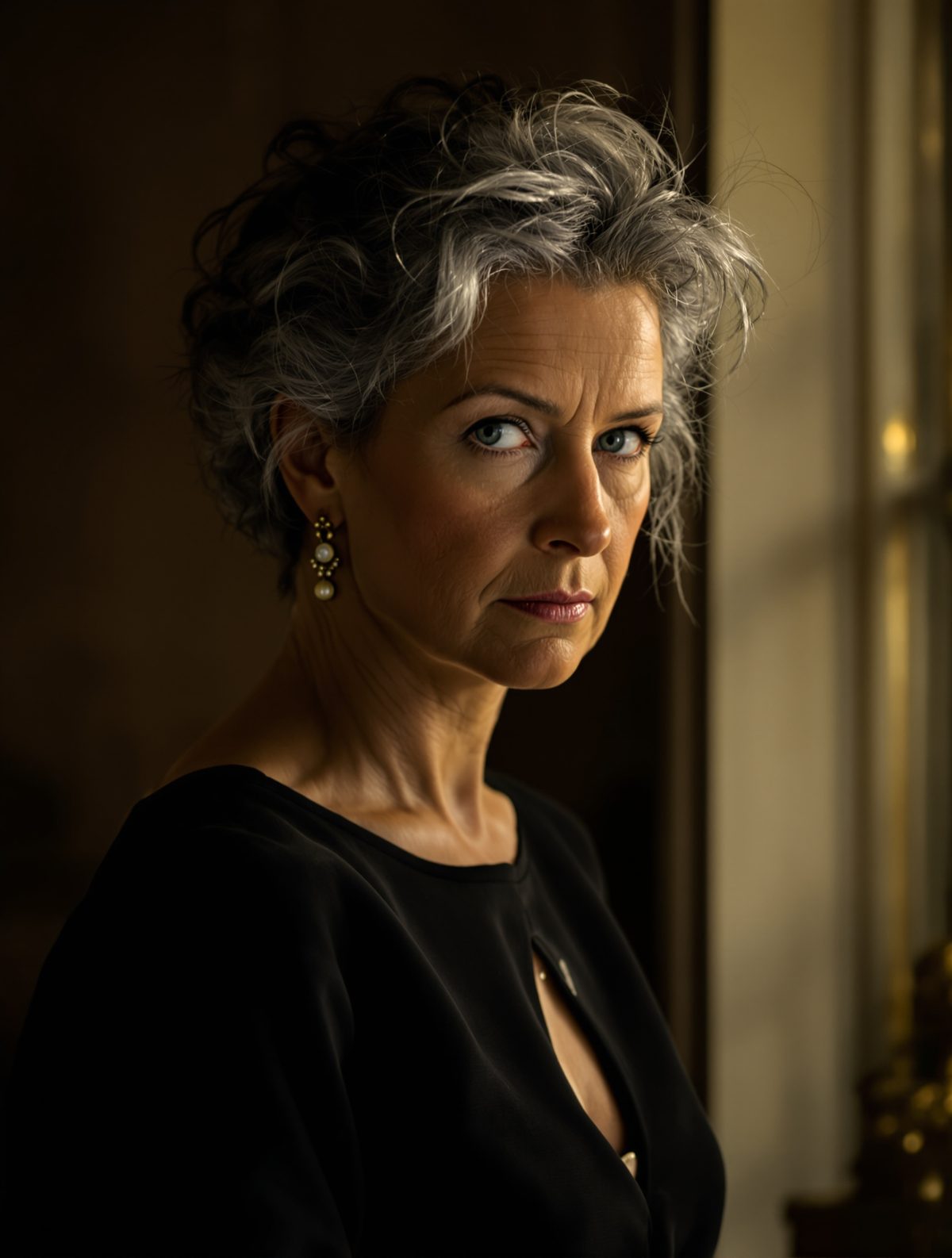
As German officers conducted their relentless searches through her home in 1943, Princess Alice would greet them with wild, unkempt grey locks and a vacant stare that convinced them she posed no threat whatsoever. What they didn't realize was that behind this carefully cultivated facade of mental instability, one of Europe's most courageous royals was orchestrating a daring rescue operation that would save countless Jewish lives.
A Princess in Occupied Territory
By 1943, Athens had fallen under brutal Nazi occupation, and life for its residents had become a daily struggle for survival. Princess Alice, who had chosen to remain in Greece despite the dangers, found herself in an impossible position. As a member of European royalty with German heritage through her Battenberg lineage, she could have easily secured safe passage out of the country. Instead, she made the extraordinary decision to stay and help those most in need.
The princess had already endured significant personal challenges before the war began. Having been diagnosed with paranoid schizophrenia in the 1930s and subjected to controversial treatments, she had emerged from her health struggles with a profound sense of spiritual purpose. Her previous experiences with being dismissed due to her mental state now became, ironically, her greatest strategic advantage.
Living in a modest flat in Athens rather than a grand palace, Princess Alice understood that survival in occupied territory required more than royal privilege—it demanded cunning, courage, and the ability to become invisible to those in power. Her solution was both brilliant and heartbreaking: she would weaponize the very prejudices that had once been used against her.
The Art of Strategic Dishevelment
Princess Alice's transformation into an apparently "harmless" figure was nothing short of masterful. Each morning, she would deliberately muss her grey hair until it stood at wild angles, creating an appearance of complete disarray. Her clothes, while clean, were worn carelessly, and she cultivated a distant, unfocused expression that suggested mental absence.
When German officers arrived for their routine searches—which happened with alarming frequency—they encountered what they believed to be a confused, possibly deranged elderly woman who posed no threat to the Reich. The Nazi ideology's cruel dismissal of those with mental health conditions worked entirely in Alice's favor. The same officers who were ruthlessly efficient in their persecution of others would barely glance at her, assuming she was incapable of any meaningful resistance.
This calculated performance required extraordinary self-control. Princess Alice had to maintain her act even when officers were ransacking her home, looking through her possessions, or making threats. One can only imagine the steel nerves required to appear vacant and harmless while knowing that discovery of her true activities would mean certain death—not just for herself, but for all those she was protecting.
The princess's appearance became her shield, allowing her to move through Athens with relative freedom. German soldiers, conditioned to see disheveled, seemingly unstable individuals as beneath notice, never suspected that this "mad" royal was operating one of the most effective resistance networks in occupied Greece.
Hidden in Plain Sight
Behind the facade of mental instability, Princess Alice was coordinating a sophisticated rescue operation. Her modest Athens home became a sanctuary for Jewish families fleeing Nazi persecution, particularly the Cohen family, whose patriarch had served as a trusted aide to her late husband, Prince Andrew of Greece.
The logistics of hiding entire families in occupied territory were staggering. Food was scarce, movement was restricted, and neighbors could become informants. Princess Alice had to manage not only the physical challenges of providing shelter and sustenance but also the constant psychological pressure of maintaining her deceptive appearance while ensuring the safety of her charges.
Her deliberately unkempt hair became a daily reminder of the role she was playing. Each morning's transformation from royal to "madwoman" was an act of both courage and sacrifice. She was voluntarily abandoning the dignity and bearing that had defined her royal upbringing, understanding that vanity was a luxury she couldn't afford when lives hung in the balance.
The princess also used her apparent mental state to deflect questions about unusual activities in her building. If neighbors noticed extra footsteps or whispered conversations, Alice's reputation as an unstable recluse provided the perfect cover. Who would suspect that a woman who couldn't properly manage her own appearance was orchestrating complex rescue operations?
The Human Cost of Heroism
While Princess Alice's strategic appearance saved lives, it came at a significant personal cost. She was forced to live in isolation, cutting herself off from most social contact to maintain her cover. The very traits that made her an effective protector—the ability to appear confused and disconnected—meant that she couldn't seek support or companionship during one of the most terrifying periods in modern history.
The princess's sacrifice extended beyond personal comfort. By choosing to stay in Athens and adopt this dangerous masquerade, she was also separated from her son Philip, who was serving in the British Royal Navy. The war years meant that she had no way of knowing his fate, just as he couldn't know whether his mother was safe in occupied Greece. This separation must have been agonizing for a mother who had already endured so much upheaval in her family life.
Her wild hair and disheveled appearance weren't just a disguise—they were symbols of everything she was willing to sacrifice for others. Each deliberately tangled strand represented her choice to prioritize human dignity over royal protocol, compassion over comfort, and moral courage over personal safety.
The families she protected understood the magnitude of her sacrifice. Years later, survivors would describe not just their gratitude for her shelter, but their admiration for her willingness to transform herself so completely in service of their survival. They witnessed firsthand how this remarkable royal abandoned every pretense of grandeur to become their guardian angel.
A Legacy Beyond Fashion
Princess Alice's wartime transformation reveals something profound about the nature of true nobility. While her wild, unkempt hair might have violated every convention of royal grooming, it represented something far more important: the willingness to sacrifice appearance for principle, comfort for conscience.
Her story offers a powerful counternarrative to our modern obsession with royal fashion and appearance. Today, every royal hairstyle is photographed, analyzed, and copied. Princess Alice reminds us that sometimes the most important fashion statement is the deliberate rejection of fashion itself—that true elegance can lie in the courage to look disheveled when looking perfect would mean abandoning your moral duty.
The princess's example continues to resonate within the royal family today. Her son Prince Philip carried forward her sense of duty and service, while her great-grandchildren represent a generation of royals who understand that their platform brings responsibility to speak for those who cannot speak for themselves. In every charitable endeavor undertaken by the modern royals, we can see echoes of Alice's wartime courage—the understanding that privilege must be paired with purpose.
Princess Alice's deliberately wild hair remains one of history's most extraordinary fashion statements—not because it was beautiful, but because it was brave. In choosing to look mad, she revealed the deepest sanity of all: the knowledge that our humanity is measured not by our appearance, but by our willingness to risk everything for others.