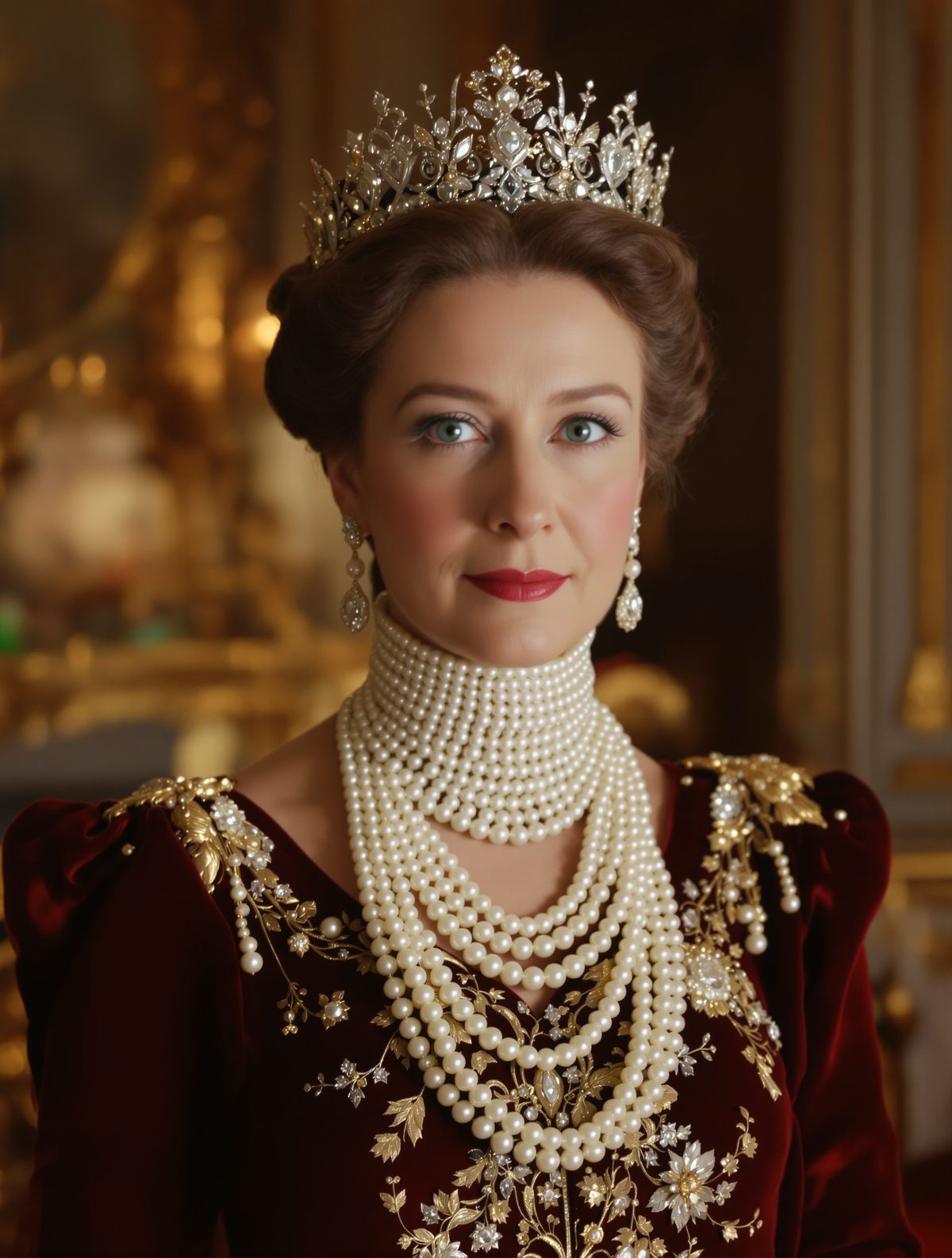
She glided through the gilded halls of Buckingham Palace, her neck adorned with towering strands of lustrous pearls that caught the light of a thousand chandeliers. Queen Alexandra, consort to King Edward VII, had turned the pearl choker into the defining accessory of Edwardian elegance. Ladies across Europe scrambled to copy her distinctive style, wrapping their own throats in cascading layers of pearls. But what the fashionable world didn't know was that behind Alexandra's glamorous signature look lay a deeply personal secret—one that transformed what appeared to be royal vanity into something far more poignant.
The Making of a Style Icon
When Princess Alexandra of Denmark married the Prince of Wales in 1863, she brought more than just her radiant beauty to the British royal family. The young Danish princess possessed an innate sense of style that would revolutionize royal fashion for generations. Her wedding dress, a vision in Honiton lace and orange blossoms, set the tone for what was to become one of history's most influential royal wardrobes.
Alexandra's approach to fashion was refreshingly modern for its time. While Queen Victoria had retreated into perpetual mourning dress following Prince Albert's death, the new Princess of Wales embraced color, texture, and bold accessories with an enthusiasm that breathed fresh life into the stuffy corridors of royal protocol. Her choices weren't merely personal—they became statements that shaped the aspirations of an entire era.
Among all her fashion innovations, none became more iconic than her pearl chokers. These weren't delicate single strands worn close to the throat, but dramatic architectural marvels—multiple rows of perfectly matched pearls that rose high on her elegant neck like ivory towers. The effect was both regal and romantic, lending her an almost swan-like grace that photographers and portrait artists captured time and again.
Behind the Palace Walls
Within the royal household, Alexandra's devotion to her pearl chokers became the stuff of legend—and sometimes gentle mockery. Palace staff whispered about the Queen's apparent vanity, noting how she never appeared in public without her towering necklaces. Even in the most casual settings, when receiving visitors for afternoon tea or strolling through the palace gardens, Alexandra's neck remained adorned with those distinctive pearls.
Lady-in-waiting accounts from the period describe how Alexandra would spend considerable time each morning selecting which pearls to wear, often layering multiple chokers to achieve her desired height and volume. Her collection was vast—gifts from her mother-in-law Queen Victoria, presents from foreign dignitaries, and pieces commissioned specifically to match her evolving style preferences.
What struck observers most was Alexandra's apparent discomfort when not wearing her chokers. On the rare occasions when she appeared without them—perhaps briefly after rising or before retiring—she would instinctively raise her hand to her throat, as if checking that something essential was in place. This gesture, witnessed by her closest attendants, hinted at something deeper than mere fashion preference.
A Childhood Secret
The truth behind Queen Alexandra's obsession with pearl chokers lay not in vanity, but in vulnerability. As a young child in Denmark, Alexandra had undergone a surgical procedure that left her with a prominent scar across her throat. Medical practices of the 1840s were primitive by today's standards, and surgical scars from childhood operations often remained visible throughout a person's life.
While the exact nature of her childhood surgery remains unclear—medical records from the Danish royal household of that era are incomplete—what is documented is Alexandra's lifelong sensitivity about her neck. The scar, described by those who glimpsed it as a thin but noticeable line across her throat, became a source of deep self-consciousness for the future queen.
In an era when physical perfection was demanded of royal women, Alexandra's scar represented a perceived flaw that could undermine her confidence and, by extension, her effectiveness as a royal representative. The pearl chokers, then, weren't accessories—they were armor, carefully crafted shields that allowed her to present herself to the world without fear of judgment or whispered comments about her appearance.
This revelation transforms our understanding of Alexandra's fashion choices from superficial decoration to something far more human and relatable. Every morning, as she selected her pearls, she was making a conscious choice to face the world on her own terms, turning what she saw as a flaw into the foundation of an iconic style.
The Pearl Phenomenon
Unaware of the personal motivation behind Alexandra's choices, fashionable society embraced her pearl chokers with unprecedented enthusiasm. Jewelry houses across Europe began creating their own versions of the "Alexandra style," crafting elaborate multi-strand chokers that promised to bestow royal elegance upon their wearers.
The influence extended far beyond the aristocracy. Department stores in London, Paris, and New York began stocking affordable versions made from cultured pearls, allowing middle-class women to participate in the trend. Fashion magazines of the period featured detailed illustrations showing how to achieve "the Alexandra look," complete with instructions on proper choker height and pearl spacing.
The Lady magazine noted in 1902 that "no well-dressed woman considers her toilette complete without a proper choker in the style favored by our gracious Queen Alexandra." The trend was so pervasive that it lasted well beyond the Edwardian era, influencing jewelry design through the 1920s and beyond.
What makes this fashion phenomenon particularly poignant is how Alexandra's personal solution to a private insecurity became a symbol of confidence and elegance for countless women. In transforming her own perceived flaw into a signature style, she inadvertently created a template for how fashion can serve as both protection and self-expression.
A Legacy of Grace
Queen Alexandra's story resonates powerfully in our contemporary understanding of beauty, confidence, and authenticity. In an age of social media scrutiny and relentless image pressure, her example offers a masterclass in turning personal challenges into sources of strength and style.
Her approach anticipated modern conversations about inclusive beauty and the power of personal style to transcend conventional standards. Rather than hiding from public life because of her scar, Alexandra chose to engage fully with her royal duties while finding creative ways to feel confident in her own skin.
The pearl chokers that once concealed a childhood scar became instruments of empowerment, allowing Alexandra to command rooms, charm foreign dignitaries, and support countless charitable causes with the confidence befitting a queen. Her legacy reminds us that true style isn't about following trends—it's about understanding ourselves deeply enough to make choices that serve both our practical needs and our highest aspirations.
Today, when we see contemporary royals like the Princess of Wales choosing meaningful jewelry that tells their personal stories, we can trace a direct line back to Queen Alexandra's pioneering approach. She understood that royal fashion is never just about appearance—it's about finding ways to present one's authentic self while fulfilling the extraordinary demands of public service. In transforming her vulnerability into her signature style, Alexandra didn't just hide a scar—she revealed the true heart of royal grace.