While the bombs fell on London and the Royal Family projected an image of stoic duty from the safety of Buckingham Palace, one princess was living an extraordinary double life. By day, she attended formal functions and maintained the rigid protocols expected of royalty. But in the dead of night, Princess Alice of Battenberg would slip away from her gilded cage, don surgical scrubs, and save lives in ways that would have sent shockwaves through the establishment had anyone discovered her secret.
The woman who would become mother-in-law to the future Queen Elizabeth II was no ordinary royal. Born into the complicated web of European nobility, Alice had already survived exile, personal tragedy, and a mental health crisis that saw her confined to a sanatorium. But nothing had prepared the palace—or history—for what she would do during Britain's darkest hour.
A Princess Forged by Adversity
Princess Alice's path to that fateful midnight surgery began long before the Blitz. Born Princess Alice of Battenberg in 1885, she was Queen Victoria's great-granddaughter and a woman shaped by extraordinary circumstances from birth. Profoundly deaf from childhood, Alice learned to lip-read in multiple languages and developed an fierce independence that would serve her well in the trials to come.
Her early life read like a catalogue of European upheaval. She married Prince Andrew of Greece and Denmark, bore five children (including the future Duke of Edinburgh), and watched her world crumble during the Greek military coup of 1922. The family fled into exile, with Alice's husband and baby son Philip rescued by a British cruiser—Philip famously sleeping in a makeshift cot constructed from an orange box.
But it was Alice's personal crisis in the late 1920s that truly set her apart from conventional royalty. Following a nervous breakdown, she was diagnosed with paranoid schizophrenia and committed to a Swiss sanatorium for two years. During this dark period, she developed an intense religious devotion that would later drive her to extraordinary acts of service. When she emerged, she was a changed woman—one who had stared into the abyss and emerged with an unshakeable commitment to helping others.
The Making of a Secret Surgeon
By the 1930s, Alice had quietly begun training as a nurse, a pursuit that raised eyebrows among the royal circles of Europe. Princesses, after all, were supposed to graciously patron hospitals, not work in them. But Alice had never been conventional, and her medical training proved remarkably thorough. She studied anatomy, learned surgical techniques, and developed skills that would soon be put to the ultimate test.
When war broke out in 1939, Alice found herself in London, staying at Buckingham Palace as bombs began falling on the capital. The official royal response was carefully calibrated—public appearances to boost morale, visits to bomb sites to show solidarity, and the famous decision by King George VI and Queen Elizabeth to remain in London throughout the Blitz. But for Alice, this wasn't enough.
The princess had heard about the desperate shortage of medical staff at London's overwhelmed hospitals. Doctors were being called to the front, nurses were working impossible hours, and casualties from the nightly bombing raids stretched resources to breaking point. While other royals confined their war efforts to ceremonial roles and fundraising galas, Alice saw an opportunity to use her hard-won medical skills where they were needed most.
The Night That Changed Everything
The details of that pivotal night in 1943 have been pieced together from hospital records, witness accounts, and Alice's own private papers, discovered decades after her death. What emerges is a story of extraordinary courage and jaw-dropping audacity that would have scandalized the palace establishment.
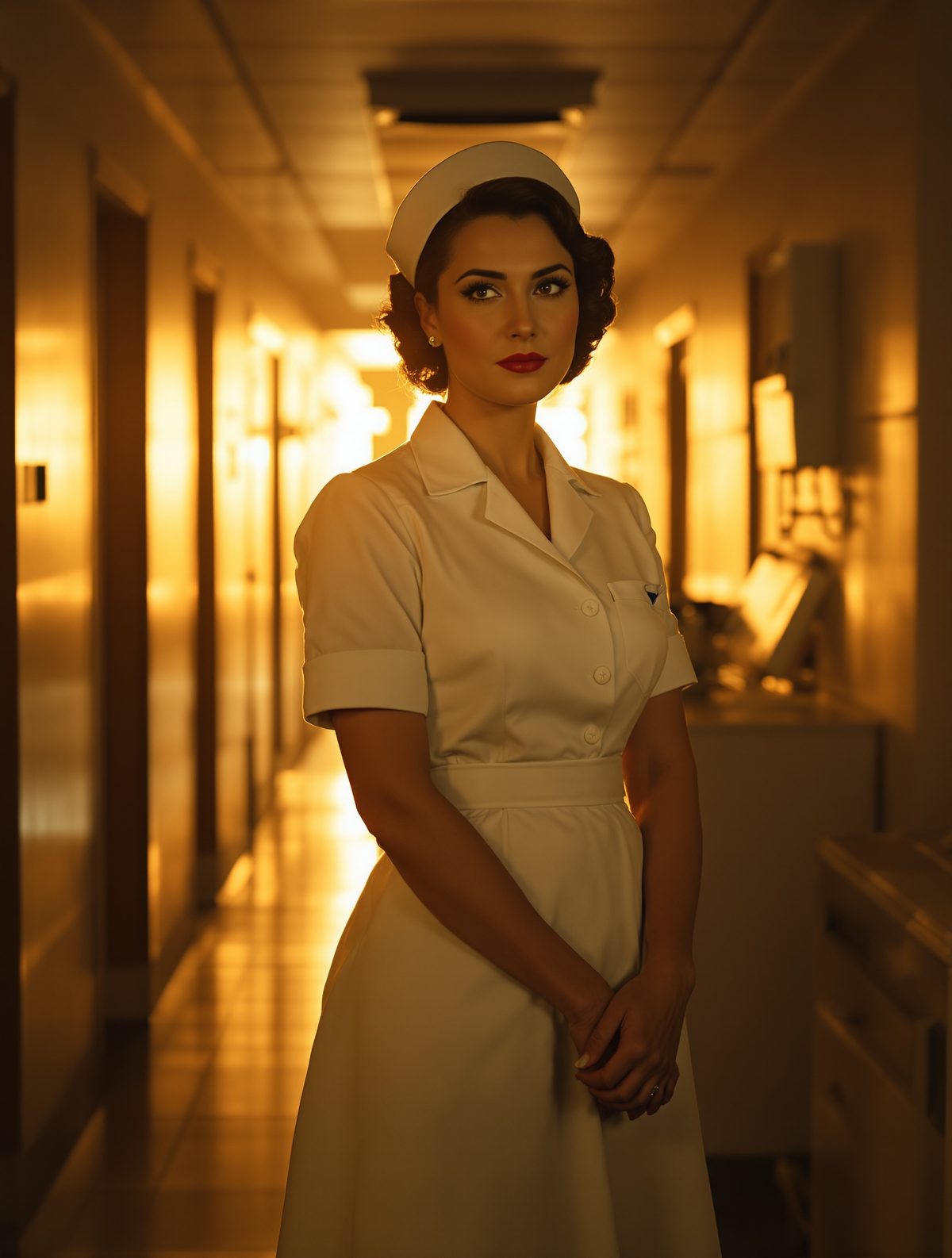
At approximately 2am on a Tuesday night in March, as German bombers droned overhead, a woman in a nurse's uniform slipped through the staff entrance of a Central London hospital. Her graying hair was pinned back, her face was partly obscured by surgical mask, and nothing about her suggested royal breeding. The night staff, exhausted from another evening of treating bombing casualties, barely glanced at what appeared to be just another volunteer arriving for the night shift.
The woman who called herself "Nurse Andrews"—a nod to her married name—had driven herself through the blacked-out streets of wartime London, navigating by memory and the occasional flash of exploding ordnance. In the back of her modest car were surgical instruments and medical supplies quietly "borrowed" from palace stores meant for the Royal Family's personal physicians.
What happened next would test every bit of Alice's medical training. A bombing victim had been brought in with massive internal injuries—the kind of complex trauma that required immediate surgery and considerable skill. With the hospital's senior surgeons either absent or treating other critical cases, "Nurse Andrews" stepped forward and quietly took charge.
For the next four hours, Princess Alice performed emergency surgery that saved a stranger's life. Her patient, a dock worker named Thomas Harrison, would never know that his life had been saved by one of Europe's most prominent princesses. To him, she was simply the skilled, soft-spoken woman who worked tirelessly through the night to repair his injuries and stayed by his bedside until dawn broke over bomb-scarred London.
A Secret That Lasted Decades
Alice's midnight medical missions continued for months, always conducted in absolute secrecy. She developed an elaborate system of alibis and excuses, telling palace staff she was attending prayer meetings or visiting friends. Her deafness, often seen as a disadvantage, became an asset—she claimed not to hear air raid sirens and used this as cover for her extended absences.
The princess operated in a shadow world between her royal duties and her calling as a healer. By day, she would attend formal functions, make polite conversation about the war effort, and maintain the careful facade expected of royalty. By night, she would shed her titles like unnecessary clothing and become simply another pair of skilled hands in London's overwhelmed medical system.
Hospital staff who worked alongside her remember "Nurse Andrews" as exceptionally competent but mysteriously private. She spoke with what some described as "a posh accent," but in war-torn London, nobody questioned volunteers too closely. The city was full of displaced aristocrats, foreign refugees, and people reinventing themselves in the chaos of war.
The secret might have died with Alice had it not been for the meticulous records kept by the hospital where she volunteered. Decades later, researchers examining wartime medical records noticed anomalies—surgical procedures performed by staff members with no official documentation, supplies that appeared and disappeared without explanation, and references to a "Nurse Andrews" who seemed to vanish from records as suddenly as she had appeared.
The Legacy of a Rebel Princess
When Princess Alice's wartime secret finally came to light in the 1990s, it reframed everything historians thought they knew about royal service during World War II. Here was a woman who had rejected the comfortable constraints of ceremonial duty and chosen genuine, hands-on service that put her own safety and reputation at risk.
The revelation also shed new light on the character of the woman who raised Prince Philip and became one of the most enigmatic figures in modern royal history. Alice's later life was marked by continued service—she founded a nursing order, worked with refugees, and eventually gave away her possessions to live in near-poverty while helping others. Her secret surgery was not an aberration but part of a lifelong pattern of putting service above status.
Today, as we watch younger royals struggle to balance duty with authenticity, Princess Alice's story offers a fascinating glimpse of what's possible when royal privilege is used not for comfort, but for genuine service. Her midnight missions remind us that the most meaningful royal contributions often happen away from cameras and ceremonies, in quiet moments when titles matter less than humanity.
The dock worker whose life she saved that night in 1943 lived for another thirty years, never knowing he owed his survival to a princess who chose healing over protocol, courage over comfort, and service over safety. In a world where royal relevance is constantly questioned, Alice's secret offers a timeless answer: sometimes the most powerful thing a person can do is simply help another human being, regardless of who might be watching—or not watching—from the palace windows.