The grandfather clock in Buckingham Palace's grand corridor had just struck two when the unmistakable sound of footsteps echoed through the marble halls. But these weren't the measured steps of a night watchman making his rounds—they were the hurried, almost furtive movements of someone trying very hard not to be discovered. What the palace staff didn't know was that their newly crowned monarch, King Edward VII, was embarking on a nightly adventure that would become one of the most endearing and closely guarded secrets of his reign.
The Discovery That Shocked the Royal Household
Mrs. Agnes Whitfield had served as head baker at Buckingham Palace for nearly fifteen years when she made a discovery that would both horrify and amuse her in equal measure. For weeks, she had arrived at her kitchen each morning to find inexplicable evidence of nocturnal visitors: cake crumbs scattered across marble countertops, ornate silver serving spoons abandoned in empty dishes, and most mysteriously of all, entire sections of celebration cakes simply vanished.
Initially suspecting the junior kitchen staff of midnight pilfering, Mrs. Whitfield began leaving subtle traps—flour dusted on doorknobs, chairs positioned just so. But when these revealed no culprits among her subordinates, she resolved to solve the mystery herself. Armed with nothing more than a flickering candle and considerable courage, she crept down to the kitchens one February night in 1902.
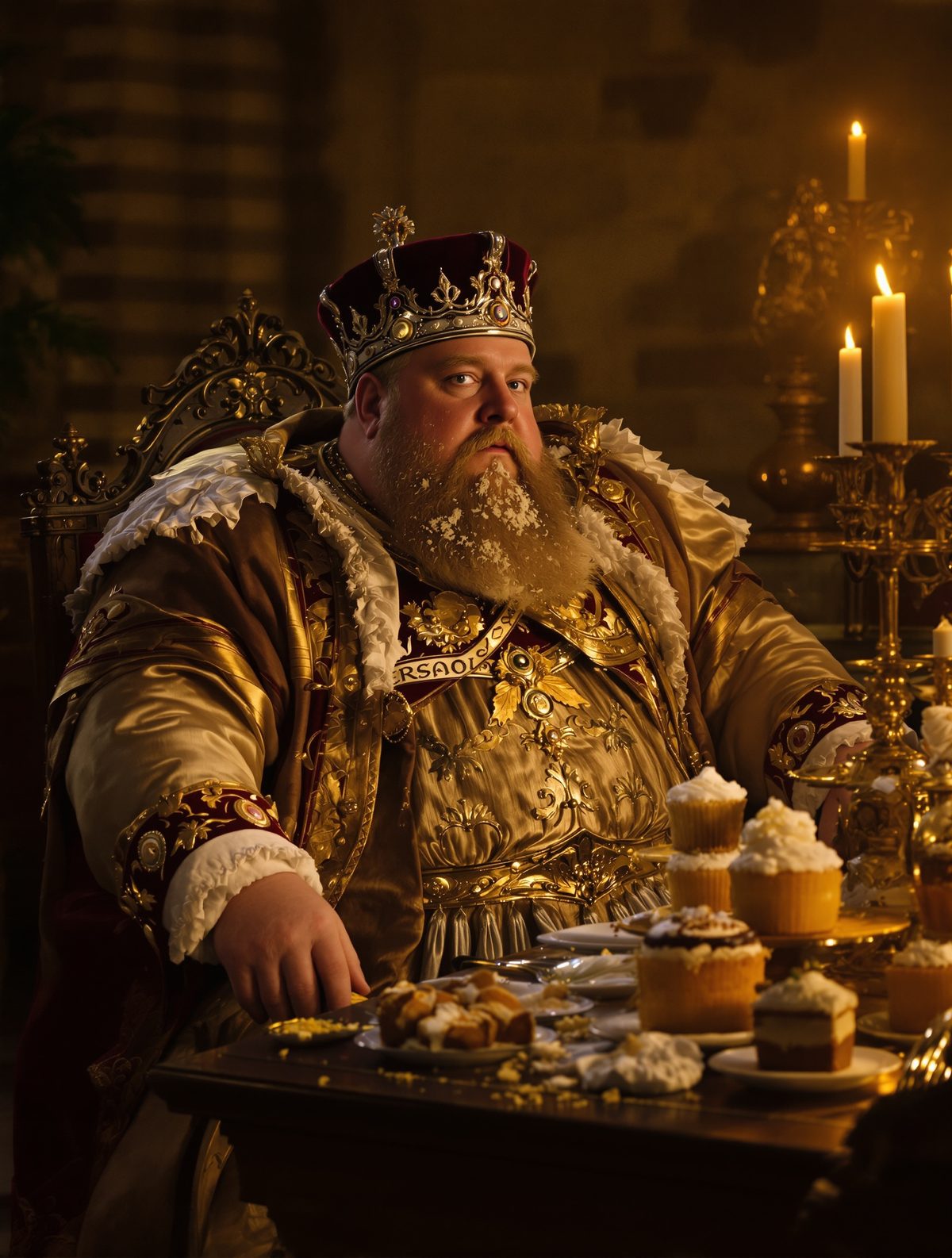
What she witnessed through the slightly ajar kitchen door was a scene that would have scandalized proper Victorian society: King Edward VII, dressed in his silk nightgown and Morocco leather slippers, was seated cross-legged on the kitchen floor, systematically working his way through the remnants of a wedding cake with his bare hands. Frosting adorned his beard, and he wore the expression of pure, childlike contentment that few had ever seen on the face of the British sovereign.
A King's Sweet Rebellion
To understand Edward's midnight cake raids, one must first appreciate the rigid constraints that governed royal dining during this period. The Edwardian court maintained elaborate protocols around every meal, with courses precisely timed and portions carefully controlled by palace physicians increasingly concerned about the King's expanding waistline. Edward, who had waited sixty years to assume the throne, found himself subject to dietary restrictions that his royal doctors insisted were necessary for his health and longevity.
But Edward VII was a man of enormous appetites—not merely for food, but for life itself. Having spent decades as the pleasure-seeking Prince of Wales, he was unaccustomed to denying himself earthly delights. His official meals, while lavish by ordinary standards, were increasingly monitored and measured. The midnight kitchen raids represented something far more significant than simple gluttony—they were acts of quiet rebellion against the suffocating protocols of kingship.
Palace records from the period reveal that Edward's nocturnal adventures coincided with particularly stressful periods of his reign. The cake raids intensified during the Boer War, reached their peak during tense negotiations with Germany, and mysteriously ceased entirely during his popular state visits to Paris and Berlin, when the King appeared genuinely happy with his public role.
The Conspiracy of Silence
Mrs. Whitfield's discovery created an extraordinary dilemma. Royal protocol demanded that she report any unusual activity to the Lord Chamberlain, yet she instinctively understood that exposing the King's vulnerable midnight moments would constitute a profound betrayal. Instead, she made a decision that demonstrated remarkable wisdom and compassion: she would become Edward's co-conspirator.
From that night forward, Mrs. Whitfield began leaving carefully selected treats in accessible locations. She discovered that the King had particular weaknesses for Victoria sponge cake, elaborate trifles, and especially any leftover confections from royal christenings and weddings. She theorized that these celebration cakes held emotional significance—they represented joy and festivity, emotions that Edward's increasingly burdensome royal duties rarely allowed him to experience spontaneously.
The conspiracy gradually expanded to include several trusted kitchen staff members, who took pride in facilitating their sovereign's happiness. They began preparing what they privately called "His Majesty's midnight selections"—portions of desserts set aside specifically for the King's nocturnal visits, always placed where they appeared to be natural leftovers rather than deliberate offerings.
The Psychology Behind the Palace Pantry
Modern psychologists might interpret Edward's cake raids as a form of emotional regulation—a way of managing the enormous stress of ruling a vast empire while maintaining a public persona of unwavering dignity. The King's choice to consume these treats with his hands, abandoning all pretense of royal etiquette, suggests a deep need to reconnect with simple, unguarded pleasure.
Royal biographers have noted that Edward's happiest childhood memories centered around informal family gatherings at Sandringham, where Queen Victoria occasionally relaxed her rigid protocols. His midnight kitchen adventures may have represented an attempt to recapture those rare moments of authentic joy from his youth. In the darkness of the palace kitchens, surrounded by the comforting aromas of vanilla and cinnamon, Edward VII could temporarily shed the weight of crown and empire.
The King's nocturnal habits also reveal his fundamentally lonely position. Unlike his subjects, he could never simply walk into a bakery or enjoy an impromptu treat without elaborate ceremony. The midnight raids provided precious moments of normalcy in a life defined by extraordinary privilege and equally extraordinary isolation.
Legacy of the Midnight Monarch
Edward VII's cake raids continued throughout his nine-year reign, ending only with his death in 1910. Mrs. Whitfield, who had guarded the King's secret faithfully, revealed the story only decades later in her private memoirs, published long after all the principal participants had passed away. Her account provides a remarkably intimate portrait of a monarch who, despite his elevated position, retained deeply human needs for comfort, rebellion, and simple pleasure.
The story of Edward's midnight adventures reminds us that even the most exalted individuals grapple with fundamentally human desires for authentic experience and emotional comfort. In an age when royal protocol demanded perfection in all things, Edward's cake raids represented small but significant victories of humanity over institution. Today, as we witness the current royal family's efforts to balance public duty with personal authenticity, Edward VII's nighttime rebellion feels remarkably contemporary—a reminder that the desire for genuine, unguarded moments transcends both time and circumstance.