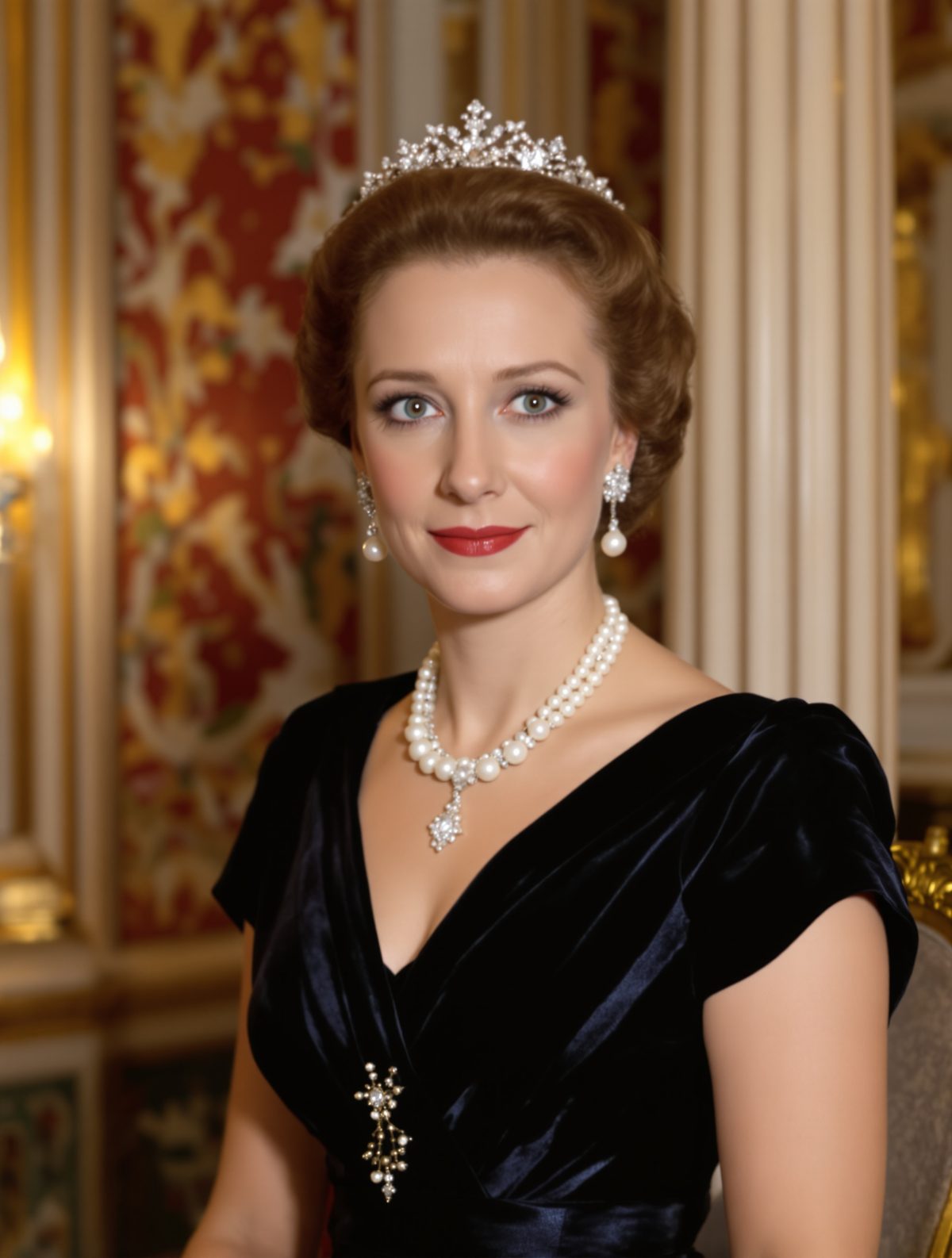
In the shadow of war-torn London, as sirens wailed and searchlights swept across the night sky, an extraordinary deception was unfolding within the very walls of Buckingham Palace. While Nazi bombers targeted Britain's heart, German intelligence operatives were frantically searching for a mysterious figure known only as the "Duchess of Nothing" – never suspecting that their quarry was hiding in plain sight, attending state dinners and royal receptions with a tiara upon her head and state secrets beneath it.
Princess Alexandra of Kent, the younger sister of the Duke of Kent and cousin to the future Queen Elizabeth II, had become one of Britain's most unlikely secret agents. Her code name was as clever as it was misleading, and for nearly two years, it would lead Hitler's spies on a wild goose chase that became one of the war's most ingenious cases of royal espionage.
A Princess Called to Serve
Born into the House of Windsor in 1936, Princess Alexandra seemed destined for a life of ceremonial duties and charitable patronages. However, the outbreak of World War II transformed the roles of many royals, and none more dramatically than this intelligent and determined young woman. By 1943, as the war raged across Europe and the Pacific, Britain's intelligence services were desperately seeking operatives who could move freely in high society circles without arousing suspicion.
Princess Alexandra's unique position made her invaluable to the war effort. Her royal status granted her access to diplomatic receptions, military briefings, and social gatherings where loose tongues might reveal crucial intelligence. More importantly, her presence at such events was so natural, so expected, that she became virtually invisible to those who might otherwise be watching for spies.
The decision to recruit a member of the royal family was not taken lightly. King George VI himself is believed to have given his personal approval for the operation, understanding that the risks to both his niece and the monarchy were substantial. Yet the potential intelligence value was deemed too important to ignore, particularly as Britain sought to gather information about German operations and identify potential collaborators within London's social elite.
The Birth of the "Duchess of Nothing"
The code name "Duchess of Nothing" was a masterpiece of misdirection, conceived by the brilliant minds at the Special Operations Executive (SOE). The beauty of the name lay in its deliberate contradiction – it suggested a titled aristocrat while simultaneously indicating emptiness or absence. German intelligence, intercepting coded communications that referenced this mysterious duchess, assumed they were dealing with a previously unknown member of the British aristocracy operating under deep cover.
What followed was a comedy of errors that would have been amusing if the stakes hadn't been so deadly serious. Nazi agents scoured Burke's Peerage, questioned contacts within European nobility, and even attempted to infiltrate London society events in search of this elusive duchess. They created elaborate theories about her identity, suggesting she might be a dispossessed European royal, a creation of British intelligence designed to confuse them, or even a highly placed German double agent whose identity was being protected.
Meanwhile, Princess Alexandra continued her regular royal duties while simultaneously passing intelligence to her handlers. She attended charity galas where foreign diplomats let slip military information after a few glasses of champagne, sat through tedious luncheons where the conversation turned to troop movements, and smiled graciously at reception lines while memorizing faces and names that would later prove crucial to British counterintelligence efforts.
Living a Double Life in Wartime London
The princess's double life required extraordinary skill and nerve. During the day, she might attend a Red Cross meeting or visit bombed-out areas of the East End in her official capacity as a royal patron. By evening, she could be at a diplomatic reception, her trained ear picking up fragments of conversation about German supply lines or the movement of U-boats in the Atlantic.
The palace itself became an unlikely hub of intelligence activity. Trusted servants were recruited to assist in the operation, creating a network of eyes and ears throughout the royal household. Foreign guests, believing themselves to be in the secure environment of British royalty's inner sanctum, often spoke more freely than they might have elsewhere – never suspecting that their words were being carefully catalogued and analyzed.
Princess Alexandra's handlers were struck by her natural aptitude for intelligence work. She possessed an exceptional memory for faces and conversations, could maintain her composure under pressure, and had an intuitive understanding of how to extract information without appearing to pry. Her royal training in polite conversation and diplomatic small talk proved invaluable skills in the world of espionage.
The physical dangers were very real. London was under constant threat of bombardment, and the princess's intelligence activities meant she was often out during air raids, attending evening events when the Luftwaffe was most active. There were also the ever-present risks of discovery – a single mistake, a moment of recognition by the wrong person, could have exposed not only her operations but potentially compromised the entire royal family.
The Great Deception Unravels
The success of the "Duchess of Nothing" operation lasted until early 1945, when a combination of factors finally led to its conclusion. As Allied forces advanced across Europe, the strategic value of London-based intelligence gathering began to diminish. More significantly, German intelligence operations in Britain were increasingly disrupted, and several captured agents revealed the extent to which they had been searching for the mysterious duchess.
Even as the operation wound down, German intelligence never fully grasped the truth. Some Nazi records captured after the war still contained references to the "Duchess of Nothing" as an unresolved intelligence puzzle. The idea that she had been hiding in plain sight, attending state banquets and ribbon-cutting ceremonies while carrying some of Britain's most sensitive secrets, was apparently too audacious for them to consider seriously.
The princess's contributions to the war effort remained classified for decades after the conflict ended. Only in recent years have historians been able to piece together the full extent of her remarkable service, drawing on declassified intelligence files and personal accounts from surviving participants in the operation.
A Legacy of Service and Sacrifice
Princess Alexandra's wartime service represents a fascinating chapter in both royal history and the annals of British intelligence. Her story challenges our preconceptions about the roles of women in wartime and the contributions of the royal family to Britain's darkest hour. While her male relatives served openly in military uniforms, she fought her battles in ballgowns and tiaras, wielding charm and intelligence as her weapons.
The operation also highlights the remarkable adaptability of the British monarchy during times of crisis. Far from retreating into ceremonial irrelevance, the royals found new ways to serve their country, even when it meant risking their lives and reputations. The King and Queen's decision to remain in London throughout the Blitz is well documented, but Princess Alexandra's secret service adds another dimension to our understanding of royal wartime courage.
Today, as we watch modern royals navigate their public duties while maintaining private lives under intense scrutiny, Princess Alexandra's story reminds us that the line between public and private has always been blurred for members of the royal family. Her ability to maintain a perfect public facade while living a secret life of service speaks to both the burdens and the opportunities that royal status can provide.
The tale of the "Duchess of Nothing" ultimately reveals a truth about effective intelligence work that remains relevant today: sometimes the best hiding place is in plain sight, and the most effective operatives are those whom nobody would ever suspect. Princess Alexandra's tiara may have glittered under the chandeliers of Buckingham Palace, but beneath it lay a mind sharp enough to outwit Hitler's spies and contribute to the Allied victory that would reshape the world.