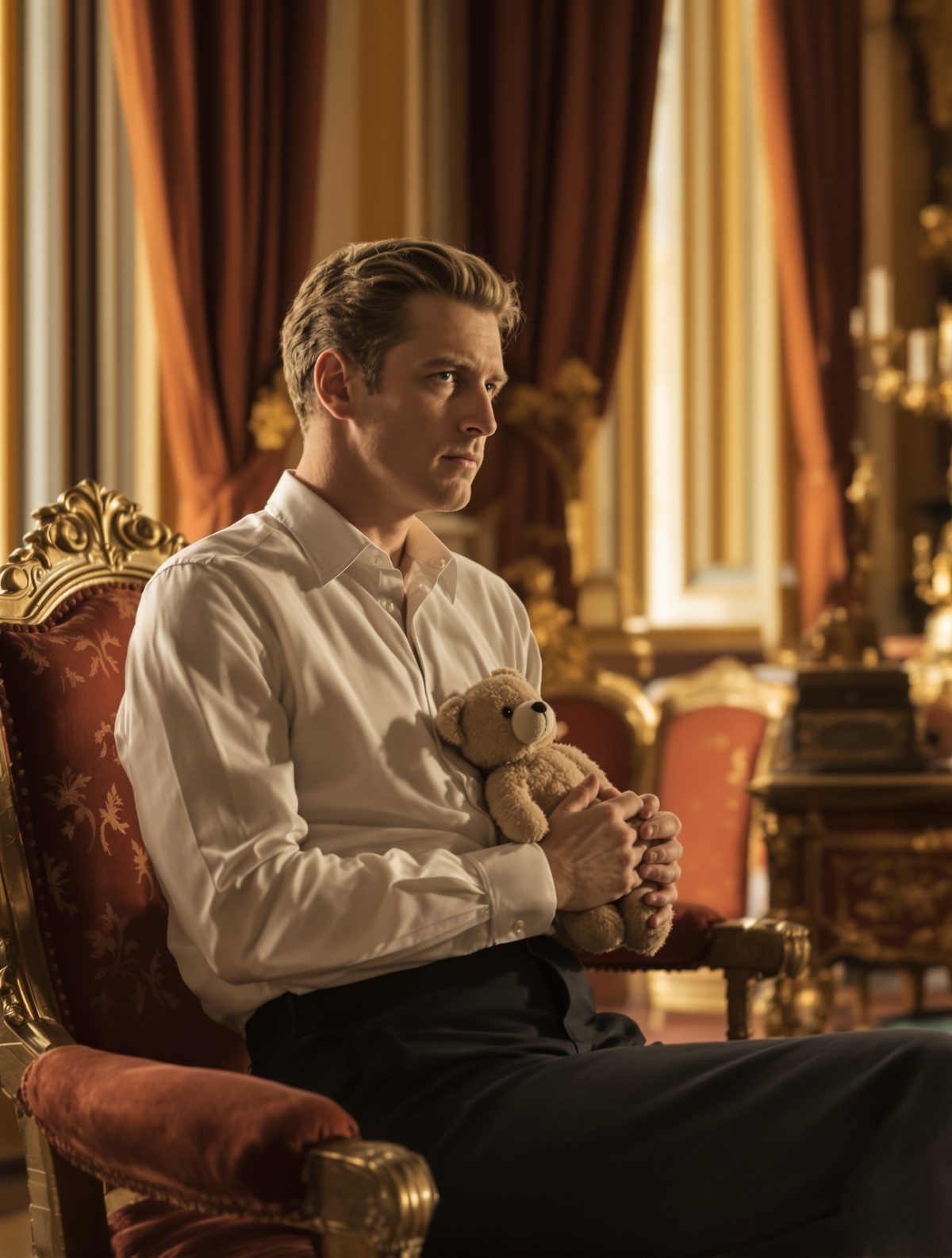
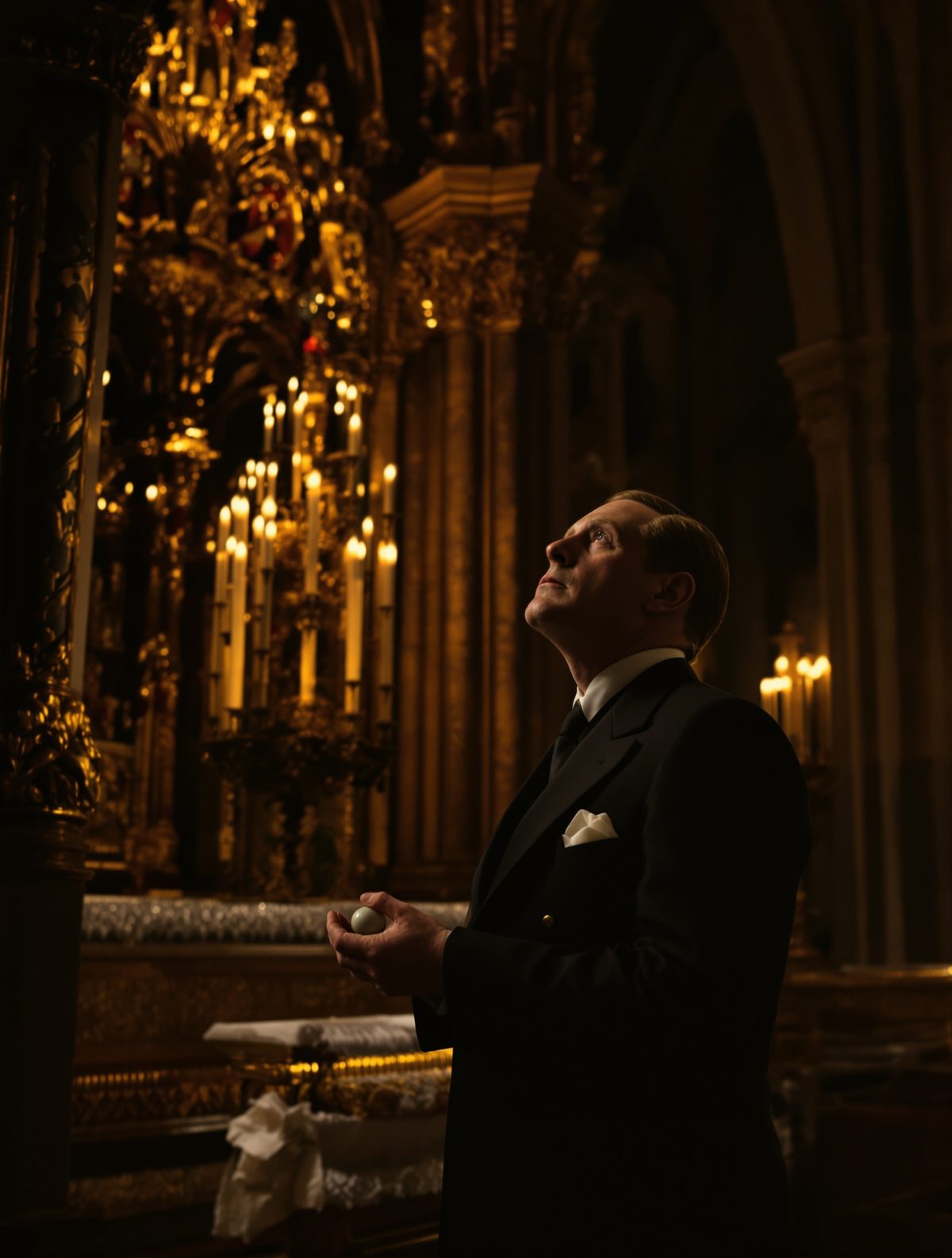
The clock struck midnight as a solitary figure slipped through the shadows of Westminster Abbey, his footsteps echoing against ancient stone walls. King George VI, less than twelve hours away from his coronation, carried with him not the Crown Jewels or ceremonial robes, but something far more precious to his troubled mind: a small, smooth marble that would become his secret weapon against the stutter that had plagued him since childhood.
What unfolded in those silent hours of May 11th, 1937, was a desperate monarch's final battle against his greatest fear—not the weight of kingship thrust upon him by his brother's abdication, but the terror of stumbling over his words before millions of subjects and a watching world.
The Reluctant King's Greatest Fear
George VI never expected to wear the crown. As the Duke of York, Prince Albert—"Bertie" to his family—had lived comfortably in the shadow of his charismatic older brother, Edward VIII. His severe stutter, which caused painful hesitations and repetitions, made public speaking an ordeal that left him physically and emotionally drained.
The speech impediment had roots in his difficult childhood. Forced to write with his right hand despite being naturally left-handed, subjected to painful "correction" devices for his knock knees, and overshadowed by his confident brother, young Bertie developed a stutter that seemed to worsen under pressure. Court physicians and speech experts had tried numerous treatments over the years, but none provided lasting relief.
When Edward VIII abdicated in December 1936 to marry Wallis Simpson, Bertie was thrust into a role he felt woefully unprepared for. The coronation, originally planned for Edward, would now showcase the new king's first major public address—broadcast live on BBC Radio to the Empire and beyond. For a man who struggled with simple conversations, the prospect was nothing short of terrifying.
"The idea of being King was repugnant to him," his wife Elizabeth later recalled. But it wasn't just the constitutional responsibilities that frightened him—it was the knowledge that every word he spoke would be scrutinized, every pause noted, every stumble magnified across the airwaves.
A Midnight Pilgrimage to Sacred Ground
As coronation day approached, George VI's anxiety reached fever pitch. Despite months of preparation and speech therapy sessions, he remained unconvinced he could deliver the crucial address without embarrassing himself and the monarchy. It was then that he made an extraordinary decision—one that would become the stuff of royal legend.
On the night of May 11th, with Westminster Abbey already prepared for the next day's ceremony, the King requested private access to the sacred space. What he sought wasn't divine intervention, but something more practical: the chance to practice his speech in the very place where millions would judge his words.
For six hours, from midnight until dawn, George VI stood alone before the altar where he would soon be crowned. The Abbey, stripped of the crowds and ceremony, became his private rehearsal hall. But he hadn't come empty-handed—tucked in his pocket was a small marble, a technique suggested by one of his speech therapists but never before tested under such pressure.
The marble method was deceptively simple. By holding the smooth stone under his tongue while speaking, it forced him to slow down his delivery and think more carefully about each word. The physical sensation provided a focal point that helped calm his nerves while naturally reducing the rapid speech patterns that often triggered his stutter.
The Secret Weapon That Transformed a King
Hour after hour, the King practiced his coronation address, the marble rolling gently beneath his tongue as he worked through each carefully crafted phrase. The acoustics of the empty Abbey allowed him to hear exactly how his words would sound, while the solitude gave him freedom to stop, restart, and perfect his delivery without judgment.
The technique worked better than anyone had dared hope. The marble forced a measured pace that actually enhanced the gravitas of his words, while the physical concentration required helped quiet the anxious thoughts that typically triggered his speech difficulties. As dawn broke over London, George VI had not only mastered his coronation address but discovered a method that would serve him throughout his reign.
Palace staff arriving for final preparations were amazed to find their sovereign already present, composed and confident in a way they hadn't seen since the abdication crisis began. The King's private secretary later noted the remarkable transformation, describing a man who seemed to have found his voice—quite literally—in the sacred silence of Westminster Abbey.
What makes this story even more remarkable is that George VI kept his marble technique secret from all but his closest advisors. Even his wife, Queen Elizabeth, wasn't told about the midnight practice session until years later. The King understood instinctively that the monarchy's mystique partly depended on appearing naturally regal, and he was determined that his subjects should see strength, not struggle.
A Coronation Speech for the Ages
When May 12th arrived, bringing with it the pomp and pageantry of a coronation that would restore confidence in the British monarchy, George VI was ready. The marble remained his secret companion as he processed through the Abbey, and when the moment came for his address, the hours of midnight practice paid dividends.
His delivery was measured, dignified, and remarkably smooth. The BBC broadcast carried his words clearly across the Empire, and listeners who had feared for their stammering king instead heard a monarch speaking with quiet authority. The marble technique, tested in solitude and perfected under pressure, had transformed not just a speech but a reign.
The success of his coronation address gave George VI the confidence he needed for the greater challenges ahead. When war came just two years later, it was this same king—still using his marble technique—who would deliver some of the most inspiring speeches in British history, rallying a nation through its darkest hour.
His wartime broadcasts, particularly his Christmas messages, became legendary for their simple eloquence and obvious sincerity. Few listeners could have guessed that behind the steady, reassuring voice was a man still fighting his childhood stutter with a smooth stone and sheer determination.
The Legacy of a King Who Found His Voice
George VI's midnight vigil at Westminster Abbey reveals something profound about leadership and personal courage. Here was a man who could easily have retreated behind the ceremonial aspects of kingship, letting others speak for him as many monarchs had done. Instead, he chose to confront his greatest weakness head-on, transforming it into a source of strength that would define his reign.
The marble technique remained his secret weapon throughout the sixteen years of his kingship. Palace staff grew accustomed to seeing their monarch discretely prepare before major speeches, though few understood the simple but effective method behind his composure. It was only after his death in 1952 that the full extent of his struggle—and his ingenious solution—became widely known.
Today, as we watch modern royals navigate their own public speaking challenges, George VI's story resonates with particular power. His example shows that true strength lies not in the absence of fear, but in the determination to overcome it. The man who never expected to be king became one of Britain's most beloved monarchs precisely because his struggles made him more, not less, relatable to his subjects.
That small marble, carried through years of speeches, broadcasts, and public addresses, became a symbol of something larger: the idea that greatness often emerges from our willingness to face our deepest fears. In the quiet hours before dawn on May 12th, 1937, George VI didn't just practice a speech—he discovered the voice that would carry Britain through war, reconstruction, and into the modern age.