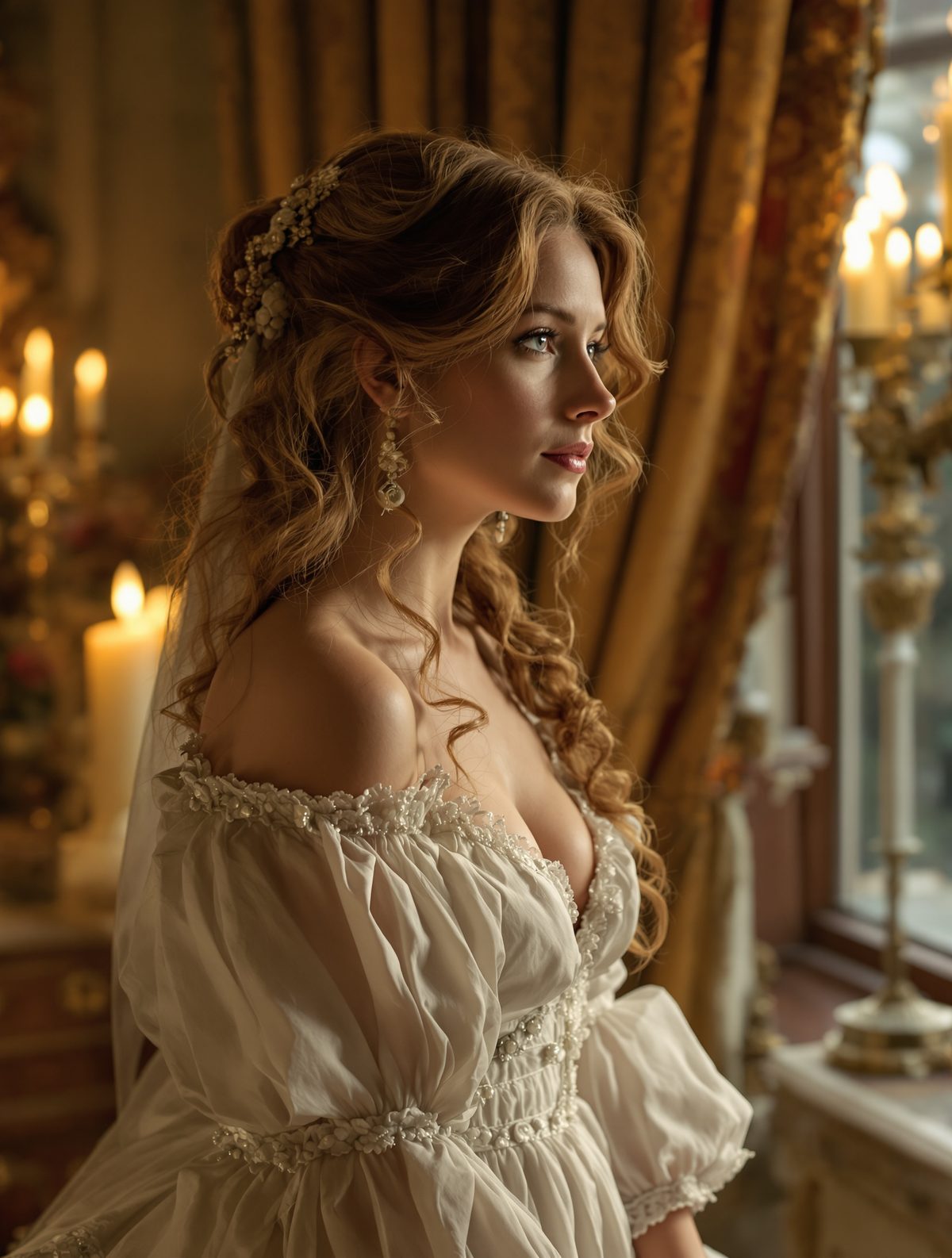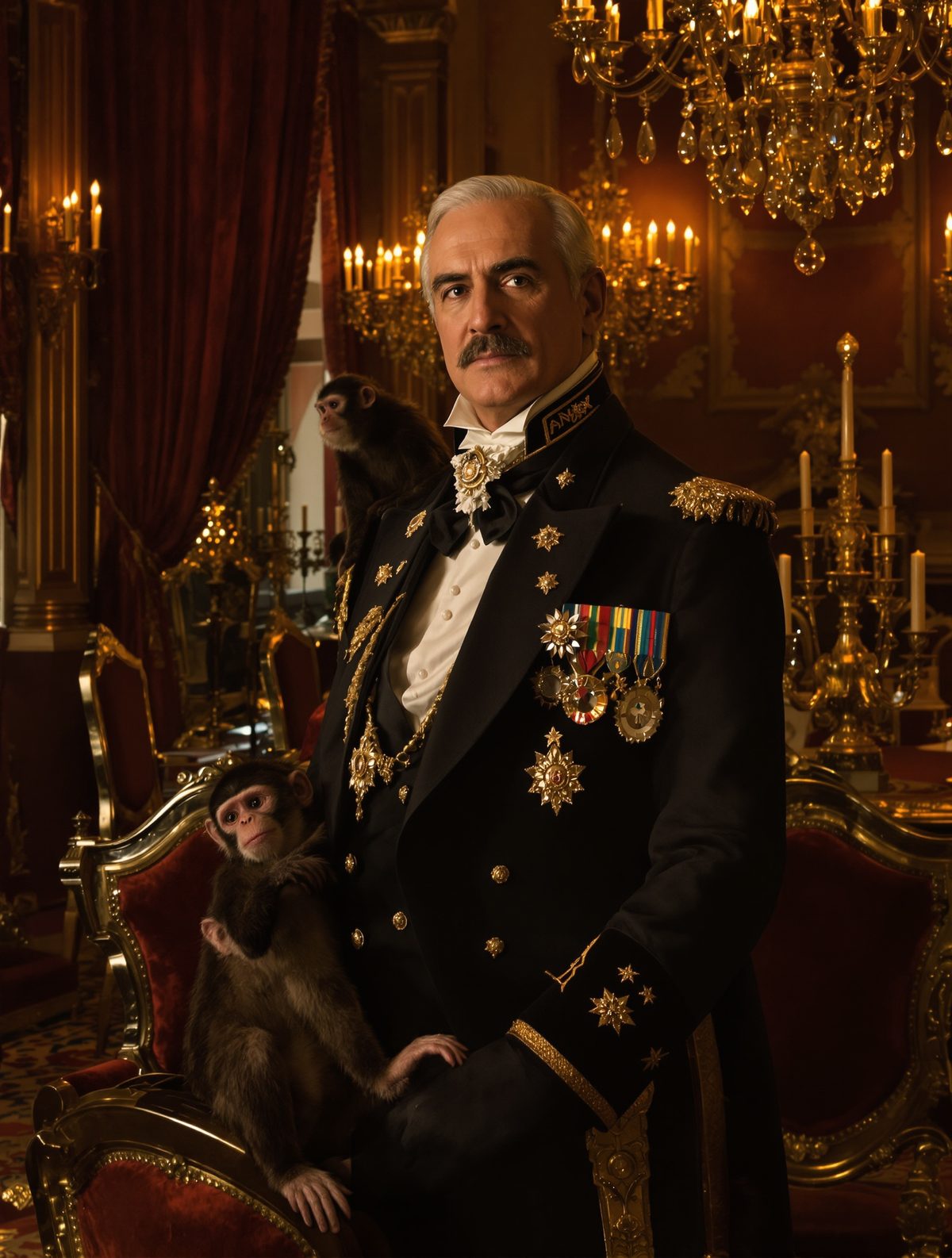
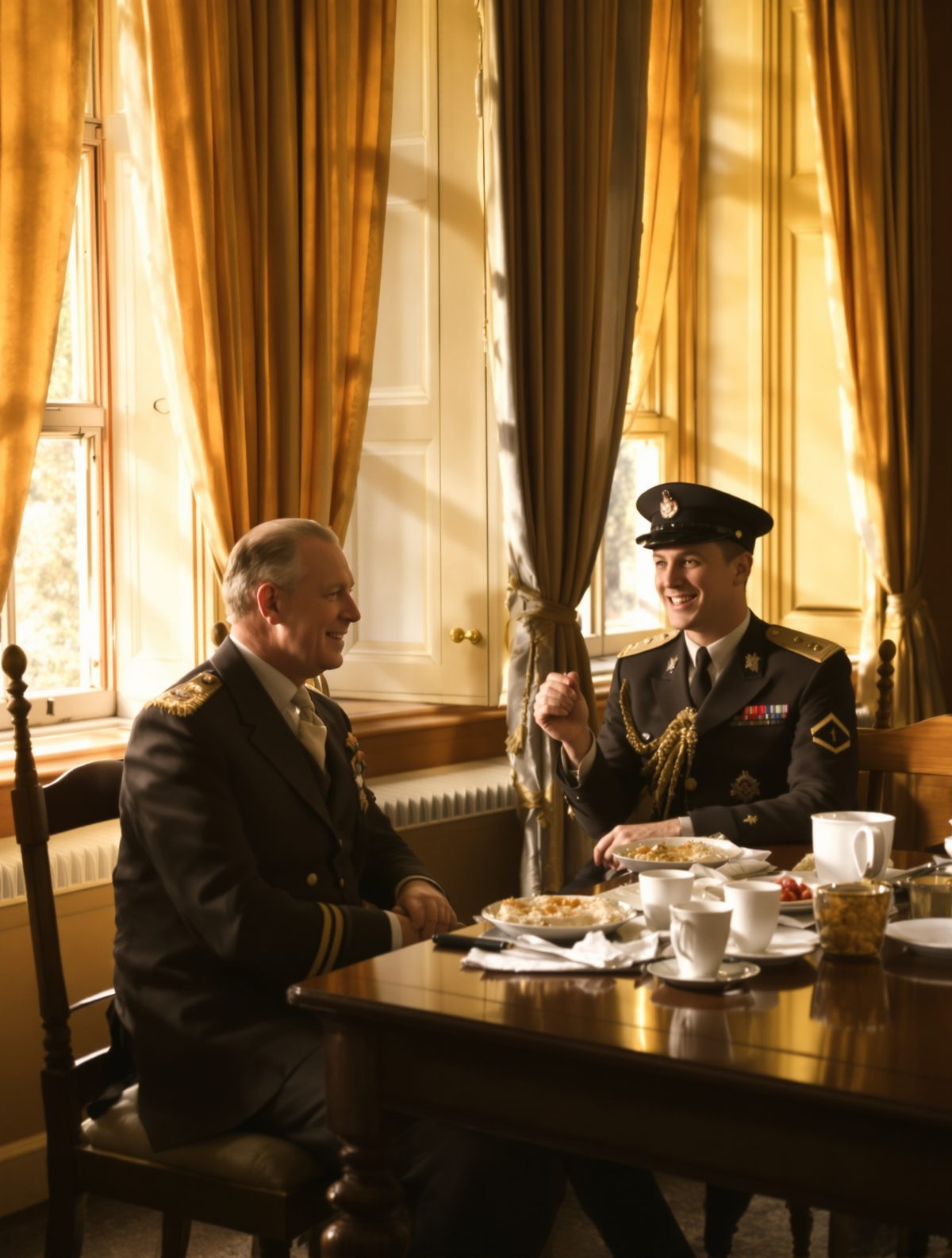
The mahogany dining room at Sandringham House gleamed with the finest china and sterling silver on Christmas morning, 1943. The Royal Family had gathered for their traditional festive breakfast, but something was amiss. King George VI's chair sat empty, his porridge growing cold. While Queen Elizabeth (later the Queen Mother) maintained polite conversation with Princesses Elizabeth and Margaret, palace staff began their familiar routine of discretely searching for their absent monarch.
They would find him, as they had for several Christmases running, in the most unexpected of places: the servants' quarters below stairs, sharing a humble bowl of porridge with young Thomas Hartwell, the solitary footman who drew the short straw of working every Christmas morning while his colleagues enjoyed rare time with their families.
A King's Quiet Rebellion Against Royal Protocol
George VI's Christmas morning disappearances began sometime in the early 1940s, during the darkest days of World War II. While the exact year remains uncertain in royal archives, palace staff accounts suggest the tradition started after the King noticed that Thomas Hartwell, a footman in his early twenties from Yorkshire, consistently volunteered for Christmas duty. What His Majesty discovered was that Hartwell had no family to return to—his parents had been killed in the London Blitz, and he was truly alone in the world.
The King's solution was characteristically direct and compassionate. Rather than simply ensuring the young man received extra rations or a bonus, George VI chose something far more meaningful: his presence. Each Christmas morning, after briefly appearing at the family breakfast, the King would excuse himself and make his way through Sandringham's labyrinthine servant passages to the small staff dining room.
Palace records from the 1940s, preserved in the Royal Archives, show that these visits were never officially scheduled or recorded in the Court Circular. They existed in the margins of royal life, a personal tradition that spoke to George VI's fundamental decency rather than his royal duty.
The Man Behind the Crown
To understand the significance of these Christmas mornings, one must appreciate the character of George VI himself. Thrust unexpectedly onto the throne following his brother Edward VIII's abdication in 1936, Albert Frederick Arthur George—known as "Bertie" to his family—never wanted to be king. His painful struggle with a severe stutter, immortalized in the film The King's Speech, was just one manifestation of his deep discomfort with the pomp and circumstance of monarchy.
Yet it was precisely this reluctance that made him such an effective and beloved sovereign. George VI possessed an innate empathy for the underdog, the overlooked, and the lonely—perhaps because he had felt all of these things himself. His wartime leadership, including his decision to remain in London during the Blitz despite government pressure to evacuate, demonstrated a man who understood suffering because he had experienced it personally.
The King's relationship with palace staff reflected this same authenticity. Unlike his more formal predecessors, George VI was known to remember the names of servants' children, to inquire about family illnesses, and to show genuine interest in their lives beyond their duties to the Crown. His Christmas tradition with Thomas Hartwell was simply the most touching example of this natural compassion.
Below Stairs at Sandringham
The servants' quarters at Sandringham in the 1940s were a world away from the opulent state rooms above. Staff accommodations were sparse but comfortable, with narrow corridors connecting small bedrooms, communal bathrooms, and a central dining area where meals were taken according to strict hierarchy. On Christmas morning, these usually bustling spaces fell eerily quiet, with only essential staff remaining on duty.
Thomas Hartwell's Christmas mornings before the King's visits would have been particularly isolating. While other staff members who remained on duty could at least look forward to Boxing Day celebrations or letters from family, Hartwell faced the holiday entirely alone. The contrast between the joyful sounds of the Royal Family's celebrations echoing from above and his solitary breakfast must have been stark.
When the King appeared in the servants' dining room that first Christmas morning, dressed casually and carrying his own bowl, it would have been a moment of pure astonishment for young Hartwell. Royal protocol strictly governed interactions between the sovereign and staff—formal address, proper distance, specific procedures for everything from serving meals to announcing visitors. For the King to simply sit down and share breakfast was unprecedented.
According to staff accounts recorded years later, these breakfast conversations covered everything from Hartwell's Yorkshire childhood to the King's own experiences during the war. George VI, who had served in the Royal Navy during World War I and had witnessed the Battle of Jutland, shared his own memories of military service and listened to Hartwell's stories of surviving the London bombing raids.
A Tradition Rooted in Wartime Brotherhood
The 1940s context of this tradition cannot be overlooked. Britain was a nation united by shared sacrifice, where class distinctions, while never fully erased, were temporarily softened by common purpose. The King and Queen's decision to remain at Buckingham Palace during the Blitz, despite bomb damage to the building itself, had earned them unprecedented respect from ordinary Britons who were enduring the same dangers.
George VI's Christmas breakfasts with Thomas Hartwell reflected this wartime spirit of democratic fellowship. In a period when many traditional boundaries were being questioned, the King's gesture represented something profoundly modern: the idea that human dignity transcended social rank, and that no one should face the holidays entirely alone.
The tradition continued throughout the war years and into the late 1940s, only ending when Thomas Hartwell left royal service to marry and start his own family—a wedding, incidentally, that the King and Queen attended as private guests, bringing the young couple a personally engraved silver tea service as a wedding gift.
Legacy of Quiet Compassion
These Christmas morning encounters were never publicized during George VI's lifetime, remaining known only to palace staff and the Royal Family. They emerged in biographies and staff memoirs decades later, adding another layer to our understanding of a monarch who led by example rather than decree.
The story resonates particularly strongly today, as the current Royal Family continues to emphasize service, mental health awareness, and the importance of community connection—values that George VI embodied in his quiet breakfast tradition. His grandsons, Prince William and Prince Harry, have spoken frequently about their own efforts to support those facing isolation and mental health challenges, echoing their grandfather's instinctive compassion.
In our current era of increasing social isolation and mental health awareness, King George VI's simple act of sharing Christmas breakfast with a lonely young man feels remarkably contemporary. It reminds us that sometimes the most profound gestures are the quietest ones: showing up, listening, and ensuring that no one faces life's celebrations or sorrows entirely alone. The King who never wanted a crown ultimately wore it with grace by remembering that true leadership often happens away from the cameras, in small moments of human connection that transform both giver and receiver.