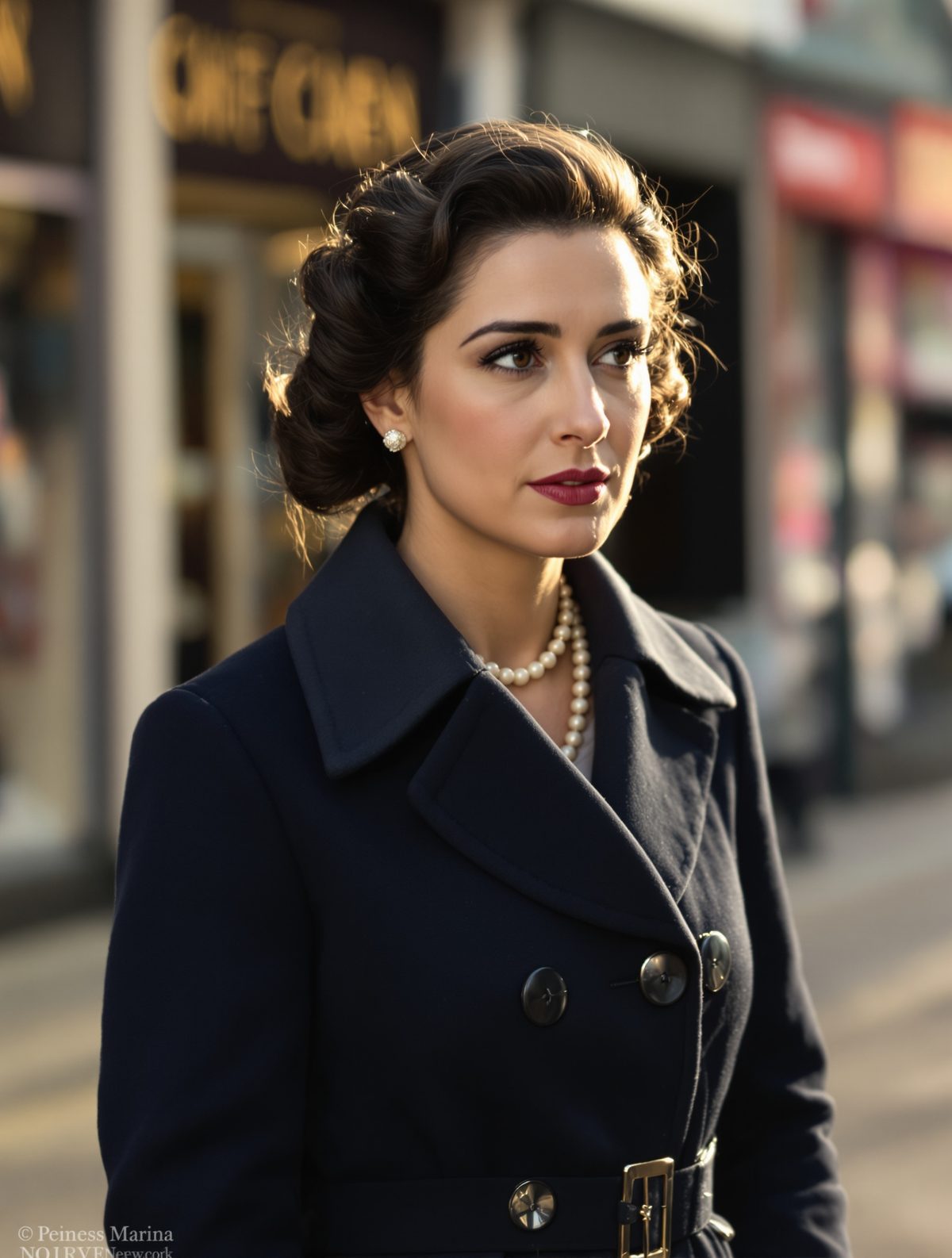
While London burned during the Blitz, one royal princess was hiding in plain sight. Princess Marina's innocent shopping trips through war-torn London concealed a secret that would help turn the tide of the war. As she chatted with Greek shopkeepers in their native tongue, buying vegetables and everyday necessities, Nazi spies assumed they were witnessing nothing more than a glamorous royal adapting to wartime rationing. They could not have been more wrong.
A Princess Born for Espionage
Princess Marina of Greece and Denmark possessed qualities that made her uniquely suited for intelligence work, though few would have predicted such a role for the woman who had become one of Britain's most fashionable royals. Born in 1906 into the Greek royal family, she had spent her childhood moving between European courts as political upheavals repeatedly forced her family into exile.
This peripatetic upbringing had given Marina something invaluable: she was genuinely multilingual. Unlike many royals who learned languages formally in palace schoolrooms, Marina had lived them. She spoke Greek with the fluency of a native, French with Parisian elegance, and had acquired her impeccable English through years of European high society. When she married Prince George, Duke of Kent, in 1934, she brought this linguistic arsenal with her to Britain.
By 1942, Marina had been widowed for just over a year. Prince George had died in a mysterious air crash in Scotland while serving with the RAF, leaving Marina alone with three young children. The official story was that she was simply a grieving royal mother, quietly supporting the war effort through patronages and public appearances. The reality was far more intriguing.
London's Hidden Greek Network
What made Marina's intelligence work so effective was London's substantial but often overlooked Greek community. Since the Ottoman period, Greek merchants, sailors, and refugees had established themselves throughout the capital, particularly in areas like Camden, Paddington, and around the docks. These communities maintained strong ties to their homeland and possessed detailed knowledge of Mediterranean shipping routes, German movements in occupied Greece, and the activities of the Greek resistance.
The challenge for British intelligence was accessing this information. Many Greek émigrés remained suspicious of British authorities, haunted by memories of political betrayals and broken promises from previous conflicts. Formal approaches often yielded little useful intelligence, as the community had learned to be wary of anyone who seemed too official or too interested.
Princess Marina, however, could walk into any Greek establishment in London without raising suspicion. Her presence was explained by her royal status and Greek heritage—what could be more natural than a Greek princess supporting her countrymen during wartime? Shop owners and customers alike were flattered by her attention and eager to share news from home with someone who truly understood their concerns.
Shopping Trips That Changed History
Marina's intelligence work was masterfully orchestrated to appear completely innocent. She would arrive at Greek businesses—bakeries, import shops, restaurants—with her lady-in-waiting, ostensibly to purchase items or to show royal support for Greek enterprises during wartime. The conversations that followed seemed entirely natural: inquiries about family members in occupied territories, discussions of shipping news, concerns about German activities in the Mediterranean.
What made these encounters so valuable was Marina's ability to ask the right questions without seeming to probe. Her genuine aristocratic connections to Greek society meant she could reference specific places, families, and political figures that resonated with her informants. They trusted her not just because of her royal status, but because she demonstrated real knowledge of and concern for Greece's situation.
The intelligence gathered during these seemingly casual shopping expeditions proved invaluable. Marina collected information about German naval movements, resistance activities, and the locations of imprisoned British servicemen. Perhaps most crucially, she helped identify which Greek shipping families remained loyal to the Allied cause and could be trusted with sensitive operations.
German intelligence services, despite their extensive networks in wartime London, never suspected Marina's true role. To them, she appeared exactly as she seemed: a fashionable but grieving royal widow, maintaining her connection to her Greek heritage while dutifully supporting Britain's war effort. The idea that this elegant princess was systematically debriefing Greek informants while selecting vegetables seemed preposterous.
The Royal Cover That Worked Too Well
Marina's effectiveness as an intelligence asset stemmed partly from how well she embodied the period's expectations of royal women during wartime. She was visible enough to demonstrate royal solidarity with the people's suffering—she famously continued wearing elegant but appropriately modest clothing throughout the war—but not so prominent as to overshadow the King and Queen's leadership role.
Her widowhood, while genuinely tragic, also provided perfect cover for her activities. A grieving mother of three young children naturally needed to maintain some public duties while also managing more private affairs. Her frequent appearances around London could be explained as either royal obligations or personal errands, creating the ideal camouflage for intelligence work.
The Greek community's response to Marina reveals something touching about wartime solidarity. Many Greek families in London were struggling economically, yet they consistently welcomed the princess and shared their most precious commodity: information about loved ones in danger. They trusted her because she represented both British royal authority and Greek heritage—a unique combination that made her the perfect liaison between two worlds.
A Legacy Written in Invisible Ink
The full extent of Princess Marina's wartime intelligence work remained classified for decades after the war ended. Even today, many details remain secret, protected by Britain's Official Secrets Act. What we do know suggests that her contributions were far more significant than the modest official histories initially suggested.
Marina's story illuminates a crucial aspect of royal service that often goes unrecognized: the ability to access people and information that formal diplomatic channels cannot reach. Her royal status opened doors, but her genuine cultural connections and linguistic abilities made those encounters meaningful. She succeeded because she offered something authentic—real understanding and concern—rather than merely trading on her title.
Perhaps most remarkably, Marina managed to balance this secret work with raising three young children who had lost their father. Prince Edward (later Duke of Kent), Princess Alexandra, and Prince Michael of Kent grew up largely unaware that their mother's shopping trips and social visits were contributing to Allied intelligence efforts. The princess compartmentalized her roles with remarkable skill, protecting both her family's security and her intelligence value.
Today, as we observe how modern royals navigate their public duties while maintaining private lives, Princess Marina's wartime service offers a compelling example of duty quietly fulfilled. She demonstrated that sometimes the most effective royal service happens not in grand public gestures, but in the accumulation of small, seemingly ordinary encounters that collectively make an extraordinary difference. In an age when royal relevance is constantly questioned, Marina's story reminds us that the monarchy's true value sometimes lies in its unique ability to bridge worlds that might otherwise remain separate—even when the stakes are nothing less than national survival.