Behind the grand doors of Buckingham Palace, King George V harbored a secret that would have shocked his subjects. Night after night, while his household slept, the King performed a ritual so humble it moved his staff to tears. In an era when monarchs were expected to maintain the utmost distance from their servants, George V was quietly breaking every rule of royal protocol—one dirty dish at a time.
The King Who Couldn't Sleep
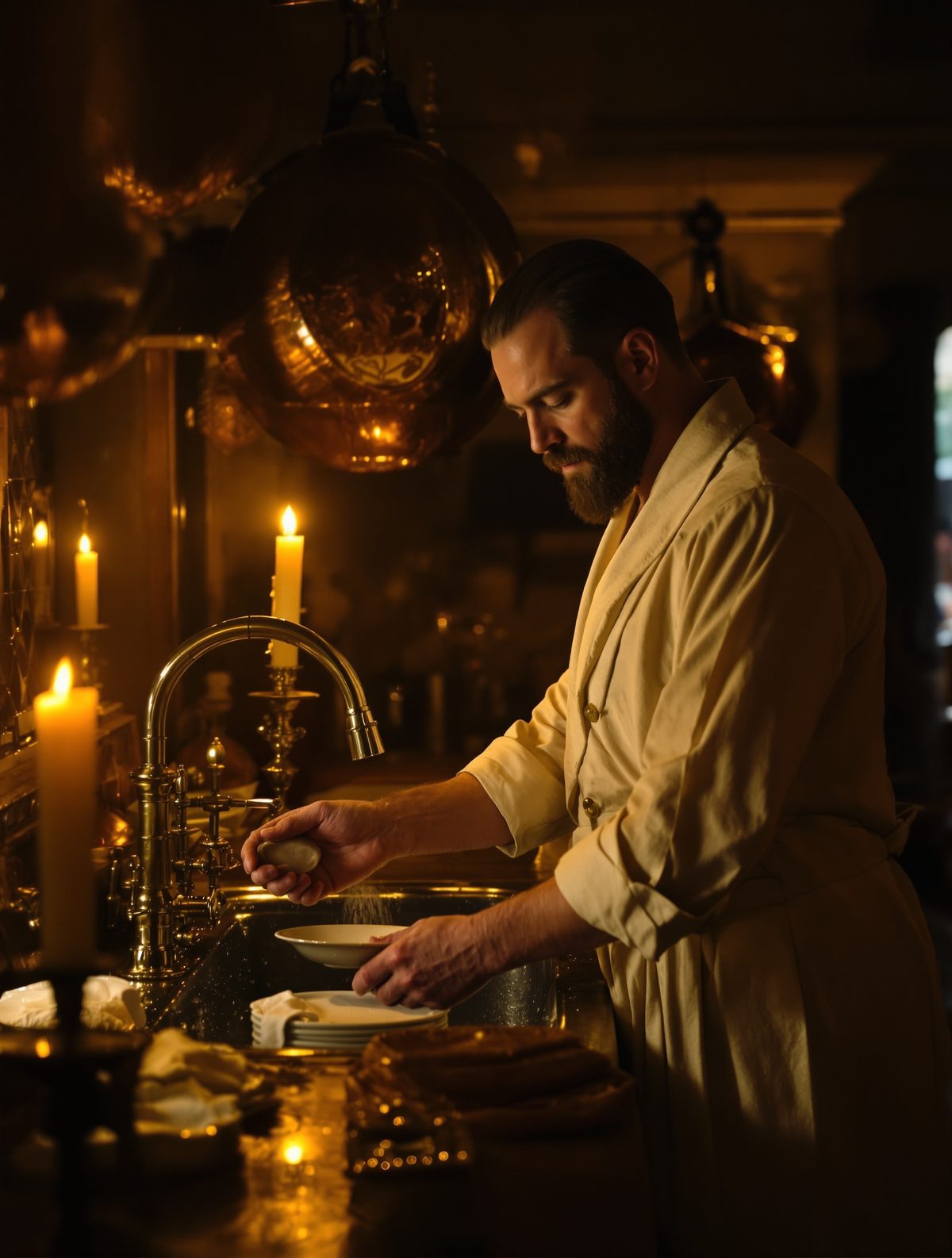
The discovery happened quite by accident in the winter of 1923. Mrs. Margaret Thornton, the head kitchen maid, had forgotten her reading spectacles in the servants' hall and crept downstairs near midnight to retrieve them. What she found in the palace kitchens defied belief: His Majesty King George V, still wearing his evening dress from a state dinner, standing at the great stone sink with his sleeves rolled up, methodically washing the dinner service used by the late-shift servants.
The sight was so extraordinary that Mrs. Thornton later confessed she thought she was dreaming. Here was the King-Emperor, ruler of a quarter of the world's population, carefully scrubbing the humble earthenware bowls and tin cups that the scullery maids and footmen used for their own simple suppers. His technique was thorough, practiced—this was clearly not the first time he had performed such a task.
Mrs. Thornton retreated silently, but word of the King's nocturnal activities soon spread through the servants' quarters like wildfire. What they discovered next would explain everything: George V had been conducting this ritual for years, ever since the early days of his reign.
A Monarch Shaped by Service
To understand why King George V felt compelled to wash his servants' dishes in the dead of night, one must look to his formative years in the Royal Navy. Unlike many of his royal contemporaries who enjoyed purely ceremonial military appointments, George V—then Prince George—had served as a genuine working naval officer for fifteen years. He had scrubbed decks, taken orders from superior officers, and lived alongside men from all walks of life.
The rigid hierarchy of palace life, where servants were expected to remain virtually invisible and the King was surrounded by layers of courtly protocol, sat uneasily with a man who had learned to value honest work and camaraderie. Royal biographers have noted that George V often seemed uncomfortable with the extreme deference shown to him, particularly by the hardest-working members of his household staff.
The servants who worked the late shifts after grand state dinners were often the most junior members of the household—young scullery maids, kitchen porters, and junior footmen who earned the least and worked the longest hours. After hosting elaborate banquets for foreign dignitaries or government officials, these staff members would often work until two or three in the morning, cleaning up the aftermath of royal entertaining. By the time they sat down to their own modest meal, they were exhausted.
The Weight of Crown and Conscience
Palace records from the period reveal that King George V suffered from chronic insomnia, particularly during times of national crisis. The 1910s and 1920s were tumultuous decades—the First World War, the Russian Revolution that claimed the lives of his cousin Tsar Nicholas II and his family, the General Strike of 1926, and the economic upheaval that followed. The King felt the weight of his people's suffering acutely.
According to his private secretary Lord Stamfordham's notes, the King would often pace the palace corridors late at night, unable to sleep while thinking about the hardships faced by ordinary Britons. It seems that washing dishes became both a form of meditation and a way to perform some small act of service for the people who served him so faithfully.
When Worlds Collided
The revelation of the King's secret ritual created an extraordinary situation within the palace hierarchy. Senior household officials were horrified—the idea of the monarch performing menial labor was considered deeply inappropriate and potentially damaging to royal dignity. Yet the junior staff members who benefited from the King's kindness were profoundly moved by the gesture.
Mary Campbell, a young kitchen maid whose letters home have been preserved in family archives, wrote to her mother: "You cannot imagine the feeling of coming down to find every dish clean and dried, knowing His Majesty himself had done this work with his own hands. We none of us knew what to say or how to feel about it."
The palace faced a delicate dilemma. They could hardly order the King to stop his midnight dishwashing, but the breach of protocol was unprecedented. Eventually, a compromise was reached: additional night staff were quietly hired to ensure that the servants' dishes were cleaned before the King could reach them, though palace lore suggests he occasionally managed to continue his ritual undetected.
The Human Heart of Monarchy
What makes King George V's midnight ritual so remarkable is not just the humility it demonstrated, but the genuine understanding it showed of the lives of working people. In an era when the gulf between royalty and ordinary citizens seemed unbridgeable, here was a king who recognized that service flowed both ways—that those who served the Crown deserved consideration and care in return.
The story reveals something profound about the nature of leadership and duty. While his subjects saw King George V as a sometimes stern, always dignified figure who embodied imperial authority, in private he grappled with the human cost of that authority. His midnight dishwashing was perhaps his way of maintaining connection with the values that had shaped him as a young naval officer—that no honest work is beneath anyone, and that true leadership means caring for those under your command.
Contemporary accounts suggest that knowledge of the King's secret ritual, while carefully kept from the public during his lifetime, profoundly affected palace culture. Staff members reported feeling a deeper sense of loyalty and affection for their monarch, knowing that he saw them as fellow human beings rather than merely fixtures of royal life.
Today, as we witness modern royals like the Prince and Princess of Wales emphasizing service and connection with ordinary people, King George V's midnight ritual feels remarkably prescient. His understanding that true majesty lies not in being served, but in serving others, offers a template for monarchy that remains relevant nearly a century later. In our age of increasing informality between royals and their people, perhaps George V's greatest legacy is not the dishes he washed, but the barriers he quietly dismantled—one humble act of service at a time.