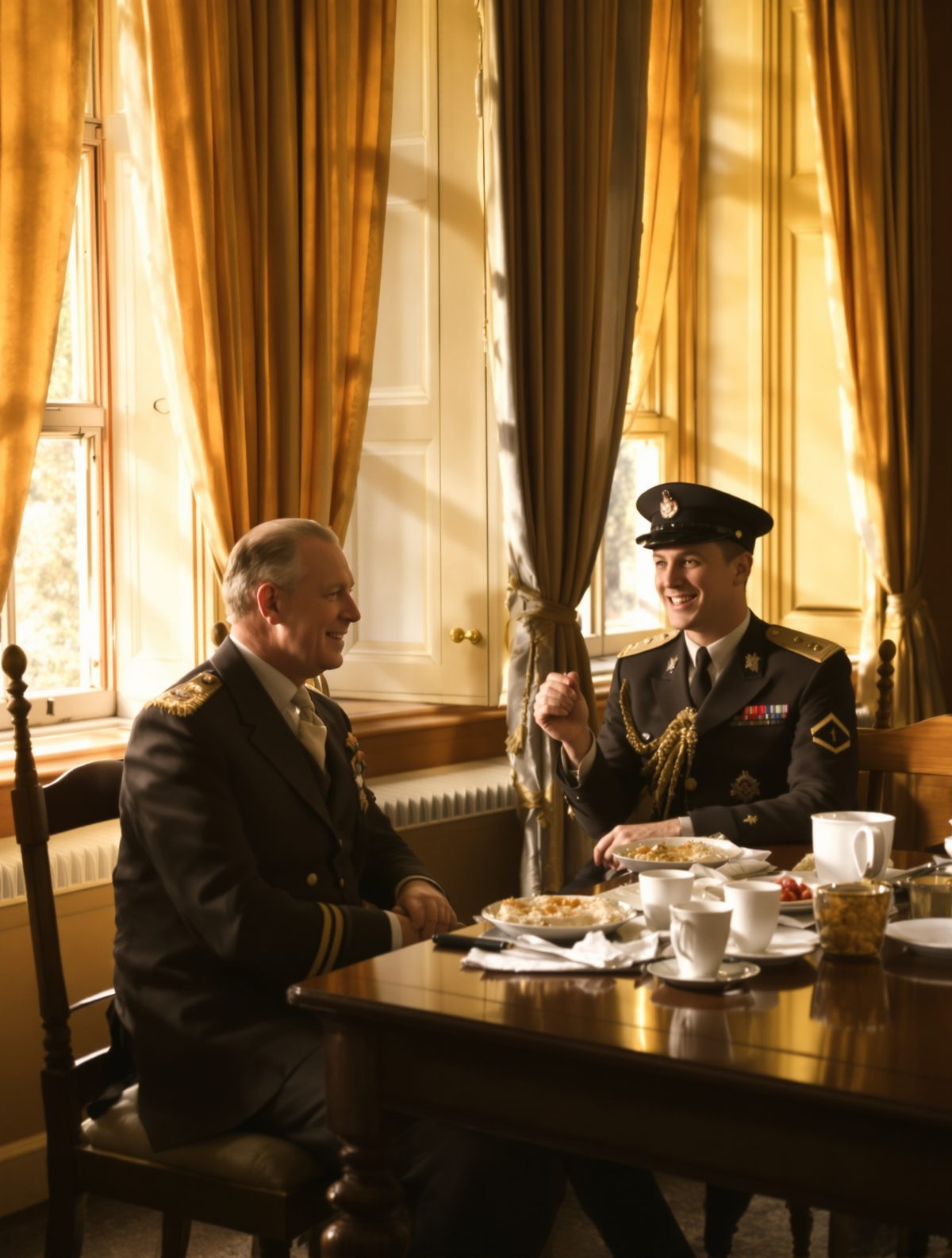
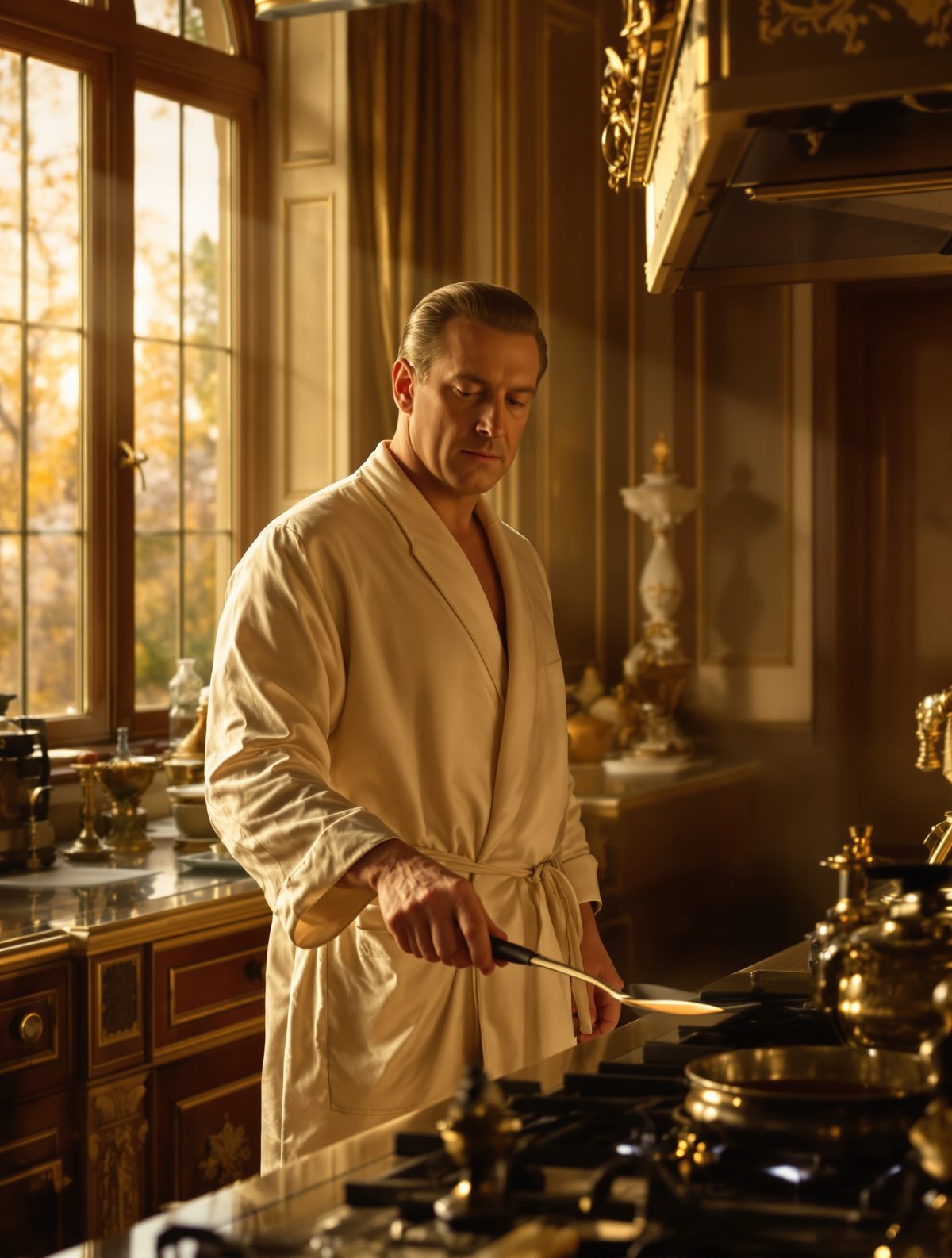
While London slept through the dark December mornings of the 1940s, a most unusual scene was unfolding in the grand kitchens of Buckingham Palace. There, surrounded by copper pots and marble countertops, stood the King of England in his silk pajamas and dressing gown, quietly cracking eggs and measuring flour. When the palace staff arrived for their Christmas morning duties, they would discover their monarch—the man who stammered through wartime broadcasts that rallied a nation—humming softly as he flipped pancakes with the practiced ease of a seasoned cook.
A King in the Kitchen
The tradition began during the darkest days of World War II, when George VI felt compelled to show his appreciation for the palace staff who had remained loyal despite the constant threat of German bombing raids. Every Christmas morning from 1940 onwards, the King would slip away from his royal apartments before dawn, making his way through the corridors of Buckingham Palace to the servants' quarters below.
The sight that greeted the arriving staff was nothing short of extraordinary. There was their sovereign, the man who bore the weight of an empire on his shoulders, standing at the great kitchen range with flour dusting his royal hands. He would have already set the long wooden tables, arranged chairs, and begun preparing what he considered a proper Christmas breakfast: fluffy pancakes, perfectly scrambled eggs, crispy bacon, and strong tea served in the palace's finest china—not the servants' usual earthenware.
What made this ritual even more remarkable was the King's notorious shyness and severe stammer. George VI, who had never expected to rule and who struggled with public speaking throughout his reign, found a different kind of confidence in the palace kitchens. Staff members later recalled how he seemed to lose his stutter almost entirely during these intimate Christmas mornings, chatting easily about the food, asking after their families, and sharing quiet jokes as they ate together.
Breaking Royal Protocol
The King's Christmas breakfast ritual flew in the face of centuries of royal protocol. The very notion of a monarch serving his staff was revolutionary—a complete inversion of the rigid hierarchy that had governed palace life since medieval times. Palace courtiers were initially mortified when they discovered what the King was doing, viewing it as wholly inappropriate behavior that threatened the mystique of monarchy.
But George VI was adamant. He had witnessed firsthand the dedication of his staff during the war years, when many chose to remain at Buckingham Palace despite the danger. The palace had been bombed nine times during the Blitz, with one attack destroying the royal chapel and damaging the state apartments. Through it all, the skeleton crew of servants had maintained their posts, ensuring the royal family's safety and the continuity of monarchical duties.
The King's gesture was particularly meaningful given the rationing that affected even the royal household during wartime. Food was scarce, and the royal family had publicly committed to following the same restrictions as their subjects. Yet somehow, George VI managed to procure special ingredients for his Christmas breakfast—perhaps saving his own rations throughout December, or calling in favors with the palace suppliers. The staff understood the sacrifice this represented and were deeply moved by their monarch's consideration.
A Family Affair
As the years progressed, the Christmas breakfast ritual evolved into something even more special. Princess Elizabeth, the future Queen, began joining her father in the kitchens when she turned sixteen in 1942. Staff members fondly remembered the sight of the teenage princess, still in her nightgown and slippers, helping to butter toast and pour tea while her father manned the stove.
Princess Margaret, younger and more mischievous, would occasionally sneak down as well, though she was more interested in sampling the food than helping with the preparation. The Queen Mother, Elizabeth Bowes-Lyon, maintained a respectful distance from the kitchen activities but would often appear just as breakfast was ending, expressing her gratitude to the staff and adding her own warm touches to the morning.
These family moments revealed a side of the royal household that the public never saw—the genuine affection between the King and Queen and their staff, and their determination to maintain human connections despite the formalities of court life. The war had stripped away many royal pretensions, and George VI seemed determined to ensure that this more authentic approach to monarchy would continue, at least within the palace walls.
The Staff's Perspective
For the palace servants, these Christmas mornings became the highlight of their year. Many came from working-class backgrounds where they would never have imagined sitting at the same table as the King of England, let alone being served by him personally. The gesture represented something profound about George VI's character—his innate understanding that true leadership meant service to others, regardless of their station.
Former palace staff who later spoke about these breakfasts (always years after the fact, and only after receiving royal permission) described them as surreal yet deeply moving experiences. They recalled the King's genuine interest in their lives, his questions about their families, and his obvious pride in his culinary efforts. He was particularly pleased with his pancakes, one former housemaid remembered, noting how he would anxiously watch their faces for approval as they took their first bites.
The staff also appreciated the King's attention to detail—how he remembered their preferences from year to year, ensuring that the housekeepers who preferred their tea particularly strong got extra leaves in their cups, or that the gardener who had mentioned missing his late wife's marmalade found a jar of homemade preserve beside his plate.
A Legacy of Service
George VI's secret Christmas tradition continued throughout the 1940s until his untimely death in 1952. The ritual died with him—neither Princess Elizabeth, upon becoming Queen, nor any subsequent monarch has revived the practice. The formal protocols of monarchy reasserted themselves, and the unique wartime intimacy between sovereign and staff became a treasured memory rather than an ongoing tradition.
Yet the story of the King's Christmas breakfasts reveals something essential about the man who never wanted to be king but who ultimately became one of Britain's most beloved monarchs. George VI understood instinctively that genuine authority comes not from demanding service, but from giving it. In an age when the monarchy's survival depended on proving its relevance to ordinary people, he found the perfect balance between maintaining royal dignity and demonstrating human compassion.
Today, as the modern royal family continues to navigate questions about relevance and accessibility, George VI's dawn visits to the palace kitchen offer a compelling example of authentic leadership. His Christmas breakfasts remind us that the most powerful royal gestures are often the most private ones—moments when crowns are set aside and genuine human connection takes precedence over protocol. In those quiet morning hours, with the scent of fresh pancakes filling the palace kitchens, a stammering king found his voice by choosing to serve rather than be served.