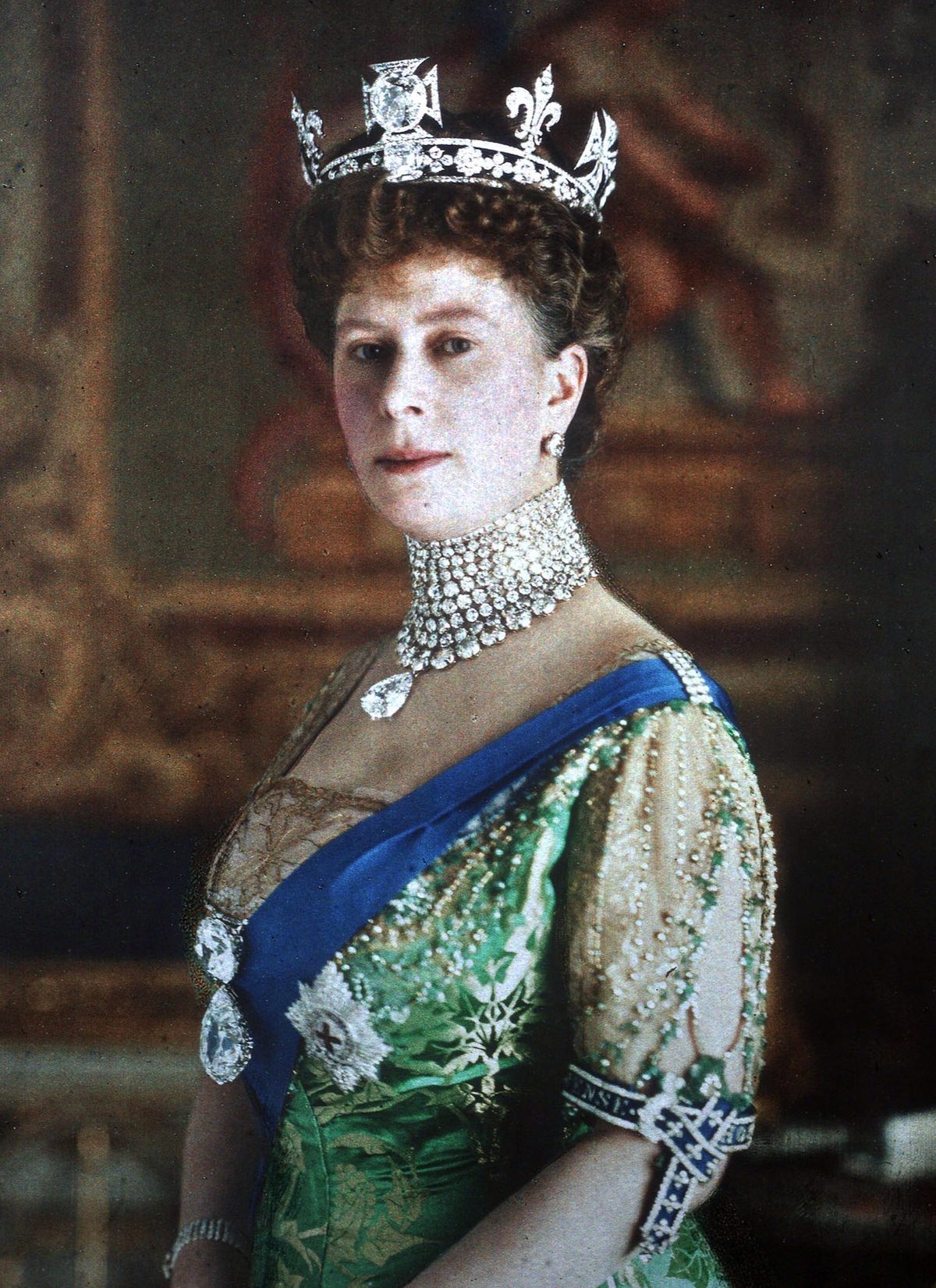
In the glittering halls of Buckingham Palace, each day begins with the rituals of regal elegance. For many, it might be hard to picture a queen enjoying a simple breakfast, much less a breakfast dressed in a glimmering tiara. Yet, for Queen Mary, consort to King George V, this was not just an occasional indulgence but a steadfast tradition. Even more curiously, whispers abound that her royal attire graced the privacy of her bedchamber, sparking curiosity among the palace staff. When asked about it, Queen Mary's serene response was a reminder of the perpetual demands of royal duty: ‘A queen,’ she said quietly, 'is never off duty.'
A Queen of Unwavering Dedication
Mary of Teck, who would become Queen Mary, was a symbol of steadfast monarchy during a time of seismic global shifts. Born in 1867, she was to marry twice into the British throne, her first engagement to Prince Albert Victor tragically ending with his early death. Her marriage to his brother, the future King George V, marked the beginning of a singular journey as consort. Queen Mary held her own distinct influence within the royal family, exuding a presence that was both stately and compassionate. Her stoic nature, unwavering dedication to duty, and profound understanding of her role set her apart as one of Britain's most revered queens consort.
During tumultuous times, including World War I and its aftermath, Queen Mary’s demeanor provided a steadfast steadiness for the nation. Her approach to her position was not just one of duty but of personal commitment — a commitment so earnest that it extended, quite unexpectedly, into the domain of her most private moments.
The Mystery of the Nocturnal Crown
The image of Queen Mary gracing the breakfast table, adorned with one of her renowned tiaras, became a point of intrigue within royal circles. Her collection of jewelry was the envy of many, with pieces often custom designed to reflect both traditional styles and her discerning taste. But why such grandeur at dawn, and reportedly, even during somber evening retreats? The answer lay not in ostentation but in unyielding protocol and personal responsibility.
The persistent rumor that Queen Mary sometimes wore her tiara into her bedchamber is enveloped in the layers of royal mystique. This practice was unorthodox even by royal standards, but it underscored a personal ritual that went beyond appearances — it was about embodying the role of the queen consistently, with dignity and decorum, regardless of the hour. The tiara was not just a crown; it was a symbol of an office that, in Queen Mary’s view, demanded complete and earnest devotion.
The Royal Household: A Witness and Confidant
Inside the cascading halls and opulent rooms of the royal residences, the household staff bore witness to these enigmatic habits. Ladies-in-waiting were ever-present companions to Queen Mary, tending to her needs and observing the subtleties of her life. It was one such morning, in the quaint hushed tones of a breakfast room filled with ornate silverware and fine china, that a polite inquiry was made. The atmosphere changed; a spoon paused mid-air as the question hovered — why the tiara?
Her answer, succinct yet profound, resonated with a timeless truth of monarchy: ‘A queen is never off duty.' It was both a mantra and mission statement. For Queen Mary, maintaining the essence of royalty was as important in private moments as it was during public appearances. Her life was interwoven with tradition, yet it was her personal commitment to these traditions that left an indelible mark on the monarchy.
Legacy of Elegance and Duty
Queen Mary's approach to her role, marked by an unwavering dedication to duty, continues to inspire the monarchy today. Her meticulous attention to the formality of royal duties set a precedent that has been carried forward by subsequent generations of royals. Her grandson, the current King Charles III, and his sons have spoken of duty in similarly earnest tones, drawing from the legacy left by their ancestors.
Queen Mary’s jewelry collection — especially her tiaras — remains an integral part of royal heritage, worn by queens and princesses in the decades since. These pieces serve as a reminder of her enduring influence within the royal family. The Queen Mary Fringe Tiara, for instance, found a place on the heads of her descendants during significant moments, including weddings and state functions, symbolizing a continuum of elegance and history.
An Enduring Tradition
Though the nocturnal tiara practice ceased with Queen Mary, her legacy lingers in the ever-present acknowledgement that the crown is more than the sum of its jewels. It is a representation of sacrifice, leadership, and a visible commitment to a nation. Queen Mary’s personal rituals, though personal, underscored the timeless nature of a role that transcends mere performance and demanded an all-encompassing dedication.
Even now, in today’s modern world, the historical intricacies of duty reverberate through the royal corridors, shaping how the British monarchy navigates its responsibilities and relationships with the public. The story of Queen Mary, wearing her tiara even in solitude, is a captivating reminder of the humanity at the heart of royal obligation. For royals today, just like then, the call of duty remains an enduring echo through time — a true testament to the sacrifice and splendor of life under the crown.
📷 Photo: Jean Desboutin. Public domain via Wikimedia Commons.