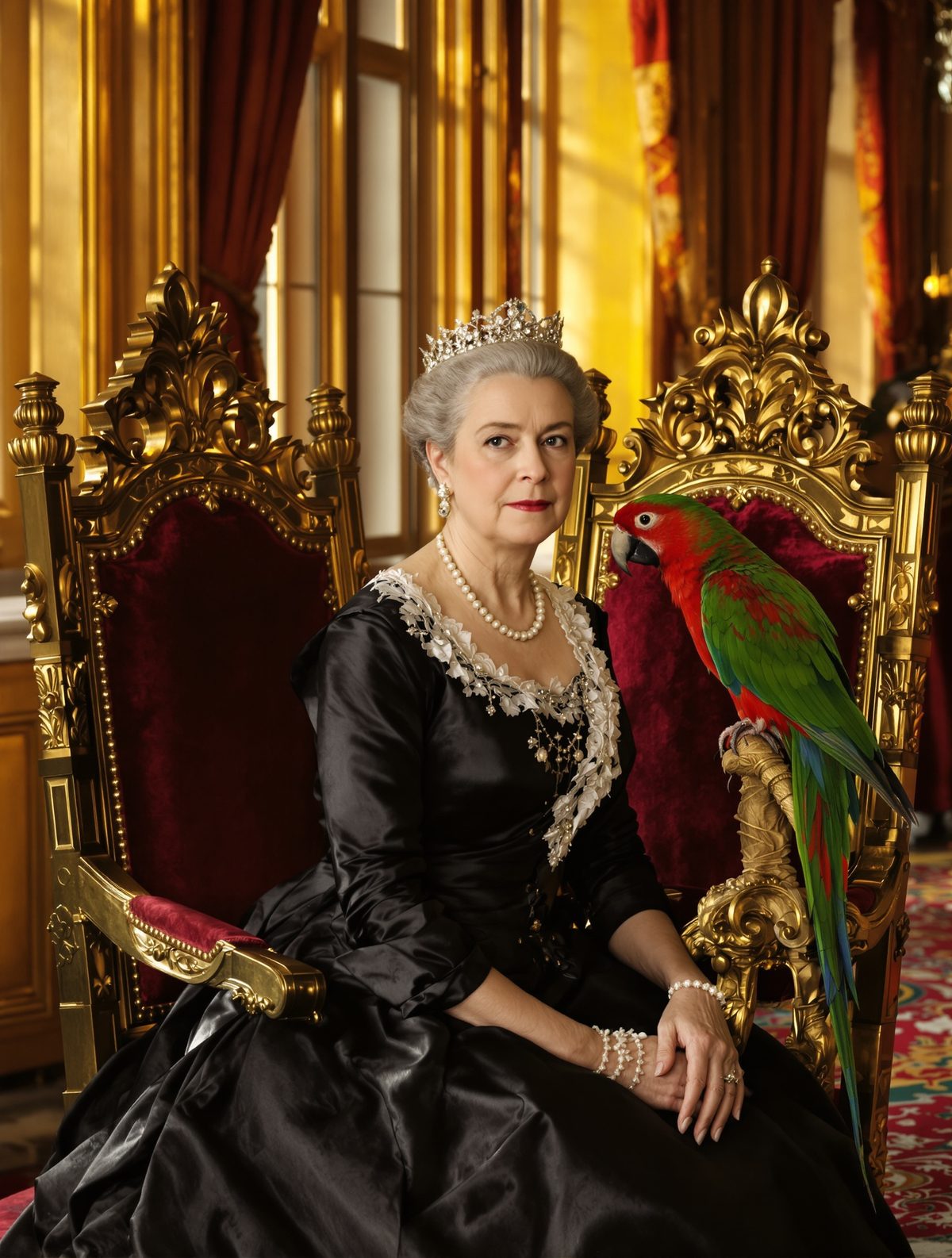
Picture this: you're a distinguished diplomat, dressed in your finest formal attire, nervously adjusting your top hat as you're escorted through the opulent corridors of Windsor Castle for an audience with Queen Victoria herself. The year is 1865, and this meeting could determine the fate of international relations. You bow deeply, begin your carefully rehearsed speech, and suddenly—from somewhere near the Queen's shoulder—a shrill voice cuts through the ceremonial silence: "Dummkopf! Dummkopf!" The Queen's expression remains serenely unchanged, but you've just been called a blockhead by Her Majesty's pet parrot.
For nearly five decades of Victoria's reign, this scene played out countless times, much to the horror of visiting dignitaries and the secret amusement of the Queen herself. The culprit was Lory, a vibrant German parrot whose linguistic talents were matched only by his impeccable timing for diplomatic disasters.
The Queen's Feathered Confidant
Queen Victoria's love affair with animals is well-documented—from her beloved Collie, Noble, to her Highland ponies—but Lory occupied a particularly unique position in the royal household. Acquired sometime in the early 1840s, shortly after her marriage to Prince Albert, the parrot quickly became a fixture in the Queen's private apartments at Windsor Castle.
Lory's German vocabulary was no accident. The bird had likely been a wedding gift or personal acquisition that reflected Victoria's deepening connection to German culture through her marriage to Albert of Saxe-Coburg and Gotha. In their private moments, the royal couple often conversed in German, and Lory, with the remarkable mimicry skills of his species, absorbed not just the language but apparently the more colorful expressions that peppered informal conversation.
The parrot's presence in formal settings wasn't unusual for the era. Victorian society embraced exotic pets as symbols of wealth and worldliness, and royal menageries had been common for centuries. What made Lory extraordinary was his uncanny ability to vocalize at precisely the wrong moments, turning state occasions into unintentional comedy.
Diplomatic Disasters and Royal Composure
Contemporary court records and personal diaries from Victoria's courtiers paint a picture of barely controlled chaos whenever Lory made his presence known during formal audiences. The parrot seemed to possess an almost supernatural sense for when tension filled the room, choosing those precise moments to unleash his limited but devastatingly effective German vocabulary.
"Dummkopf" was reportedly his favorite insult, but witnesses also recorded him squawking "Schweinhund" (pig-dog) and what appeared to be various other Germanic exclamations that sent German-speaking visitors into barely concealed shock. English courtiers, initially bewildered by the foreign outbursts, gradually learned to recognize the insulting nature of Lory's commentary through the horrified expressions of their continental counterparts.
Queen Victoria's response to these incidents became the stuff of legend among palace staff. With the practiced composure that defined her six-decade reign, she would maintain perfect diplomatic bearing, her face a mask of regal serenity. When questioned about her pet's outbursts, she would claim—with what courtiers privately suspected was deliberate obtuseness—that she couldn't possibly understand what the bird was saying.
This royal poker face served multiple purposes. It protected diplomatic relations, maintained the dignity of formal occasions, and perhaps most importantly, allowed Victoria to keep her beloved companion without admitting to his decidedly unroyal behavior. The Queen's attachment to her pets was genuine and deep, and parting with Lory would have been emotionally devastating.
The Court's Coping Strategies
As Lory's reputation spread throughout European diplomatic circles, the royal household developed increasingly creative strategies to manage the situation. Palace staff would attempt to relocate the parrot before important meetings, but Lory had an uncanny ability to escape and find his way back to the Queen's side at precisely the most inconvenient moments.
Some courtiers developed elaborate hand signals to warn visiting dignitaries about potential avian interruptions, while others simply began briefing foreign guests about the Queen's "eccentric pet" in advance. The French ambassador reportedly once arrived at Windsor Castle carrying a small bag of seeds, hoping to keep Lory distracted during crucial trade negotiations.
The situation became so notorious that certain diplomatic protocols began to include provisions for "unexpected interruptions" during formal audiences. While never explicitly naming Lory, these guidelines suspiciously resembled strategies for dealing with unruly pets rather than traditional state ceremony procedures.
Interestingly, some visitors began to view Lory's insults as a bizarre form of royal test. Diplomats who could maintain their composure while being called names by the Queen's parrot were seen as possessing the temperament necessary for successful international relations. Others interpreted the bird's behavior as some sort of coded royal commentary on their proposals, leading to wildly inaccurate diplomatic analyses.
A Window into Victorian Royal Life
Lory's story illuminates fascinating aspects of Victorian royal culture that formal histories often overlook. Despite the era's reputation for rigid propriety, the reality of palace life included moments of absurd humor and genuine human warmth. Victoria's refusal to discipline or remove her pet reveals a woman who, beneath the imperial facade, cherished personal relationships and creature comforts.
The parrot's German vocabulary also reflects the complex cultural dynamics within the royal household. While Victoria ruled a British Empire, her personal life was deeply influenced by German customs, language, and sensibilities through her marriage to Albert. Lory essentially broadcast this private reality during public occasions, creating an unintentional bridge between Victoria's public and personal personas.
Palace records suggest that Lory lived well into the 1880s, meaning he witnessed and commented upon decades of British history, from the Crimean War through the height of imperial expansion. His presence provided a constant thread of domestic normalcy amid the weightiest affairs of state—a reminder that even queens need companionship, even if that companionship occasionally calls distinguished visitors "pig-dogs."
The tolerance shown by visiting dignitaries for Lory's behavior also speaks to Victoria's international stature. By the mid-19th century, the British Empire's power was such that foreign diplomats simply accepted avian insults as part of conducting business with the formidable Queen-Empress. In a strange way, Lory became a symbol of British confidence and diplomatic dominance—who else but the ruler of the world's greatest empire could allow her pet to insult guests with impunity?
Today, as we observe the modern royal family navigating their own challenges with public image and personal authenticity, Lory's legacy offers a delightfully human reminder that even the most formal institutions contain spaces for quirk, personality, and the occasional magnificent breach of protocol. Sometimes the most revealing royal stories aren't found in official biographies, but in the squawks, barks, and chirps of four-legged and feathered palace residents who never learned the rules of diplomatic courtesy.