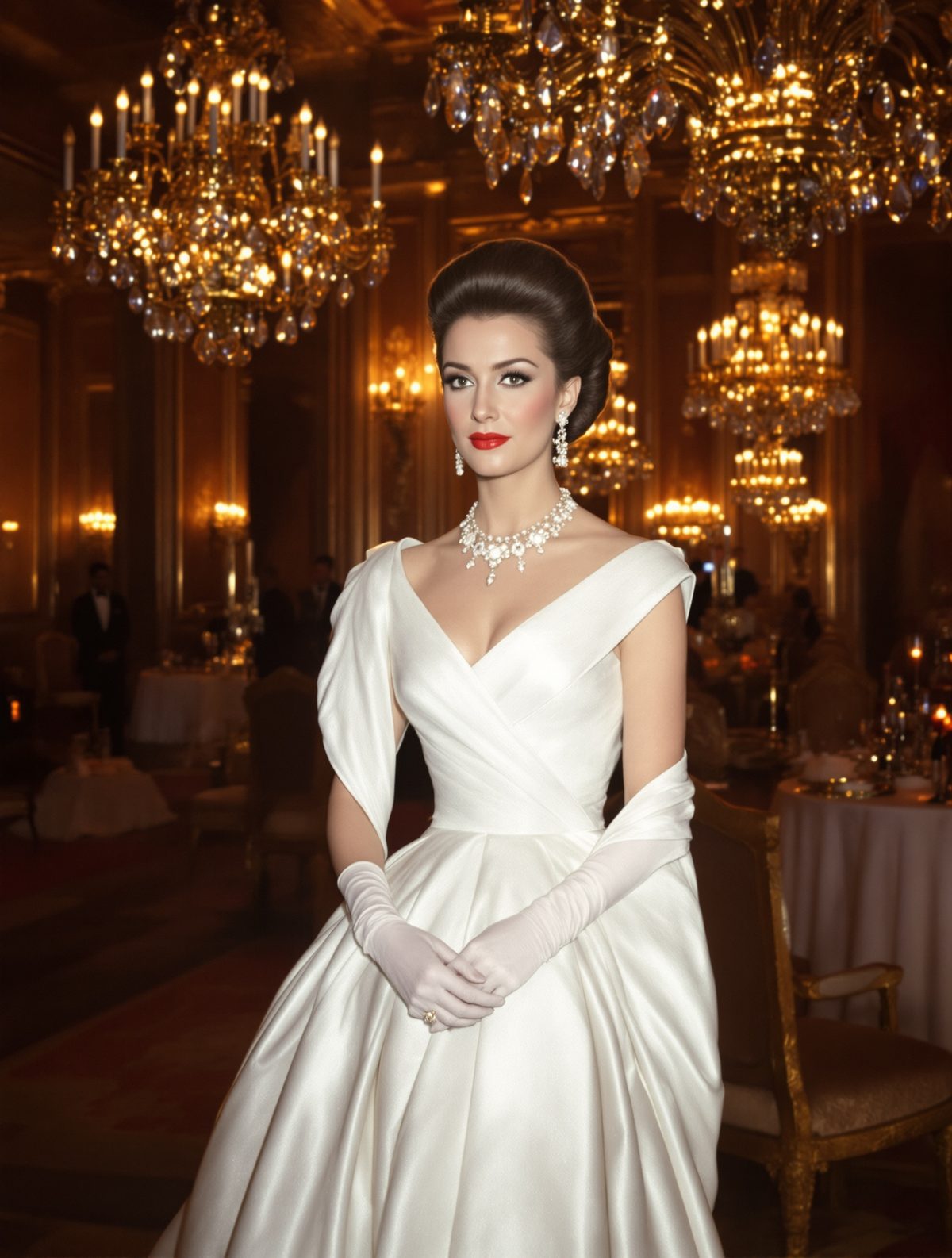
The glittering chandeliers of Buckingham Palace have witnessed countless moments of royal splendour, but few as unexpectedly scandalous as the evening of 15th November 1965. Princess Margaret, the Queen's younger sister and the monarchy's resident rebel, made what appeared to be an elegant entrance to a state banquet honouring visiting dignitaries. Her choice was a stunning white Christian Dior gown that seemed the epitome of royal sophistication. That is, until the palace's brilliant dining room lighting revealed a shocking truth that would send ripples through the court and ensure this particular dress would never see another royal occasion.
The Princess Who Rewrote Royal Rules
By 1965, Princess Margaret had already established herself as the royal family's most unpredictable member. At 35, she had survived the constitutional crisis of her abandoned romance with Group Captain Peter Townsend, married photographer Antony Armstrong-Jones (later Lord Snowdon), and was navigating the complex waters of being a modern princess in a rapidly changing world. Margaret had always possessed an innate understanding of fashion's power, working closely with designers like Norman Hartnell and Christian Dior to create looks that were simultaneously regal and avant-garde.
The Princess was known for pushing boundaries in ways her elder sister simply couldn't. Where the Queen embodied duty and tradition, Margaret represented glamour and rebellion. She frequented London's most fashionable nightclubs, counted celebrities among her closest friends, and approached royal protocol with a creative interpretation that both thrilled and horrified palace courtiers.
Her fashion choices had always been more daring than those of other royal ladies. Margaret understood that clothes were a form of communication, and she wasn't afraid to make bold statements. She had introduced shorter hemlines to royal wardrobes, experimented with dramatic makeup, and chosen designs that emphasised her petite but striking figure. However, nothing in her sartorial history had quite prepared the court for what would unfold that November evening.
A Dior Creation with Hidden Secrets
The gown in question was a masterpiece of haute couture craftsmanship from the House of Dior. Created during the tenure of Marc Bohan, who had taken over as artistic director after the sudden death of Yves Saint Laurent's brief stint following Christian Dior's passing, the dress represented the maison's commitment to elegant innovation. The design appeared deceptively simple: a floor-length white gown with long sleeves and a modest neckline that seemed perfectly appropriate for a formal state occasion.
The dress featured Dior's signature attention to detail, with exquisite construction and a silhouette that flattered Margaret's figure beautifully. From the exterior, it appeared to be made of substantial white fabric, lined and structured in the manner expected of royal formal wear. The Princess had likely chosen it precisely because it seemed to strike the perfect balance between fashionable and appropriate—a white gown being entirely suitable for a state banquet.
What wasn't immediately apparent was the dress's construction. The outer layer was made of a fine, nearly transparent fabric that relied on strategic lining and the careful management of lighting to maintain modesty. In the softer lighting of Margaret's private apartments and the palace corridors, the dress appeared perfectly opaque. The subtle sheerness wasn't noticeable during her preparation or her initial entrance to the evening's festivities.
The Moment Everything Changed
State banquets at Buckingham Palace are illuminated by some of the most brilliant lighting in any royal residence. The combination of crystal chandeliers, wall sconces, and strategically placed lamps creates an atmosphere of magnificent grandeur—but also reveals every detail with crystal clarity. As Princess Margaret took her place in the State Dining Room, the full power of this lighting system transformed her elegant white gown into something far more revealing than anyone had anticipated.
The fine fabric that had appeared opaque in dimmer lighting became virtually transparent under the palace's brilliant illumination. The dress revealed not just the Princess's silhouette, but details of her undergarments and figure that were decidedly inappropriate for a formal state occasion. What had been intended as sophisticated elegance became an unintentional display that shocked the assembled dignitaries and court officials.
The Queen's reaction, according to those present, was one of barely contained horror mixed with the kind of resigned exasperation that only comes from years of managing her sister's unpredictable choices. Photographers present captured Her Majesty's expression—a masterclass in royal composure under pressure, though her eyes reportedly conveyed volumes about her feelings regarding Margaret's sartorial selection.
Palace staff moved with practiced discretion to manage the situation, though there was little that could be done without creating an even greater spectacle. Margaret herself, ever the professional, maintained her composure throughout the evening, though she was undoubtedly aware of the stir she had created.
The Aftermath and Royal Protocol
The immediate aftermath of the "see-through dress incident" demonstrated the palace's sophisticated machinery for managing potentially damaging situations. While photographers had captured images of the evening, there was significant pressure applied to limit the circulation of the more revealing photographs. The royal press relations team worked overtime to ensure that coverage focused on the diplomatic success of the state banquet rather than the Princess's fashion mishap.
Within royal circles, however, the incident became legendary. Courtiers who had witnessed the evening would speak of it in hushed tones for years to come. The episode reinforced Margaret's reputation as the royal family member most likely to create unexpected drama, though this time the drama was entirely unintentional.
The Queen, according to palace insiders, had what can only be described as a frank conversation with her sister about appropriate attire for state occasions. While the details of this discussion were never made public, its effectiveness was demonstrated by Margaret's subsequent choices for formal events, which tended to err on the side of more conservative styling.
The Dior gown itself was retired from royal service immediately. Despite its beauty and the craftsmanship involved in its creation, it never appeared at another royal event. The dress had become too associated with potential embarrassment to risk a repeat performance, regardless of lighting conditions.
A Legacy of Royal Fashion Rebellion
The see-through dress incident of 1965 has become part of royal fashion folklore, representing both the pitfalls and the pioneering spirit of Princess Margaret's approach to style. While the evening was undoubtedly embarrassing for all involved, it also highlighted Margaret's willingness to experiment with fashion in ways that would eventually benefit the entire royal family's relationship with contemporary style.
Margaret's fashion risks—both successful and otherwise—helped modernise the monarchy's image during a crucial period of social change. Her willingness to work with cutting-edge designers and embrace new styles paved the way for future generations of royals to express personality through their wardrobes. The same spirit that led to the Dior disaster also produced some of the most memorable and influential royal fashion moments of the 1960s and 1970s.
Today, as we watch contemporary royals navigate the balance between tradition and modernity in their fashion choices, Princess Margaret's legacy looms large. Her 1965 mishap serves as both a cautionary tale about the importance of considering all aspects of royal presentation and a reminder that true style sometimes requires taking risks. The night she accidentally scandalised Buckingham Palace has become a defining moment in royal fashion history—proof that even the most carefully planned sartorial choices can have unexpected consequences, and that sometimes the most memorable fashion moments are the ones that go slightly, spectacularly wrong.