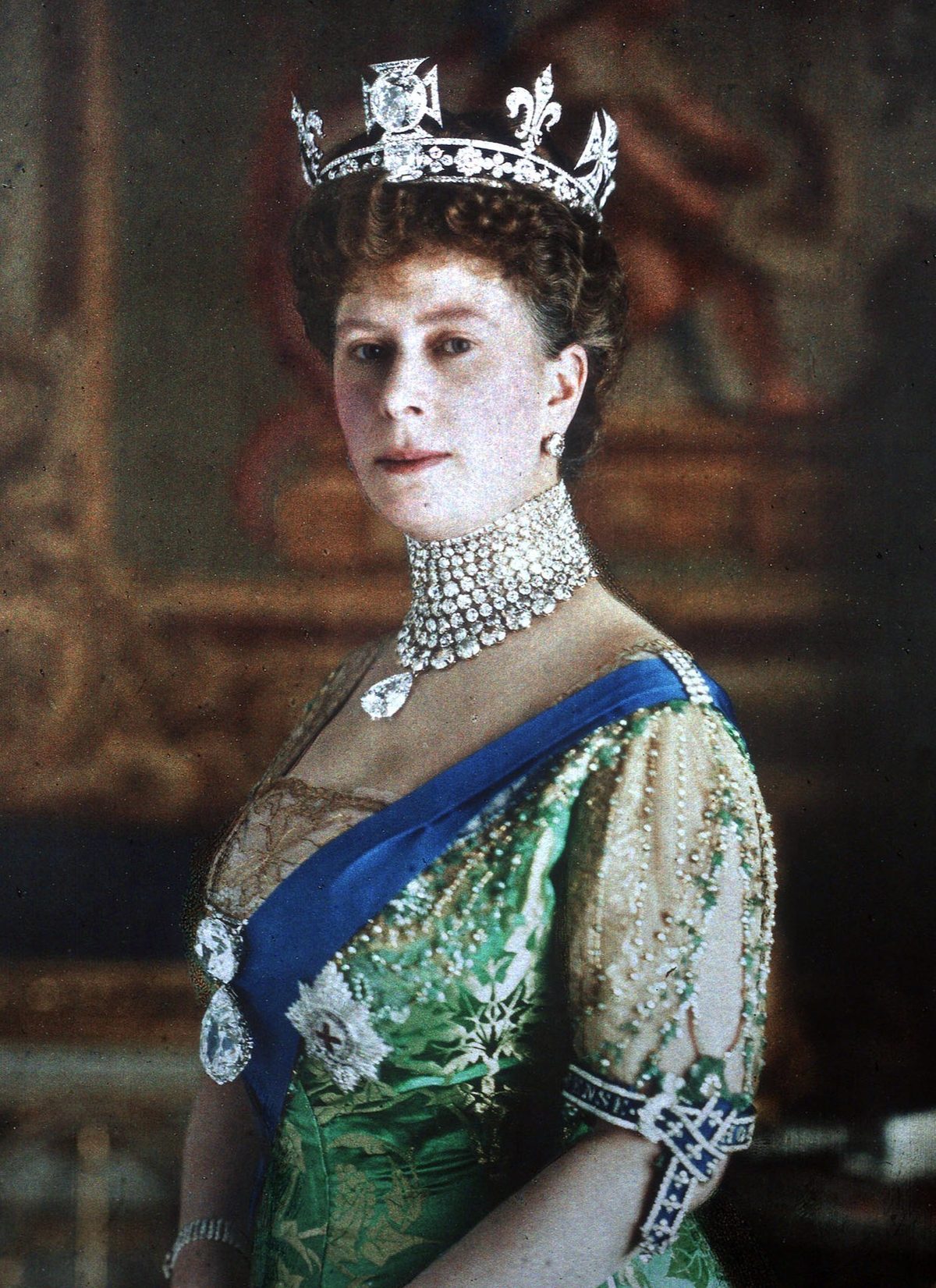
She was known for being composed, formal, and almost untouchable. But when Queen Mary walked through the wards of blinded First World War soldiers at St Dunstan's in 1917, something in her broke. What happened next became one of the most quietly devastating moments of her entire public life.
A Moment of Unexpected Vulnerability
The year was 1917, and the ongoing horror of the First World War weighed heavily on the public spirit. Amidst the relentless marches of soldiers and the grieving of families, Queen Mary demonstrated her own brand of steadfast support for Britain's servicemen. As consort to King George V, her regal and steadfast presence was a symbol of continuity and hope in a tumultuous era.
Despite her reputation for formality and her unyielding adherence to royal protocol, Queen Mary was not immune to the human stories unfolding on the home front. This was evidenced starkly during her visits to St Dunstan's, an institution dedicated to the care of blinded soldiers and sailors returning from the battle-torn fields of Europe. The outpouring of royal concern was brought into sharp focus as she arrived at the hospital, each step a testament to her dedication to personal service, not just distant figure-head duty.
The Room of Heroes
St Dunstan's was a haven for veterans grappling with a future of darkness—a future wrought by the unforgiving theater of war. It became a place where men learned to navigate a new world, to carve out an existence forever altered by the loss of sight. The Queen's visit to this institution was significant, but what unfolded during her time there left an indelible mark on both the Queen and those she met.
As she proceeded through the ward, the sound of her shoes softly padding along the linoleum floor was almost drowned out by the low murmur of voices and the occasional tapping of a blind man's cane. The atmosphere was a blend of apprehension and anticipation; for these soldiers, a royal visit was a rare and cherished disruption from their daily routine.
It was here, amidst these men weaving their stories of courage and resilience, that Queen Mary met a particular soldier whose life—and whose barren vision—would thereafter be entwined with that of the crown. The details of their exchange are sparse, but it remains one of the most poignant anecdotes from her lifetime.
The Power of Unspoken Words
Reports of the day describe how Queen Mary, with poignant deliberateness, chose to sit beside this blinded soldier. His world had been turned dark by war, but in that moment, he felt touched not merely by the Queen's presence but by her openly shared humanity. She took his hand in both of hers—those royal hands accustomed to waving from balconies and sealing national decrees—and she wept silently, a gesture of profound empathy transcending the barriers of class and circumstance.
The soldier, whose identity remains respectfully anonymous in historical records, later recounted that this was the kindest act anyone had ever done for him. In that quiet moment, without pageantry or words, Queen Mary transcended her royal composure and revealed a vulnerability seldom seen. Her tears, a silent acknowledgment of his sacrifice, spoke more clearly than any eloquent speech. It was a simple yet powerful testimony of shared grief and support, a recognition of his suffering, and an unvoiced promise that his bravery was not overlooked by crown or country.
A Queen's Humanity
For Queen Mary, who was raised to embody the unyielding strength of the monarchy, this encounter was exceptional. It was an unguarded moment reflecting the deepest compassion in its purest form. Her empathy did not diminish her regal stature, but rather, it amplified her humanity in a way that was both profound and lasting.
The royal family, historically framed just beyond the reach of ordinary citizens, is often seen through a lens of duty-bound solemnity and grandeur. Yet, Queen Mary's tearful gift to this blinded soldier redefined her relationship with her subjects, showcasing an aspect of royalty unrestrained by conventional expectations.
The societal impact of such displays of royal warmth should not be underestimated. At a time when the world seemed hell-bent on plunging deeper into chaos, this intimate act of kindness provided a tangible link between the monarchy and the common people. It demonstrated that empathy and understanding were not foreign to the golden rooms of Buckingham Palace.
Echoes Beyond the Past
More than a century later, as contemporary society navigates its own trials, the heartwarming narrative of Queen Mary and the blinded soldier remains relevant. It serves as a reminder of the enduring power of compassion and the extraordinary impact of simple kindness. Though much has changed within the corridors of monarchy since those days, the values embodied in this encounter have retained their vibrance.
Today's royal family, led by descendants of Queen Mary herself, continues to navigate the delicate balance between age-old tradition and modern engagement. Their actions, steeped in the legacy of moments like Queen Mary's visit, often reflect that same desire to connect. The challenges they face are different, yet the core missions of service and empathy remain unchanged.
Queen Mary's tearful gift to the blinded soldier stands as an intimate legacy—one that urges us to look at the monarchy not just as an institution of past and present ceremonial grandeur but as a beacon of continuing human empathy and shared resilience. In such stories, the resonance of duty mingled with compassion writes a chapter for both royalty and subject alike, one where the echoes of a tearful queen continue to find relevance in the story of who we are, together, in the world we strive to build.
📷 Photo: Jean Desboutin. Public domain via Wikimedia Commons.