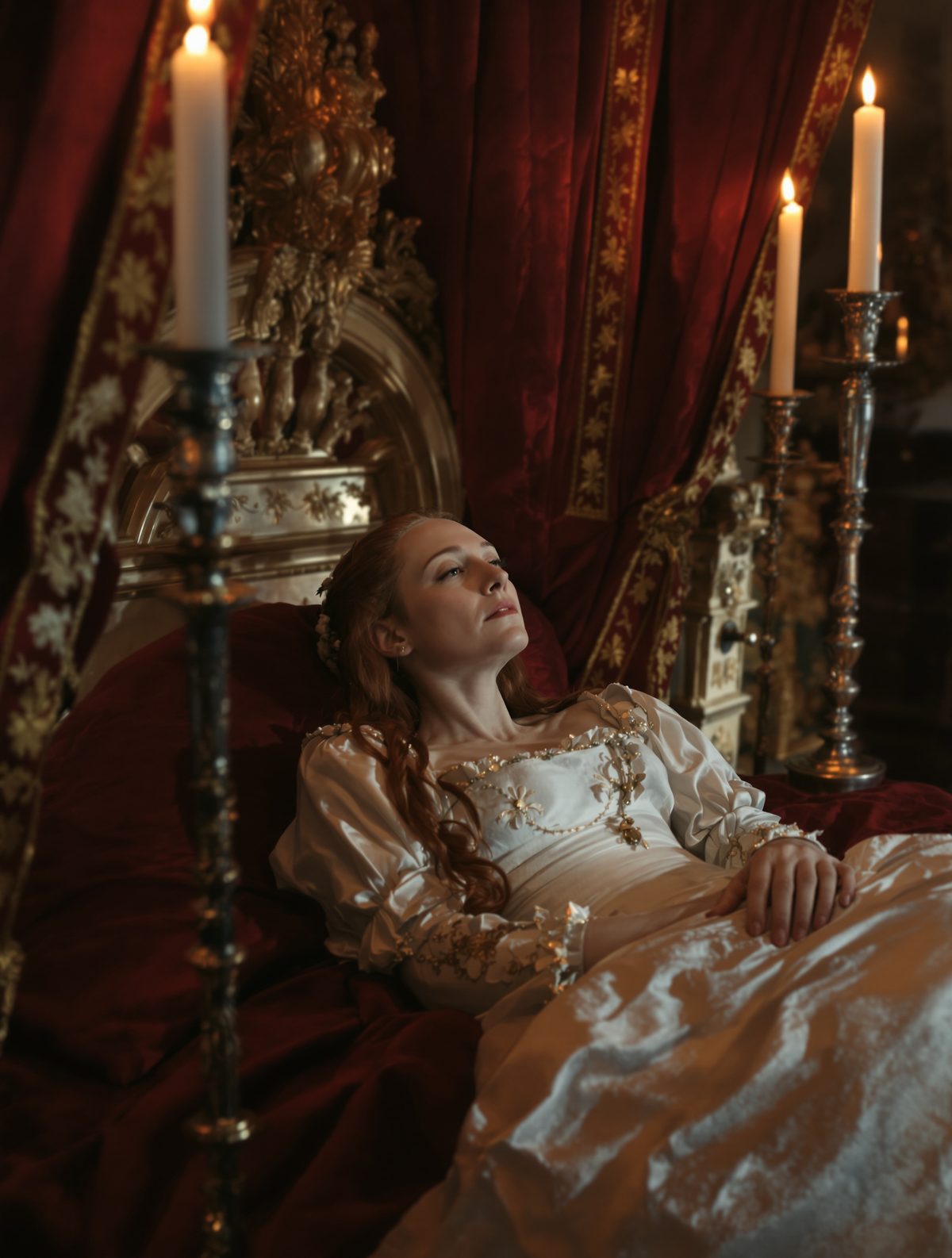
The November wind rattled the windows of St James's Palace as England's first Queen Regnant lay dying in her bed, surrounded by her most trusted ladies-in-waiting. They expected prayers, perhaps final words about her kingdom or her faith. Instead, Queen Mary I whispered something so unexpected, so heartbreaking, that it would haunt those who heard it for the rest of their lives. In her final moments, the woman history would remember as "Bloody Mary" revealed the phantom that had tormented her more than any political rebellion: the children she never had, and the love that remained forever out of reach.
The Queen's Greatest Sorrow
To understand Mary's final words, we must first grasp the profound tragedy that shaped her reign and consumed her heart. Born in 1516 to Henry VIII and Catherine of Aragon, Mary had grown up believing she would bear the heirs that would secure England's Catholic future. Her marriage to Philip II of Spain in 1554 seemed to promise everything she desired: a powerful Catholic husband, an alliance with Europe's mightiest empire, and the prospect of children who would restore England to the papal fold.
But Philip, eleven years her junior and ruler of a vast empire, viewed their union primarily through the lens of politics rather than passion. While Mary fell deeply in love with her handsome Spanish husband, Philip's affections remained coolly diplomatic. He spent barely a year in England during their four-year marriage, leaving Mary to rule alone while he attended to his continental territories.
Even more devastating were the phantom pregnancies that twice convinced Mary she was carrying the heir England desperately needed. In 1554 and again in 1557, the Queen's body exhibited all the signs of pregnancy – her abdomen swelled, she felt what she believed were the movements of a child, and her monthly courses ceased. Court physicians confirmed the pregnancies, preparations were made for royal births, and Te Deums were sung in thanksgiving across the realm.
The Cruel Deception of Hope
The psychological condition now known as pseudocyesis, or false pregnancy, was little understood in Tudor times. For Mary, these episodes were devastatingly real. She would spend months preparing for motherhood, commissioning cradles, hiring wet nurses, and feeling what she genuinely believed were her unborn children moving within her womb. The court would organize itself around the impending royal birth, with nobles gathering to witness the arrival of England's Catholic heir.
When no children came, the disappointment was crushing – not just for Mary personally, but for her entire religious and political project. Without an heir, her restoration of Catholicism would die with her, and her Protestant half-sister Elizabeth would inherit the throne. The phantom pregnancies became a source of whispered speculation throughout European courts, with some suggesting they were signs of divine displeasure, others attributing them to the Queen's desperate longing for motherhood.
Contemporary accounts describe Mary as a woman transformed by these false hopes and bitter disappointments. Once known for her learning, her linguistic abilities, and her genuine piety, she became increasingly isolated and melancholic. Her marriage had brought her neither the companionship she craved nor the children she desperately needed to secure her legacy.
The Final Hours at St James's Palace
By autumn 1558, Mary's health was failing rapidly. Modern historians suggest she may have suffered from ovarian cysts or uterine cancer – conditions that could have contributed to her phantom pregnancies and ultimately proved fatal. As she lay dying in the palace that had witnessed so many Tudor dramas, her mind returned obsessively to the great sorrows of her life.
According to several contemporary sources, including accounts from her ladies-in-waiting, Mary's final utterances were not the conventional prayers for her soul or blessings for her successor that might be expected of a dying monarch. Instead, she spoke repeatedly of feeling movements in her womb – the phantom kicks that had tormented her for years. Her devoted attendants, women who had served her through all her trials, could only listen in heartbroken silence.
The Queen's reported final statement – "When they open me, you will find Philip and Calais lying in my heart" – captures the twin tragedies that defined her reign. Philip, the absent husband whose love she could never fully claim, and Calais, the last English foothold in France, lost to the French during her reign and considered a catastrophic blow to English prestige. In her dying moments, Mary revealed that these losses had, quite literally, broken her heart.
A Legacy Written in Sorrow
The tragedy of Mary's final words lies not just in their content, but in what they reveal about a woman who had been shaped by forces largely beyond her control. Declared illegitimate by her father, restored to the succession, thrust onto a throne she had to fight to claim, and married to a man whose political calculations mattered more than her emotional needs – Mary's life had been a series of disappointments punctuated by brief moments of hope.
Her ladies-in-waiting, who had witnessed her private struggles behind the public facade of majesty, understood the full weight of her final confession. They had seen her pace her chambers during her phantom pregnancies, had helped her prepare for children who would never come, and had watched her scan every letter from Spain hoping for word from Philip.
The autopsy that Mary seemed to anticipate in her final words never took place – royal bodies were not subjected to such indignities in Tudor England. But her metaphorical truth was clear: the absence of Philip's love and the loss of Calais had indeed consumed her from within, leaving her heart as empty as her womb.
When we consider Mary's dying words today, they remind us that even queens – perhaps especially queens – are human beings first, royal symbols second. Behind the crown and scepter, behind the religious ceremonies and political calculations, Mary Tudor was a woman who longed for the simple human happiness of a loving marriage and children to cherish. Her final utterances, shocking in their intimacy and devastating in their honesty, offer us a glimpse into the private pain of public majesty – a reminder that the weight of a crown can never truly compensate for the absence of love. In death, as in life, Mary's greatest tragedy was not her political failures, but the phantom children who existed only in her hopes and the distant husband who remained forever just beyond her reach.