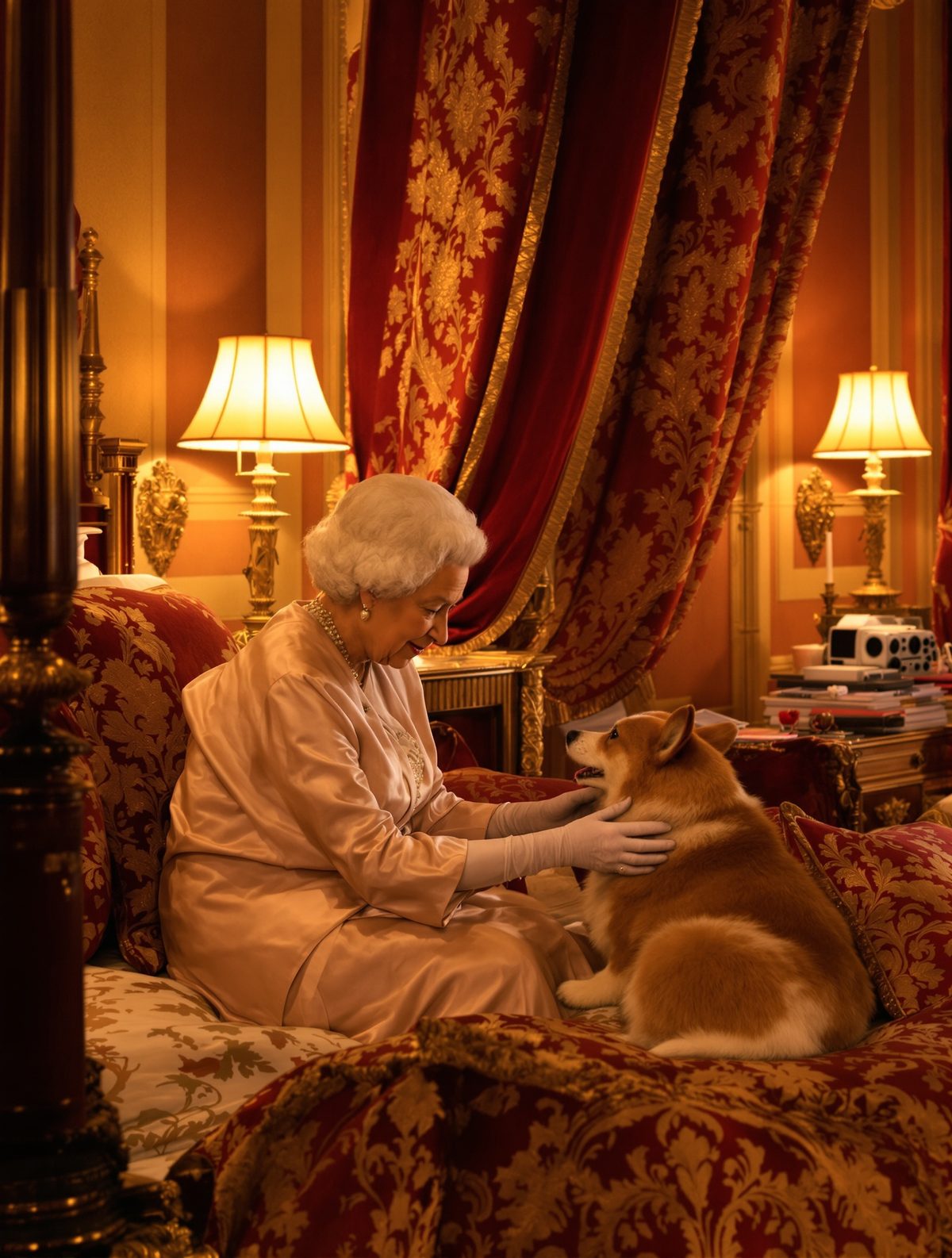
Behind the gilded doors of Buckingham Palace, Queen Elizabeth II harbored a touching secret that palace staff guarded for seven decades. Every night, against all royal protocol, the monarch shared her private sanctuary with her most trusted companions. While the world knew of Her Majesty's deep affection for her corgis, few realized that these beloved dogs didn't just live in the palace—they slept beside the Queen herself, curled up on silk cushions in the most private room in the realm.
A Royal Sanctuary Shared
The Queen's bedroom at Buckingham Palace was always considered the ultimate private space—a sanctuary where even the most senior courtiers rarely ventured. Yet for seven extraordinary decades, from the moment Elizabeth ascended the throne in 1952 until her passing in 2022, this hallowed chamber housed an endearing secret. Each evening, as the palace settled into quiet and the last of the day's official duties concluded, a small procession of corgis would make their way to the royal bedroom.
Palace insiders, bound by both professional discretion and genuine affection for their sovereign, maintained this charming confidence throughout Her Majesty's reign. The sight of silk cushions arranged carefully beside the Queen's bed became as familiar to her closest staff as the morning tea service or evening briefing papers. These weren't just any cushions—they were specially commissioned pieces, crafted from the finest materials and positioned with the same precision that governed every other aspect of palace life.
The arrangement spoke volumes about Elizabeth's character. Here was a woman who could command armies, dissolve parliaments, and receive world leaders, yet chose to share her most intimate space with creatures who offered nothing but unconditional love and companionship. It was perhaps the most human gesture imaginable from someone whose life was otherwise governed by centuries of protocol and tradition.
Breaking Protocol for Love
Royal protocol has always been notoriously strict about animals in the palace, particularly in the private apartments. Traditionally, royal pets were housed in kennels or designated areas, cared for by specialized staff and kept at a respectful distance from the formal business of monarchy. The Queen's decision to welcome her corgis into her bedroom represented a quiet but significant departure from these established customs.
The choice was entirely her own—a rare instance where personal preference triumphed over institutional tradition. Palace staff quickly adapted to this new reality, understanding that Her Majesty's evening routine was incomplete without her four-legged companions settling in for the night. The corgis seemed to sense the privilege of their position, reportedly displaying impeccable behavior during their nighttime duties as royal bedmates.
This nightly arrangement required careful coordination from the palace staff. The silk cushions needed daily attention—cleaned, fluffed, and positioned just so. The corgis themselves received evening grooming to ensure they were pristine before entering the Queen's private chamber. Even their feeding schedules were adjusted to accommodate this special routine, with their final meal of the day timed to prevent any nighttime disruptions.
The Queen's ladies-in-waiting and personal staff became expert at managing this delicate balance between royal dignity and canine comfort. They understood that these moments—the Queen settling into bed with her beloved corgis nearby—represented some of the most peaceful and genuine parts of Her Majesty's day.
Seven Decades of Faithful Companionship
Over the course of her remarkable reign, dozens of corgis shared this intimate privilege with the Queen. Each dog brought its own personality to the bedroom sanctuary, yet all seemed to understand the sacred nature of their role. The silk cushions witnessed the changing of the guard as older corgis passed on and younger ones took their place, but the routine itself remained constant—a thread of continuity through seven decades of extraordinary change.
The Queen's devotion to this evening ritual never wavered, even during the most challenging periods of her reign. Whether dealing with constitutional crises, family difficulties, or global events that demanded her attention, she always ensured her corgis were comfortable and close. Palace staff noted that during particularly stressful times, Her Majesty seemed to find special solace in these quiet moments with her dogs.
The arrangement evolved subtly over the years. As the Queen aged, the positioning of the cushions was adjusted to ensure she could easily see and reach her companions. During her later years, when mobility became more challenging, staff made certain that the corgis could be close enough to provide comfort without creating any practical difficulties for the monarch.
The dogs themselves seemed to age into their roles with dignity, understanding somehow that nighttime in the royal bedroom required a different demeanor than their daytime palace adventures. They would settle onto their silk cushions with remarkable quiet, as if aware they were participating in something both special and secret.
The Human Heart Behind the Crown
This touching tradition reveals something profound about Queen Elizabeth II's character—her ability to maintain genuine, uncomplicated relationships in a world governed by complexity and ceremony. While her days were filled with state papers, official engagements, and the weight of constitutional responsibility, her evenings offered the simple pleasure of companionship with creatures who knew nothing of crowns or kingdoms.
The secret was kept not out of shame or embarrassment, but out of respect for the Queen's need for private moments of normalcy. Palace staff understood intuitively that this wasn't merely about pets sharing a bedroom—it was about preserving space for the woman behind the monarch to simply be herself. The corgis asked nothing of her except love, offered no political advice, and required no diplomatic consideration.
The silk cushions became symbols of the Queen's commitment to finding joy and comfort in simple things, even within the grandest of settings.
The loyalty of the palace staff in maintaining this secret for seven decades speaks to their deep respect and affection for their sovereign. In an age where palace secrets rarely remained hidden for long, this charming tradition endured because everyone who knew about it understood its importance to the Queen's well-being and happiness.
The image of Britain's longest-reigning monarch settling into sleep beside her faithful corgis, all of them comfortable on their respective silk furnishings, captures something essential about Elizabeth II's reign. She understood that true majesty lay not in distance and formality, but in the grace to honor both duty and love, tradition and tenderness.
As we remember Queen Elizabeth II's extraordinary seven-decade reign, this secret reminds us that even the most exalted lives are made meaningful by simple acts of love and loyalty. In a world of constant change and complexity, the nightly gathering of woman and dogs on silk cushions represented something timelessly beautiful—the enduring power of companionship to bring comfort, joy, and peace to any heart, royal or otherwise.