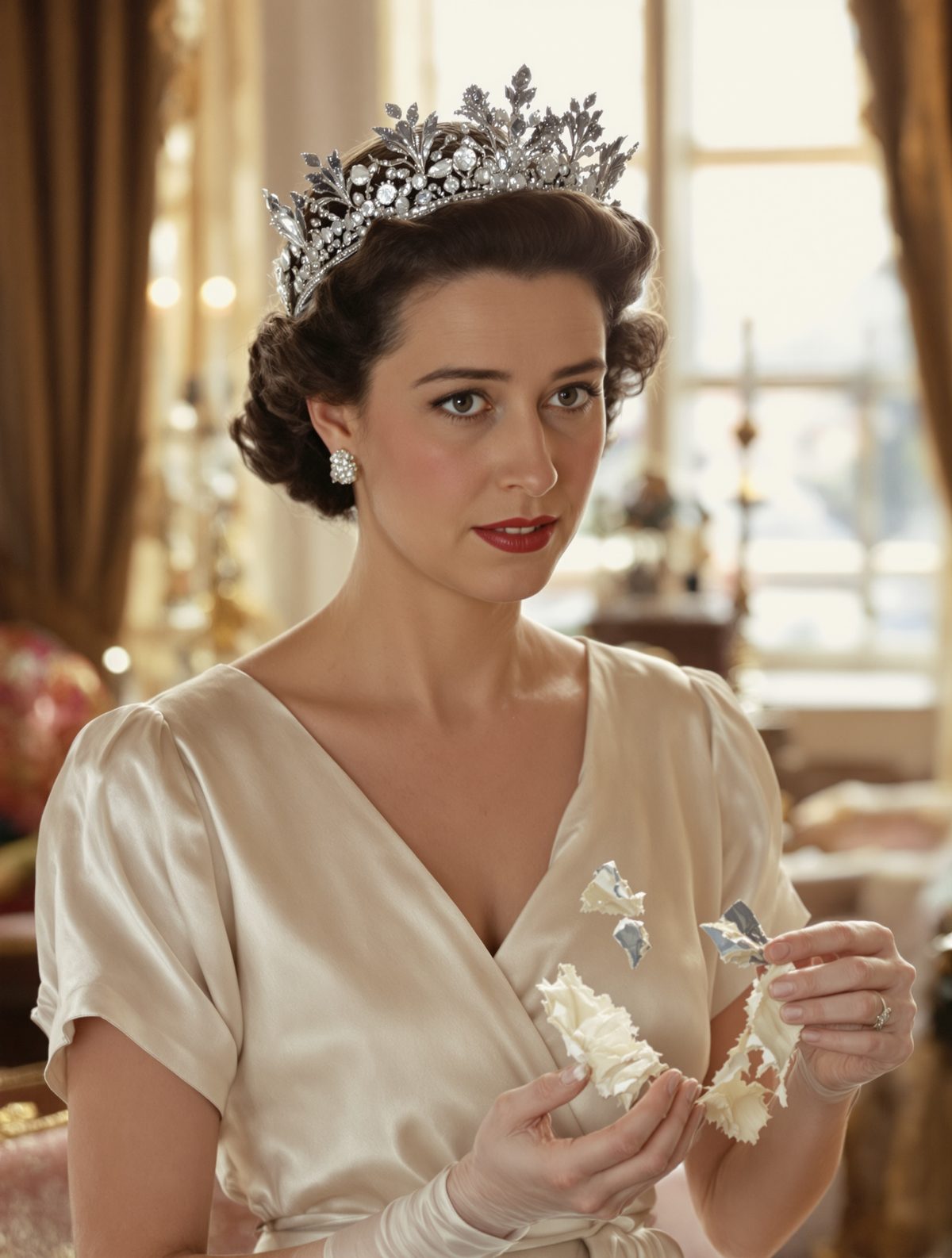
The morning mist hung over Buckingham Palace as twenty-one-year-old Princess Elizabeth prepared for the most important day of her young life. November 20, 1947, would see her wed Lieutenant Philip Mountbatten in a ceremony watched by millions around the world. But as the future Queen reached for her wedding tiara—the exquisite Queen Mary Fringe Tiara—disaster struck. The precious diamond headpiece, meant to crown her on this momentous day, snapped clean in half in her hands. With just hours until she was due at Westminster Abbey, the royal household faced a crisis that would test their resourcefulness and send court jewelers racing through the streets of post-war London.
The Queen Mary Fringe Tiara: A Crown Jewel with History
The tiara that broke on that fateful morning was no ordinary piece of jewelry. Originally crafted in 1919 for Queen Mary, Princess Elizabeth's grandmother, the Queen Mary Fringe Tiara was a masterpiece of royal craftsmanship. Designed by Garrard & Co., the Crown Jewellers, it featured forty-seven graduated diamond bars set in gold and silver, creating a stunning sunburst effect that had graced the heads of royalty for nearly three decades.
Queen Mary herself had commissioned the piece, transforming a diamond necklace given to her as a wedding gift in 1893 by Queen Victoria. The innovative design allowed the piece to be worn both as a necklace and as a tiara, showcasing the versatility that made it a favorite among the royal ladies. The tiara had already witnessed significant royal moments, having been worn at various state occasions and formal events throughout the 1920s and 1930s.
For Princess Elizabeth, choosing this particular tiara held deep sentimental value. It represented a connection to her beloved grandmother Queen Mary, who had been instrumental in her upbringing and education in royal duties. The selection also honored the continuity of the monarchy—something particularly meaningful in the aftermath of World War II, as Britain sought to rebuild and look toward a hopeful future.
A Morning of Crisis at Buckingham Palace
The atmosphere at Buckingham Palace on the morning of November 20th had been one of controlled excitement. The royal household staff had been preparing for months, coordinating every detail of what would become one of the most celebrated royal weddings of the twentieth century. Princess Elizabeth's Norman Hartnell wedding gown hung ready, its intricate embroidery of star flowers, orange blossoms, and ears of corn catching the morning light streaming through the palace windows.
When the tiara broke, the news sent shockwaves through the royal apartments. Here was the future Queen of England, mere hours from her wedding ceremony, holding the pieces of what should have been the crowning glory of her bridal ensemble. The exact moment of the break remains part of royal lore—some accounts suggest it happened as she lifted it from its case, while others indicate it occurred during a fitting.
What we do know is that the palace staff immediately sprang into action. This was, after all, a household trained to handle crises with discretion and efficiency. The broken tiara was carefully gathered, and an urgent call was placed to Garrard & Co., the same jewelers who had created the piece nearly three decades earlier.
A Race Against Time Through London
The story of what happened next has become legendary in royal circles. The court jewelers at Garrard & Co. received the emergency call and immediately understood the gravity of the situation. With Westminster Abbey filling with distinguished guests from around the world—including kings, queens, and heads of state—failure was simply not an option.
A team of skilled craftsmen was assembled, and the broken tiara was rushed to their Bond Street workshop. Using traditional techniques passed down through generations of royal jewelers, they began the delicate process of welding the diamond frame back together. The work required absolute precision; not only did the structural integrity need to be restored, but the tiara had to appear flawless for its close-up moment on one of the most photographed days in royal history.
Meanwhile, back at Buckingham Palace, Princess Elizabeth waited with remarkable composure. Contemporary accounts describe her as surprisingly calm during the crisis, displaying the same steady temperament that would serve her well throughout her future reign. She remained in her dressing gown, ready to complete her preparations the moment the tiara was returned.
The repair work took several precious hours. As the morning progressed toward the early afternoon ceremony, tension mounted throughout the palace. Finally, with time running desperately short, the restored tiara was rushed back through the streets of London to Buckingham Palace.
A Perfect Wedding Despite the Drama
When the repaired Queen Mary Fringe Tiara finally arrived back at the palace, it was nothing short of miraculous. The Garrard craftsmen had performed their work so skillfully that no trace of the morning's drama remained visible. The tiara was immediately fitted onto Princess Elizabeth's head, where it sat perfectly atop her silk tulle veil, which had been lent by her mother, Queen Elizabeth (later the Queen Mother).
The ceremony at Westminster Abbey proceeded without a hitch. As Princess Elizabeth walked down the aisle on the arm of her father, King George VI, the restored tiara sparkled magnificently under the abbey's lights. The two thousand guests and the millions listening on radio around the world were completely unaware of the morning's near-disaster.
The wedding photographs show the tiara in all its glory, creating the perfect complement to Hartnell's ivory silk gown. The diamonds caught the light beautifully, creating the radiant effect that had made the piece so beloved by the royal family. Looking at those images today, it's remarkable to think that just hours before they were taken, the tiara had been in pieces.
The successful repair became a testament not only to the skill of the royal jewelers but also to the resilience and adaptability that would become hallmarks of Elizabeth's reign. Even on her wedding day, she demonstrated the grace under pressure that would serve both her and the nation well in the decades to come.
This dramatic wedding morning incident offers us a delightfully human glimpse into royal life, reminding us that even the most carefully orchestrated royal occasions can face unexpected challenges. The story of the broken tiara has become part of the rich tapestry of royal wedding lore, joining countless other tales of behind-the-scenes drama that make these grand occasions all the more fascinating. Today, as we witness new generations of royals beginning their own married lives, we're reminded that the combination of meticulous planning, skilled craftsmanship, and a healthy dose of good fortune continues to create the magic that makes royal weddings so captivating to audiences worldwide.