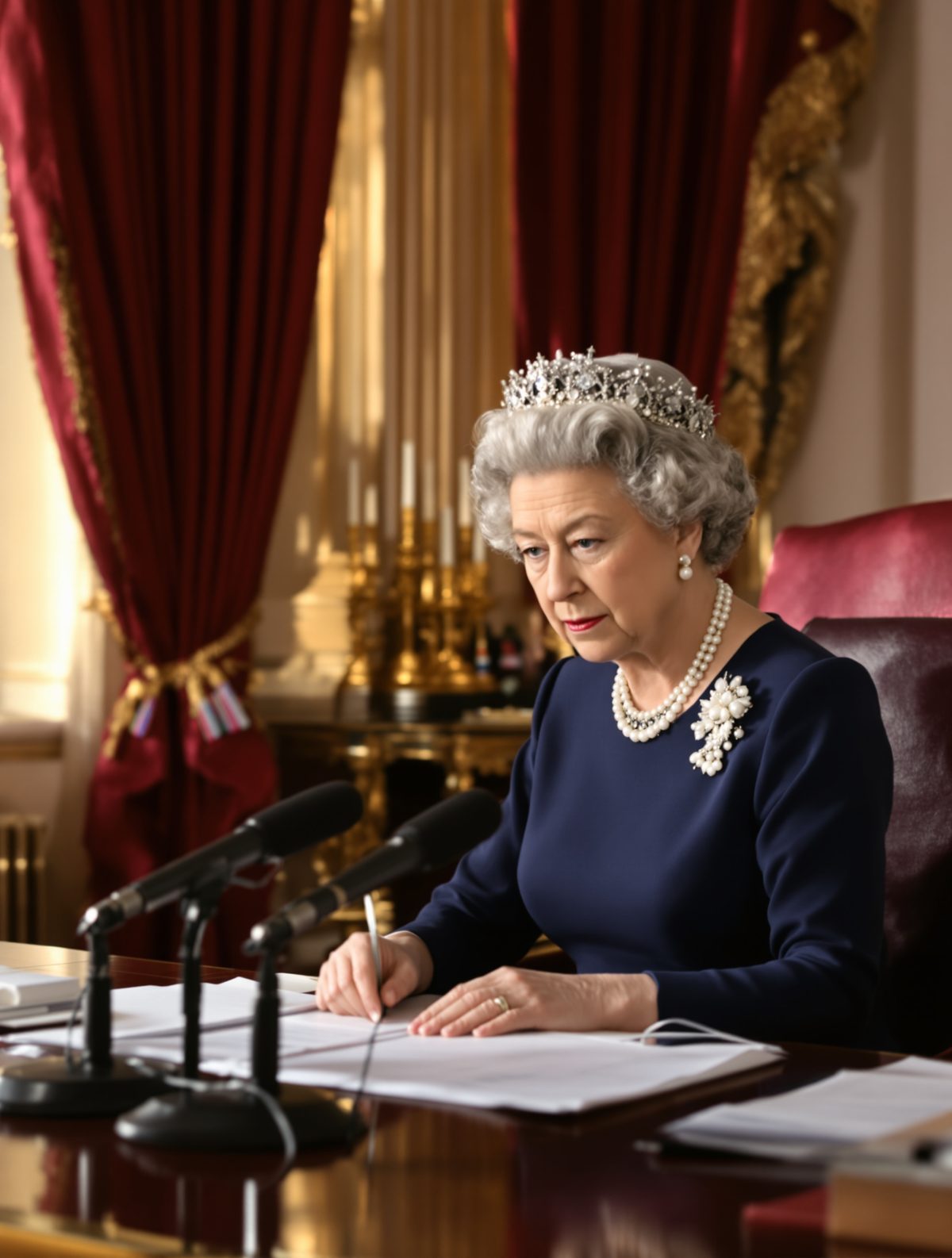
Deep in the bowels of Windsor Castle in 1983, Queen Elizabeth II sat before a microphone practicing words no sovereign should ever have to speak. The Cold War had reached its most terrifying peak, and the unthinkable scenario of nuclear conflict loomed large enough that Britain's most unflappable monarch was rehearsing how to tell her subjects that World War III had begun. For thirty-three years, this haunting speech remained locked away in government vaults—a chilling reminder of how close civilization came to the brink.
A World on the Edge of Destruction
The year 1983 marked one of the most dangerous periods in modern history. Relations between the superpowers had plummeted to depths not seen since the Cuban Missile Crisis. President Reagan had branded the Soviet Union an "evil empire," while the Kremlin remained convinced that America was planning a first strike. In this atmosphere of mutual suspicion and hair-trigger readiness, British officials realized they needed contingency plans for the ultimate nightmare scenario.
Against this backdrop of global tension, the Queen's role as Head of State took on unprecedented gravity. While prime ministers could come and go, she represented the continuity of the nation itself. If Britain faced annihilation, it would be Her Majesty's voice that would need to steady the nation's nerves and rally whatever hope remained. The weight of this responsibility was not lost on the monarch who had already guided her country through decades of challenges.
The secret exercise, codenamed "Wintex-Cimex 83," was designed to test NATO's response to escalating global conflict. As part of this elaborate war game, officials determined that the Queen would need to address her subjects should the unthinkable occur. What followed was one of the most sobering moments of her long reign—a rehearsal for Armageddon.
Behind Palace Doors: Preparing for the Unthinkable
The recording session itself was conducted with the utmost secrecy and gravity. Palace officials worked closely with government ministers to craft a message that would somehow blend the Queen's characteristic dignity with the apocalyptic reality of nuclear war. The speech needed to acknowledge the horror while maintaining the steady, reassuring tone that had become Her Majesty's hallmark during national crises.
In her unmistakable voice, the Queen rehearsed telling her subjects that "the horrors of war could not have seemed more remote" just days earlier, but now the country faced its gravest hour. The practiced words spoke of enemies whose "deadly power" could not be resisted through conventional means alone. Most poignantly, she prepared to acknowledge that "as we strive together to fight off the new evil" many families would endure "the agony of separation."
The human dimension of this moment cannot be overstated. Here was a mother and grandmother, who had lived through the Blitz and witnessed firsthand the devastation of World War II, now contemplating how to help her people face something far worse. Those who knew the Queen well understood that beneath her composed exterior lay a deep well of feeling for her subjects' welfare. The burden of potentially delivering such news must have weighed heavily on her heart.
The Royal Touch: Grace Under Ultimate Pressure
What emerges from accounts of this period is how the Queen approached even this most terrible of duties with her characteristic sense of service. Palace staff noted her professionalism during the rehearsal, treating this nightmare scenario with the same meticulous attention she brought to state occasions and Christmas broadcasts. This was duty in its purest form—preparing for a role she prayed she would never have to fulfill.
The speech revealed fascinating insights into how the monarchy viewed its role during national catastrophe. Rather than simply announcing the facts, the prepared address emphasized shared struggle and collective resilience. The Queen was ready to position herself not above the crisis but alongside her people, facing the same uncertainties and fears. This approach reflected the constitutional monarchy's evolution into something more intimate and emotionally connected to the public experience.
The very existence of such a speech underscored the unique position of the Crown in British life. While politicians might flee to bunkers and military leaders coordinate response strategies, the Queen was prepared to remain a visible symbol of continuity and hope. This willingness to share her people's fate, whatever it might be, exemplified the depth of her commitment to the oath she had taken as a young woman thirty years earlier.
Secrets in the Vault: Why It Remained Hidden
The decision to keep this recording classified for over three decades reflected both the sensitivity of the material and the government's desire to avoid unnecessarily alarming the public about how close Britain had come to nuclear conflict. When the speech finally came to light in 2013, historians and royal watchers were struck by both its historical significance and its deeply human qualities.
The long secrecy also preserved something precious—the dignity of a moment when the Queen prepared for the ultimate test of her reign. By keeping it private for so long, officials allowed Her Majesty's willingness to face the unthinkable to speak for itself, without sensationalism or political exploitation. The eventual release came only after enough time had passed for the world to recognize the gravity of that moment without the immediacy of fear.
Royal biographers have since noted how this hidden chapter illuminated the Queen's character in ways that public appearances never could. Here was evidence of her private preparation for a duty she hoped never to perform—the ultimate expression of putting country before self. The speech represented not just words on a page but a window into the soul of someone who truly understood the weight of the Crown.
A Legacy of Quiet Courage
Today, as we face new global uncertainties and challenges, the Queen's secret rehearsal for humanity's darkest hour takes on fresh significance. It reminds us that true leadership often happens away from cameras and crowds—in quiet moments of preparation for responsibilities we pray we'll never face. The willingness to shoulder such burdens, to practice for the unthinkable while hoping for the best, reveals character in its deepest form.
The 1983 speech that was never delivered stands as a testament to both the unique role of constitutional monarchy and the exceptional person who wore the Crown for seventy years. In preparing to guide her nation through nuclear war, Queen Elizabeth II demonstrated that her commitment to service knew no bounds—not even the end of the world itself. That recording, locked away for thirty-three years, preserved not just words but proof of a devotion to duty that defined one of history's most remarkable reigns.