In the grand galleries of the Royal Academy of Arts in 1883, visitors paused to admire a striking marble bust displayed among the summer exhibition's finest works. The sculpture, listed simply as the work of an unknown artist, possessed a remarkable quality that drew the eye and commanded respect. Little did those Victorian art lovers know they were witnessing history in the making—not just because of the sculpture's artistic merit, but because it had been created by one of the most accomplished royal artists Britain has ever known: Princess Louise, Queen Victoria's fourth daughter.
A Princess with Artistic Ambitions
Princess Louise Caroline Alberta was never destined to be an ordinary royal daughter. Born in 1848, she grew up during a remarkable period of cultural flowering in Victorian Britain, when the arts were experiencing unprecedented patronage and innovation. Unlike her sisters, who were expected to marry into European royalty and fade into domestic obscurity, Louise possessed an independent spirit and genuine artistic talent that would not be suppressed.
From an early age, Louise demonstrated exceptional ability in drawing and painting. Queen Victoria, herself an accomplished artist who understood the therapeutic and intellectual benefits of creative pursuits, encouraged her daughter's talents. The Queen arranged for Louise to study under some of the finest artists of the day, including the renowned sculptor Mary Thornycroft. This was no mere dabbling in ladylike accomplishments—Louise approached her art with the dedication and seriousness of a professional.
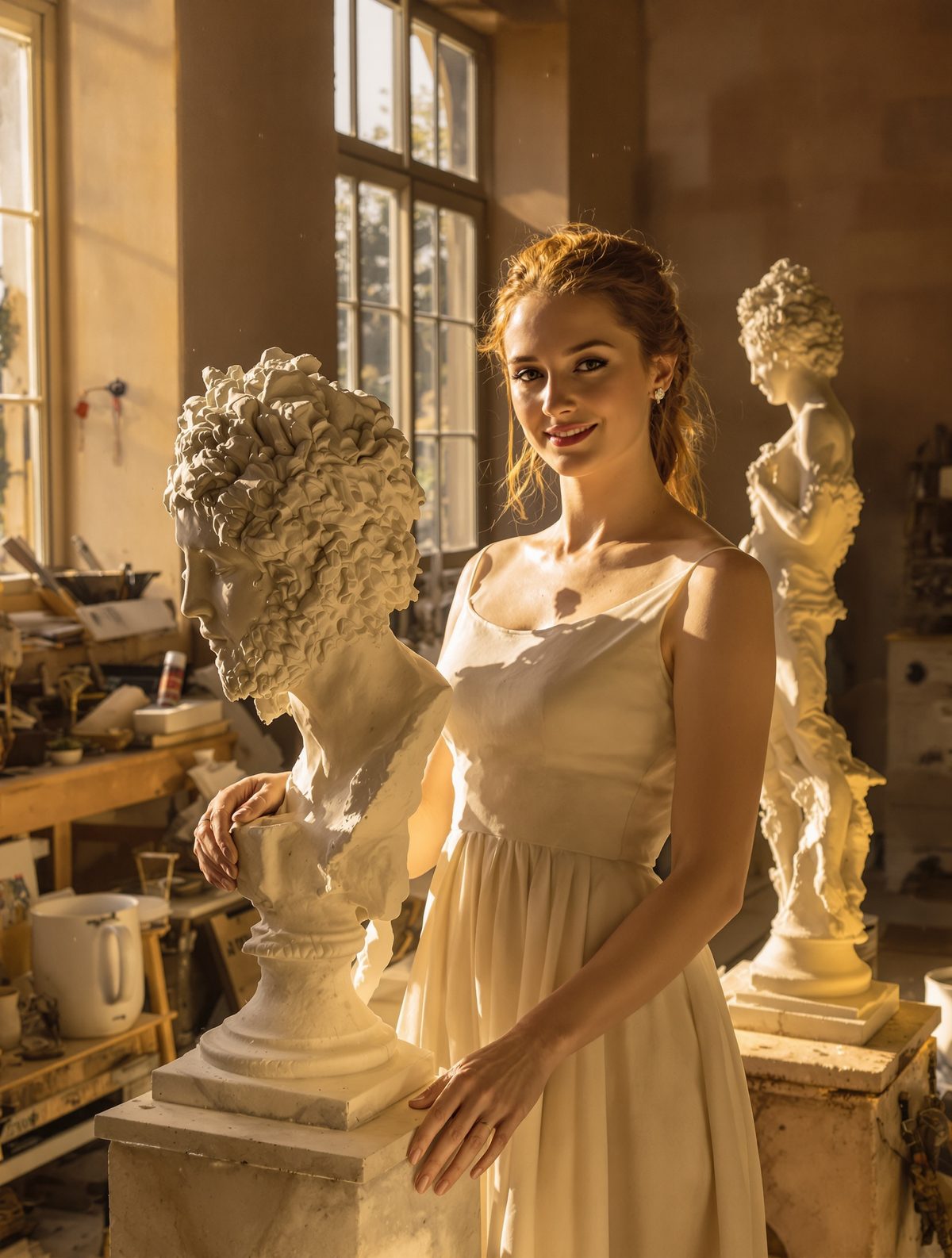
By the 1870s, Princess Louise had established herself as a skilled sculptor, working primarily in clay and marble. Her pieces displayed a technical proficiency and emotional depth that impressed even the most discerning critics. Yet therein lay the challenge: how could a royal princess, bound by protocol and social expectations, truly test her abilities against the artistic establishment of the day?
The Secret Submission
The Royal Academy's Summer Exhibition was—and remains—one of the most prestigious showcases for contemporary art in Britain. For any artist, acceptance into this hallowed exhibition represented validation of the highest order. The selection process was notoriously competitive, with thousands of works submitted annually and only the finest chosen for display.
In 1883, Princess Louise made a decision that would have shocked Victorian society had it been known at the time. Working in complete secrecy, she submitted one of her sculptures to the Royal Academy under an assumed name. The piece was a masterful marble bust, demonstrating the technical skill and artistic vision she had developed through years of dedicated study and practice.
The anonymity was crucial. Had the selection committee known the work came from Queen Victoria's daughter, questions would inevitably have arisen about whether royal privilege influenced their judgment. Louise was determined that her art should succeed or fail purely on its own merits, without the gilding of her royal title or the burden of lowered expectations often applied to aristocratic amateurs.
The Art World's Best-Kept Secret
The sculpture was accepted—a triumph that Princess Louise could share with no one except perhaps her closest confidantes. For months during the exhibition's run, she experienced the unique pleasure of watching visitors admire her work, reading reviews that praised the mysterious sculptor's technique, all while maintaining her royal composure and keeping her authorship secret.
Contemporary accounts suggest that art critics were genuinely impressed by the piece, noting its sophisticated understanding of form and its emotional resonance. The sculpture stood entirely on its own artistic merit, displayed alongside works by some of the era's most celebrated artists. For Louise, this must have provided immense personal satisfaction—proof that her years of study and dedication had produced work worthy of professional recognition.
The Great Revelation
When Princess Louise's authorship was eventually revealed, the reaction was immediate and dramatic. Victorian society was captivated by the story of the royal sculptor who had successfully infiltrated the art world incognito. Newspapers seized upon the tale, celebrating both Louise's artistic achievement and her bold decision to test herself against anonymous competition.
The revelation caused a sensation that extended far beyond artistic circles. Here was a princess who had not only mastered a demanding craft but had done so with such skill that professional critics and curators had been completely convinced of her abilities. The story challenged contemporary assumptions about royal women's capabilities and highlighted Louise's determination to be judged as an artist rather than merely as a princess who happened to sculpt.
For the Royal Academy, the discovery must have been gratifying in its own way. Their selection process had been vindicated—they had chosen excellent work purely on artistic grounds, without any knowledge of its prestigious provenance. The institution's reputation for maintaining rigorous standards was enhanced rather than compromised by the revelation.
A Legacy of Royal Artistry
Princess Louise's secret submission to the Royal Academy represents more than just an amusing historical anecdote. It demonstrates a remarkable independence of spirit and commitment to excellence that set her apart among royal women of her era. Louise went on to become one of the most accomplished artists in the royal family's history, creating public monuments and sculptures that can still be admired today.
Her statue of Queen Victoria, which stands outside Kensington Palace, remains one of her most celebrated works. She also created memorials and decorative pieces that demonstrated her range and continuing development as an artist. Throughout her career, she maintained the same commitment to quality and authenticity that had driven her to submit anonymously to the Royal Academy.
Louise's artistic achievements were all the more remarkable given the constraints of her position. Royal women of the Victorian era faced enormous pressure to conform to narrow expectations of appropriate behavior and interests. By pursuing serious artistic study and creating work of professional caliber, Louise quietly but definitively expanded the possibilities for future generations of royal women.
The story of Princess Louise's secret sculpture reminds us that true artistic achievement transcends social position and title. In choosing anonymity, she created a pure test of her abilities—one that she passed with distinction. Her success at the Royal Academy stands as testament not only to her individual talent but to the power of dedication, study, and the courage to compete on equal terms. Today, as we continue to witness royal family members pursuing their own passions and causes, we can trace a line back to Princess Louise's pioneering spirit and her determination to let her work speak for itself.