The morning of October 25, 1760 began like any other for King George II at Kensington Palace. At 77, His Majesty maintained his famously rigid routine: rising at seven o'clock sharp, taking his morning chocolate, and attending to his private needs in the royal water closet. But when his faithful German valet entered the King's private chambers later that morning, he discovered a scene that would shock the nation — the King of England lay collapsed on the floor, having died completely alone in the most undignified of circumstances.
A King of Unwavering Routine
King George II was a monarch defined by his methodical habits. Known for his punctuality and Germanic precision, he had transformed Kensington Palace into a court that ran with clockwork efficiency. Every morning followed the same pattern: the King would rise early, dress with assistance from his valet, and begin his day with the ritual that millions of his subjects also observed — a visit to the water closet.
On that fateful October morning, the King appeared in good health and spirits. At 77, he had already exceeded the life expectancy of most men of his era, yet he remained active in his royal duties. The previous evening, he had dined well and retired at his usual hour. Court observers noted nothing unusual about his demeanor or physical condition as he went about his morning routine.
The King's water closet, like everything else at Kensington Palace, reflected the grandeur expected of royalty while serving an entirely practical purpose. These private chambers were among the most luxurious of their kind, fitted with the finest materials available and designed to provide the monarch with comfort and privacy during his most vulnerable moments.
The Discovery That Changed Everything
As the morning hours passed, the King's absence from his usual appointments began to cause concern among the palace staff. George II was notorious for his adherence to schedule — a delay of even a few minutes was entirely out of character. His valet, growing increasingly worried, finally made the decision to check on his sovereign's wellbeing.
What he discovered would forever mark one of the most undignified moments in British royal history. The King lay collapsed on the floor of his water closet, having apparently suffered what we would now recognize as a heart attack or stroke. The exact medical cause remains uncertain, as 18th-century understanding of such conditions was limited, but court physicians who later examined the scene concluded that death had been swift.
The valet's shock was profound — not merely at finding his master dead, but at the circumstances surrounding the discovery. Here was a man who had ruled an empire, commanded armies, and held the destiny of nations in his hands, yet he had died in the most private and vulnerable of human moments. The irony was not lost on the court: a king who valued dignity and ceremony above all else had met his end in circumstances that were anything but regal.
The Reign That Defined an Era
George II's death marked the end of a remarkable 33-year reign that had seen Britain transform into a global power. Born Georg August in Hanover in 1683, he had inherited the throne from his father, George I, and spent his reign consolidating the Hanoverian dynasty's hold on British power. His reign witnessed the Jacobite uprising of 1745, the expansion of British influence in India and North America, and the beginning of what would become the British Empire's golden age.
The King had been the last British monarch to personally lead troops into battle, fighting at Dettingen in 1743 at the age of 60. His courage on the battlefield and his dedication to his adopted country had gradually won over subjects who had initially viewed the Hanoverian dynasty with suspicion. By 1760, he had become a respected figure whose German origins were largely forgotten in favor of his British achievements.
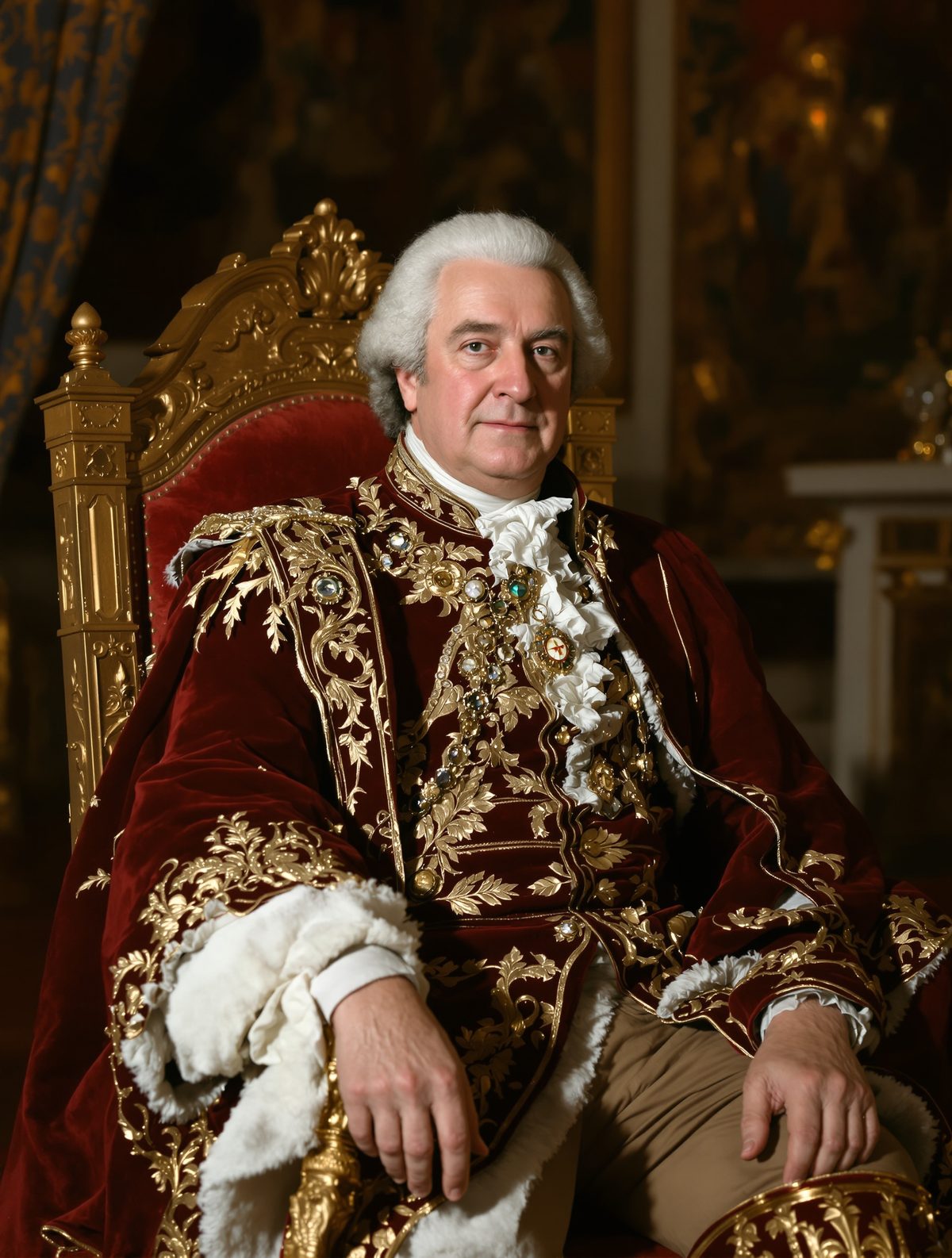
His court at Kensington Palace had become synonymous with proper protocol and magnificent ceremony. The King insisted on maintaining the highest standards of royal behavior, both from himself and those around him. Courtiers dressed in their finest clothes, conversations followed strict etiquette, and every aspect of royal life was choreographed to reflect the majesty of the crown.
A Palace in Shock
News of the King's death spread through Kensington Palace like wildfire, though the exact circumstances were initially kept within a tight circle of trusted servants and officials. The undignified nature of his passing presented a unique challenge for court protocol experts, who had detailed procedures for royal deaths but nothing quite like this.
The immediate concern was practical: how to move the King's body with appropriate dignity while maintaining the secrecy necessary to prevent panic. Palace staff worked quickly and discretely, ensuring that when the official announcement was made, it simply stated that His Majesty had died peacefully in his private apartments.
The King's grandson, the future George III, was immediately summoned to begin the transition of power. At just 22, he would inherit not only a throne but also the responsibility of maintaining the dignity that his grandfather had spent a lifetime building — despite the rather undignified circumstances of his passing.
Court officials faced the delicate task of managing public perception while respecting the truth. The official cause of death was listed as a sudden seizure, which was medically accurate while avoiding the more embarrassing details of the discovery.
Legacy Beyond the Final Moment
While the circumstances of George II's death initially caused whispers and speculation, they ultimately faded into historical footnotes beside his substantial achievements as monarch. His reign had seen Britain emerge as Europe's dominant naval power, and his support for parliamentary government had strengthened constitutional monarchy in ways that continue to influence the crown today.
The incident also highlighted the fundamental humanity of monarchy — even kings and queens experience the same basic human needs and vulnerabilities as their subjects. In an age when royal personages were often viewed as almost divine figures, George II's death served as a reminder that beneath the crowns and ceremonies, monarchs remained gloriously, undeniably human.
Modern historians view the King's solitary death as emblematic of the isolation that often accompanied absolute power. Despite being surrounded by hundreds of courtiers, servants, and officials, George II spent his final moments entirely alone — a poignant reminder of the personal cost of wearing the crown.
Today, as we observe the carefully managed public appearances and private moments of our current royal family, we might reflect on how much has changed since that October morning in 1760. The dignity and humanity that define modern monarchy perhaps owe something to the lessons learned from moments like these — that true royal greatness lies not in avoiding human frailty, but in serving with honor despite it. King George II's legacy endures not because of how he died, but because of how magnificently he lived and reigned for over three decades.