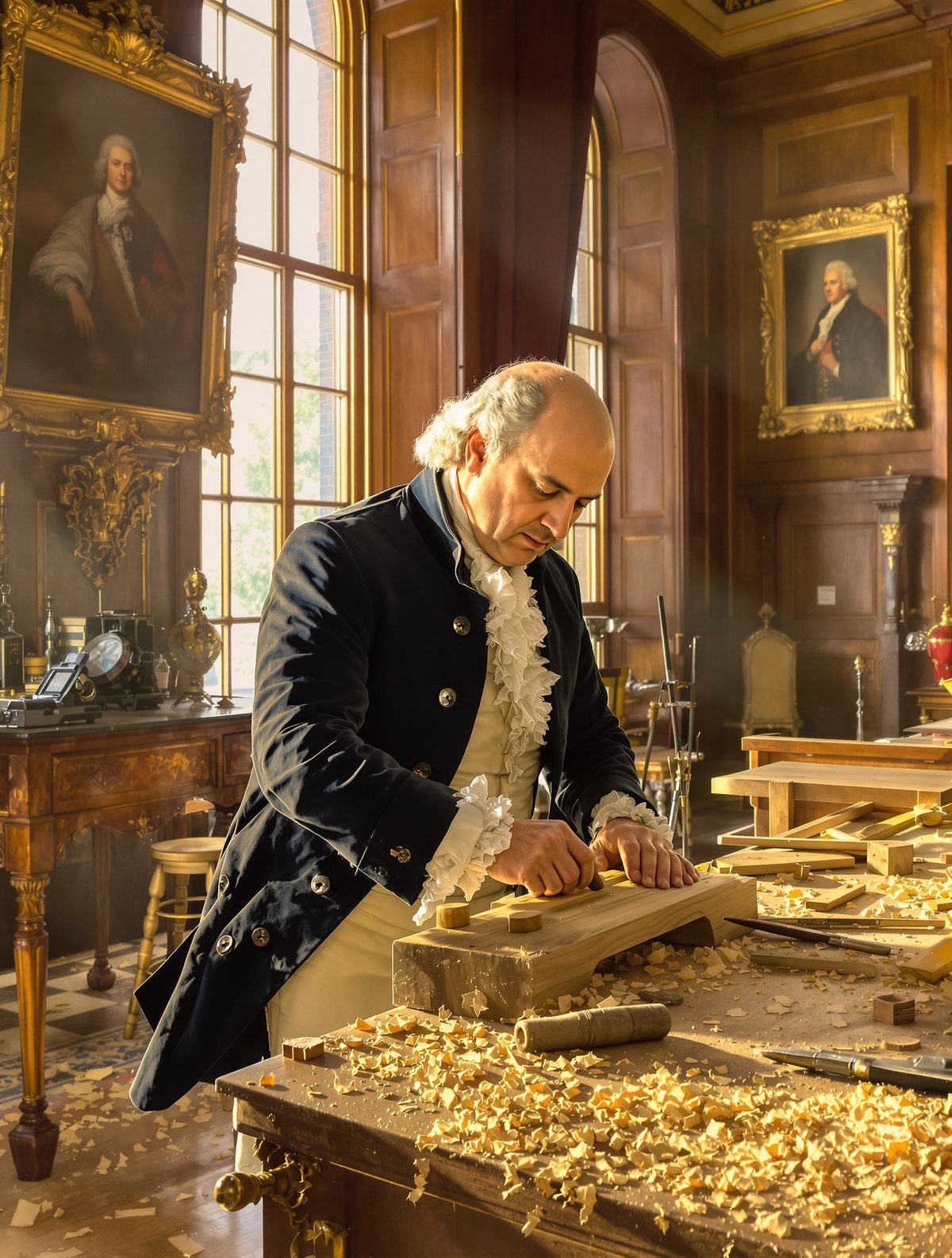
While his courtiers expected him to spend his days in regal splendor, surrounded by the finest craftsmen and servants attending to his every need, King George III had other plans. The monarch who would rule Britain for six decades shocked his entire court by rolling up his sleeves, donning a leather apron, and wielding wood planes and chisels with the skill of a master craftsman. In an age when manual labor was considered utterly beneath royal dignity, George III created his own secret sanctuary of sawdust and satisfaction—a fully equipped carpenter's workshop hidden within the walls of Windsor Castle.
A King's Revolutionary Retreat
The discovery of King George III's woodworking workshop sent ripples of horror through the rigid hierarchy of 18th-century court life. Tucked away in a quiet corner of Windsor Castle, this wasn't merely a gentleman's hobby room filled with delicate instruments for show. This was a serious workshop, complete with workbenches, hand planes, saws, chisels, and all the tools of a professional carpenter. The king had spared no expense in creating his wooden wonderland, importing the finest tools from across Europe and ensuring every piece of equipment met his exacting standards.
What made this revelation even more scandalous to his courtiers was the king's genuine expertise. George III wasn't simply playing at being a craftsman—he was remarkably skilled. Contemporary accounts describe him working for hours, completely absorbed in his projects, emerging with beautifully crafted pieces of furniture that rivaled the work of professional cabinetmakers. His hands, which courtiers believed should only hold scepters and sign royal proclamations, bore the honest calluses of dedicated craftsmanship.
The workshop became the king's refuge from the overwhelming pressures of ruling an expanding empire during one of history's most tumultuous periods. While revolution brewed in America and political storms raged at home, George III found peace in the methodical process of transforming raw timber into objects of beauty and function.
Scandal in the Court of Etiquette
To understand the courtiers' horror, one must appreciate the suffocating social conventions of Georgian high society. Manual labor was not merely discouraged among the aristocracy—it was considered a fundamental violation of natural order. The nobility's hands were meant to remain soft and unblemished, symbols of their elevated station above the working classes. Even gentlemen's pursuits like painting or music were acceptable only because they required no physical exertion that might be confused with common labor.
The king's workshop represented everything the court found terrifying about their monarch's unconventional nature. Here was a man who was supposed to embody divine appointment and aristocratic superiority, yet he insisted on engaging in what they viewed as common trades work. Whispered conversations in palace corridors expressed concern that such behavior might undermine the very foundations of royal authority. How could subjects respect a king who dirtied his hands with work any village carpenter might do?
Some courtiers attempted delicate interventions, suggesting that His Majesty might find more suitable pursuits in scholarly endeavors or refined arts. Their carefully worded concerns fell on deaf ears. George III had found something more precious than their approval—genuine satisfaction in creating something beautiful and useful with his own hands.
The Philosophy of a Working King
George III's passion for woodworking reflected deeper aspects of his character that set him apart from many of his royal predecessors. Unlike monarchs who sought validation through military conquest or grand displays of wealth, this king found fulfillment in the honest satisfaction of skilled craftsmanship. His approach to kingship emphasized duty, moral responsibility, and personal integrity—values that aligned perfectly with the dignity he found in manual work.
The king's workshop also represented his connection to Enlightenment ideals about the nobility of labor and craftsmanship. While his courtiers clung to outdated notions about the degrading nature of physical work, George III embraced a more progressive understanding of human dignity that found honor in all honest endeavor. This philosophy would later influence his approach to other aspects of his reign, including his interest in agricultural innovation and his support for British manufacturing.
His woodworking provided a form of therapy that was perhaps more effective than any medicine available in the 18th century. The repetitive, focused nature of the work offered relief from the mental pressures that would later manifest in his well-documented periods of illness. In his workshop, surrounded by the familiar scents of wood shavings and linseed oil, the king could escape the relentless demands of ruling an empire and find peace in creation rather than command.
Legacy of the Craftsman King
Some pieces created in King George III's workshop survived to become treasured parts of the Royal Collection, though many items were likely distributed as gifts or used throughout the royal residences without fanfare. The quality of his work impressed even professional craftsmen of the day, who marveled that a monarch could achieve such skill alongside his royal duties.
The king's dedication to his craft continued even during the most challenging periods of his reign. When political pressures mounted and his relationship with Parliament grew strained, he would retreat to his workshop for solace. During the heartbreak of losing the American colonies, the rhythmic sounds of planning and sanding provided a meditative backdrop for processing grief and disappointment.
This remarkable aspect of George III's character offers a fascinating glimpse into the personal life of a monarch often remembered primarily for external events—the American Revolution, his conflicts with Parliament, and his later mental illness. Yet here we see a man who understood that true satisfaction came not from the trappings of power but from the simple joy of creating something beautiful and functional with one's own hands.
The story of King George III's secret workshop reminds us that even those born to the highest positions can find their greatest fulfillment in the most humble activities. In an age when we increasingly recognize the importance of mental health and personal fulfillment, this craftsman king's dedication to his woodworking seems remarkably modern. His courtiers may have been horrified by his callused hands and sawdust-covered apron, but George III had discovered something they never could—that dignity lies not in avoiding honest work, but in embracing it with passion and skill. Perhaps future monarchs might take inspiration from this king who understood that the truest nobility comes not from what others do for us, but from what we create with our own hands.