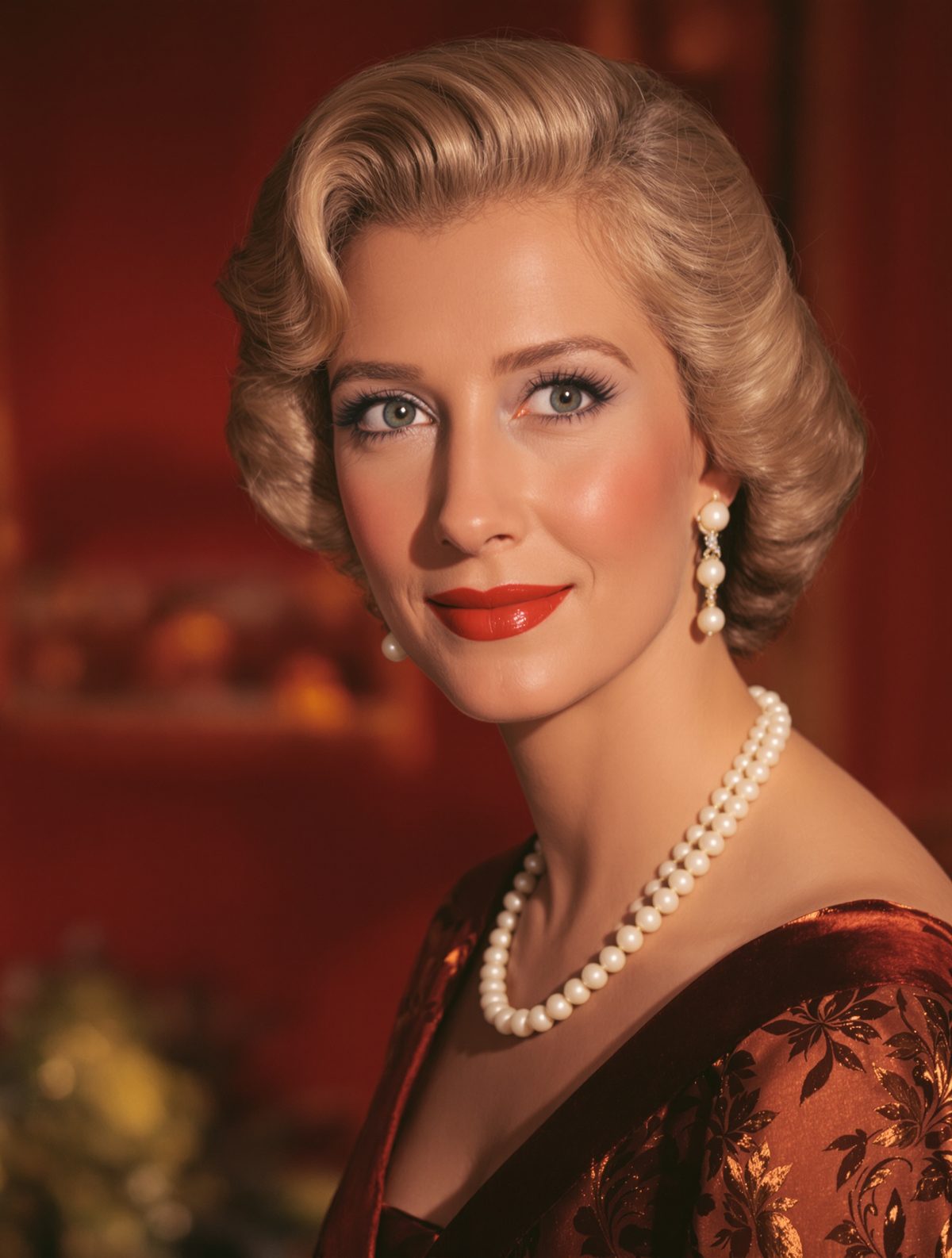
On a crisp autumn afternoon in 1963, Princess Alexandra did what countless Londoners had done before her: she popped into her local Boots chemist for a bit of shopping. But what happened next would transform the beauty industry forever. The King's cousin, known for her impeccable style and warm personality, was about to accidentally create one of the most coveted lipstick shades in cosmetic history—all because she couldn't find quite the right coral tone on the shelves.
The princess, then 26 and at the height of her glamorous reign as one of Britain's most fashionable royals, had always possessed an innate understanding of what worked with her complexion. That day, standing among the modest beauty counters of the Knightsbridge Boots, she made a request that would echo through decades of makeup bags across the globe.
A Royal Beauty Emergency
Princess Alexandra had always been particular about her appearance—not out of vanity, but from necessity. As one of the hardest-working members of the royal family, she understood that every public appearance was scrutinised, every photograph analysed. Her beauty routine needed to be flawless, yet she preferred a more natural, approachable look than some of her more formal royal relatives.
The early 1960s were a transformative time for both fashion and the monarchy. The Beatles were revolutionising music, Twiggy was redefining beauty standards, and even the royals were embracing a more modern aesthetic. Alexandra, who had married businessman Angus Ogilvy in 1963 in a wedding that captivated the nation, represented this new generation of royals—elegant yet accessible, traditional yet contemporary.
That particular afternoon, Alexandra found herself facing a common dilemma: she needed the perfect lip colour for an upcoming engagement, but nothing on display quite matched her vision. The existing coral shades were either too orange, too pink, or too muted. What she wanted was something that would complement her fair complexion and blonde hair while maintaining the sophisticated yet approachable image she had cultivated.
The young shop assistant, reportedly nervous about serving such a distinguished customer, listened carefully as the princess described exactly what she was looking for. Rather than simply apologising for the limited selection, the assistant made a bold decision that would change both their lives.
The Accidental Innovation
What happened next reads like something from a fairy tale, but it was pure British ingenuity. The quick-thinking Boots employee began mixing different lipstick shades right there at the counter, combining various corals, pinks, and neutral tones until she achieved something close to what Princess Alexandra had described.
The process was entirely improvised—there were no precise measurements, no scientific formulations, just an intuitive understanding of colour and a desire to please a royal customer. The assistant blended and adjusted, testing the colour against the back of her hand and holding it up to the light, while Princess Alexandra watched with growing excitement.
When the final shade emerged—a sophisticated coral with just the right balance of warmth and elegance—both women knew something special had been created. The colour was modern without being trendy, flattering without being obvious, and sophisticated enough for royal engagements while remaining wearable for everyday occasions.
Princess Alexandra was delighted with her custom creation, but neither she nor the shop assistant could have predicted what would happen next. Word of the princess's bespoke lipstick began to spread through the interconnected worlds of fashion, beauty, and high society.
From Palace to Global Phenomenon
The beauty industry in the 1960s was a tight-knit community where insider information travelled quickly. When Revlon executives heard whispers about Princess Alexandra's custom coral shade, they recognised an opportunity that went far beyond a single lipstick colour.
Royal endorsements, even accidental ones, were beauty gold. The same woman who had worn Norman Hartnell gowns and influenced wedding dress trends across the Commonwealth had inadvertently created what could become the next must-have beauty product. But first, they needed to recreate the exact shade that had been mixed so spontaneously in that London chemist.
The process of reverse-engineering the colour proved more complex than anyone had anticipated. Revlon's chemists worked tirelessly to analyse the improvised formula, breaking down each component and understanding how the different pigments interacted to create that perfect coral tone. They tested countless variations, adjusting the undertones and saturation until they achieved a shade that captured the elegant sophistication of the original.
When Revlon finally launched what became known as their signature coral shade, the marketing practically wrote itself. Though they couldn't explicitly use Princess Alexandra's name or image, the beauty industry grapevine ensured that everyone knew the lipstick's royal origins. The shade embodied everything that Princess Alexandra represented: timeless elegance, modern sophistication, and accessible glamour.
The Enduring Legacy of Royal Style
The success of Princess Alexandra's accidental lipstick creation extended far beyond sales figures, though those were impressive enough. The shade became Revlon's bestselling coral lipstick for decades, inspiring countless variations and competitor attempts to capture the same magical formula.
More significantly, the story highlighted how royal influence on fashion and beauty had evolved. Unlike the formal, dictated trends of previous generations, this was organic influence—a royal simply living her life and making choices that resonated with women around the world. Princess Alexandra hadn't set out to launch a beauty empire; she had simply wanted the perfect lipstick for her engagements.
The incident also marked a shift in how beauty brands thought about product development. The success of the coral shade proved that consumers craved authenticity and story behind their cosmetics. It wasn't enough for a lipstick to be well-formulated; it needed to represent something aspirational, to connect with customers on an emotional level.
Throughout the following decades, as fashion and beauty trends shifted dramatically, Princess Alexandra's coral shade remained remarkably consistent in its appeal. It transcended the dramatic eye makeup of the 1970s, the bold colours of the 1980s, and the minimalism of the 1990s, proving that truly perfect shades are timeless rather than trendy.
Royal Beauty in the Modern Era
The story of Princess Alexandra's lipstick reads differently in our current age of social media influence and celebrity beauty brands. Today, when royal makeup choices are dissected within hours of public appearances and beauty products can sell out based on a single Instagram post, the slow, organic spread of influence from that 1963 Boots visit seems almost quaint.
Yet perhaps there's something to be learned from that more innocent approach to royal beauty influence. Princess Alexandra's impact came not from calculated marketing or strategic partnerships, but from her authentic pursuit of what worked for her. She wasn't trying to build a brand or capture market share; she was simply a woman who knew what she wanted and was fortunate enough to find someone willing to create it.
The coral shade that emerged from that chance encounter continues to influence beauty trends today. Modern brands still launch coral lipsticks that echo the sophisticated warmth of Princess Alexandra's original, and makeup artists frequently reference the shade as the gold standard for flattering coral tones.
Looking back at Princess Alexandra's accidental beauty legacy reminds us that the most enduring trends often emerge from the most spontaneous moments. In an era when every royal beauty choice is scrutinised and commercialised, there's something refreshingly authentic about a princess who simply walked into a chemist, knew what she wanted, and trusted a nervous shop assistant to create magic. That coral shade didn't just launch a beauty empire—it proved that true style transcends both time and circumstance, creating connections that last far longer than the reigns of the royals who inspire them.