The summer of 1972 was meant to be a quiet one at Windsor Castle. The Queen had settled into a comfortable routine with her youngest son, eight-year-old Prince Edward, who was being privately tutored within the castle walls. Unlike his older brothers Charles, Andrew, and sister Anne, Edward had shown a preference for theatrical pursuits over traditional royal activities. What nobody anticipated was that his artistic inclinations would nearly send his mother into cardiac arrest on a seemingly ordinary Tuesday afternoon.
The Great Disappearance
Palace life in the 1970s operated with clockwork precision, particularly when it came to the royal children's schedules. Prince Edward's daily routine included morning lessons with his tutor, afternoon recreation, and evening studies. On that fateful day, however, the youngest Wales child had other plans entirely.
It was Edward's tutor who first noticed something amiss. The prince had excused himself after lunch, claiming he needed to retrieve a book from his room. When thirty minutes passed without his return, concern began to ripple through the castle staff. By the one-hour mark, a full search was underway.
The Queen, initially told that Edward was simply "delayed," grew increasingly worried as afternoon stretched into early evening. Palace guards combed through the castle's 1,000 rooms, checked the gardens, and even searched the Round Tower. For three heart-stopping hours, the youngest member of the royal family had simply vanished.
What made Edward's disappearance particularly alarming was the castle's security protocols. Even in the more relaxed atmosphere of the 1970s, royal children didn't simply wander off unnoticed. The fact that an eight-year-old had managed to evade detection spoke either to remarkable stealth or a concerning gap in palace security.
The Royal Mews Discovery
The breakthrough came when a stable hand reported hearing unusual sounds from the upper levels of the Royal Mews. The historic buildings, which housed the royal carriages and horses, weren't typically part of young Edward's usual haunts. When guards investigated, they discovered something that would become palace legend.
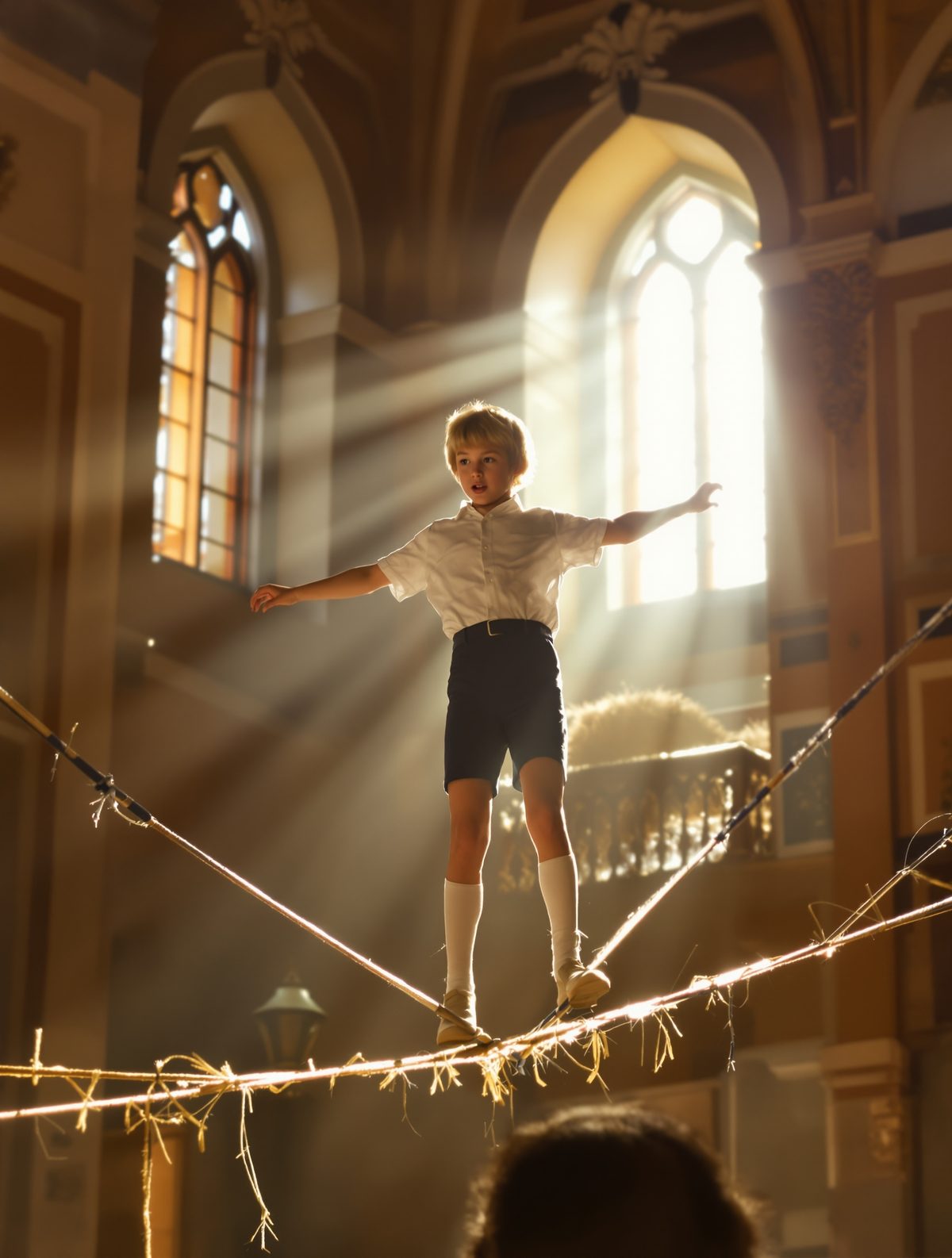
High above the cobblestones, Prince Edward had constructed an elaborate tightrope setup using rope he'd somehow procured from the groundskeeping supplies. The young prince, demonstrating both impressive ingenuity and alarming disregard for safety, had rigged his makeshift circus apparatus between two wooden support beams, creating a practice space roughly ten feet above the ground.
When the search party found him, Edward was mid-performance, arms outstretched for balance, completely absorbed in his unauthorized acrobatic endeavor. The sight of the Queen's youngest son walking a tightrope without any safety equipment, in what amounted to a medieval barn, was enough to send even seasoned palace guards into panic mode.
The timing couldn't have been worse. The Queen had just arrived at the Mews, having insisted on joining the search personally when her son remained missing after three hours. Palace staff later reported that Her Majesty went visibly pale upon seeing her eight-year-old balanced precariously above the stone floor.
A Mother's Heart Attack
Queen Elizabeth II had faced many challenges in her twenty years on the throne by 1972, from constitutional crises to family scandals. However, nothing had quite prepared her for the sight of her youngest child practicing circus arts in secret. According to those present, the Queen's reaction was immediate and visceral.
Palace insiders described the scene as one of the few times they'd witnessed the monarch's legendary composure completely crack. The Queen reportedly had to steady herself against a wooden post, her usual unflappable demeanor replaced by pure maternal terror. One guard later noted that he'd never seen Her Majesty look so genuinely frightened—not during state emergencies, not during family crises, but at the sight of her son's DIY circus performance.
The rescue operation itself proved delicate. Edward, initially thrilled to have an audience for his newly acquired skills, had to be carefully coaxed down from his aerial stage. Palace staff formed a human safety net below while the Queen, having recovered her composure, firmly but calmly instructed her son to return to ground level immediately.
What struck observers most was the juxtaposition of Edward's innocent excitement against his mother's barely contained panic. The young prince had clearly spent considerable time planning and executing his secret training ground, viewing it as a grand adventure rather than a potential tragedy.
The Aftermath and Palace Response
The immediate aftermath of Edward's tightrope escapade saw swift changes to palace security and supervision protocols. The Queen, having experienced what she later privately described as "the longest three hours of her life," ensured that such disappearances would be impossible in future.
Rather than simply punishing Edward's adventurous spirit, the royal family took a more nuanced approach. The Queen, recognizing her son's genuine interest in performance and acrobatics, arranged for proper circus training under professional supervision. This decision reflected her understanding that Edward's theatrical inclinations needed constructive outlets rather than outright suppression.
The incident also highlighted the unique challenges faced by royal children, particularly the youngest ones who often felt overshadowed by their older siblings' more traditional pursuits. Edward's secret circus training represented both a cry for attention and a genuine passion that deserved recognition rather than dismissal.
Palace staff underwent additional training in child supervision, and new protocols were established for monitoring the younger royals' activities. The Royal Mews, meanwhile, was thoroughly inspected and secured against future unauthorized acrobatic installations.
Legacy of a Young Performer
Prince Edward's childhood tightrope adventure proved prophetic of his future path. Unlike his brothers, who followed more traditional royal routes through military service and established charitable frameworks, Edward would eventually carve out a unique niche in the arts and entertainment world. His later involvement with television production and theatrical enterprises can be traced back to these early displays of creative ambition.
The 1972 incident also revealed important aspects of Queen Elizabeth's parenting philosophy. Despite her initial terror, she chose to nurture rather than suppress her son's unconventional interests. This approach would prove influential in how the royal family handled subsequent generations' departures from traditional expectations.
Looking back, Edward's secret circus training represents a pivotal moment in modern royal history—a reminder that even within the most structured and traditional institutions, individual creativity and rebellion find ways to emerge. The image of young Edward balanced ten feet above the Royal Mews, arms outstretched and completely focused on his unauthorized performance, captures something essential about the tension between duty and personal expression that continues to define royal life today.
Today's royal children, from Prince George to Princess Charlotte and Prince Louis, benefit from the lessons learned during Edward's adventurous childhood. The balance between security and creative freedom that the Queen established in response to her youngest son's escapade continues to influence how the monarchy nurtures its next generation, proving that sometimes a mother's heart attack can lead to lasting positive change.