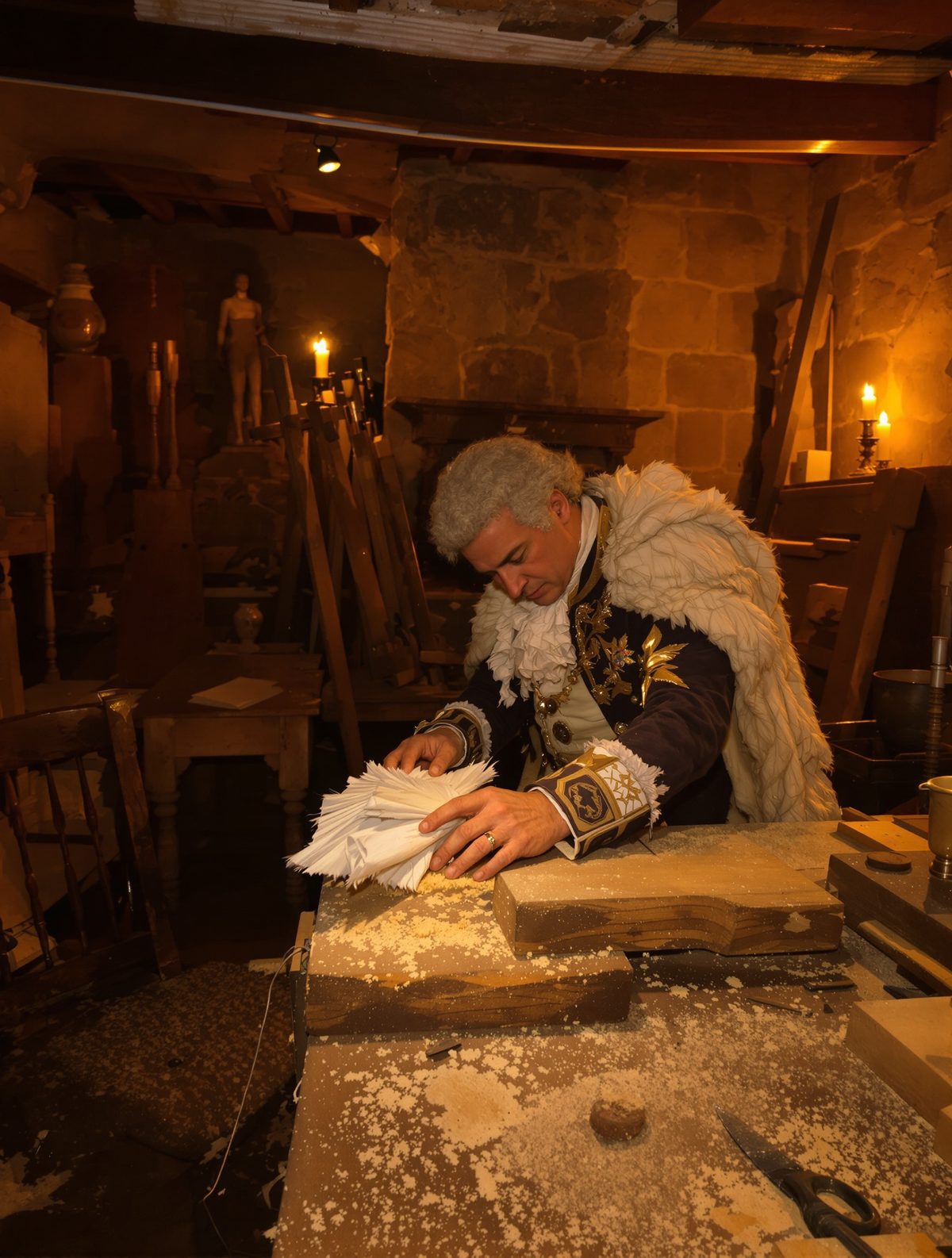
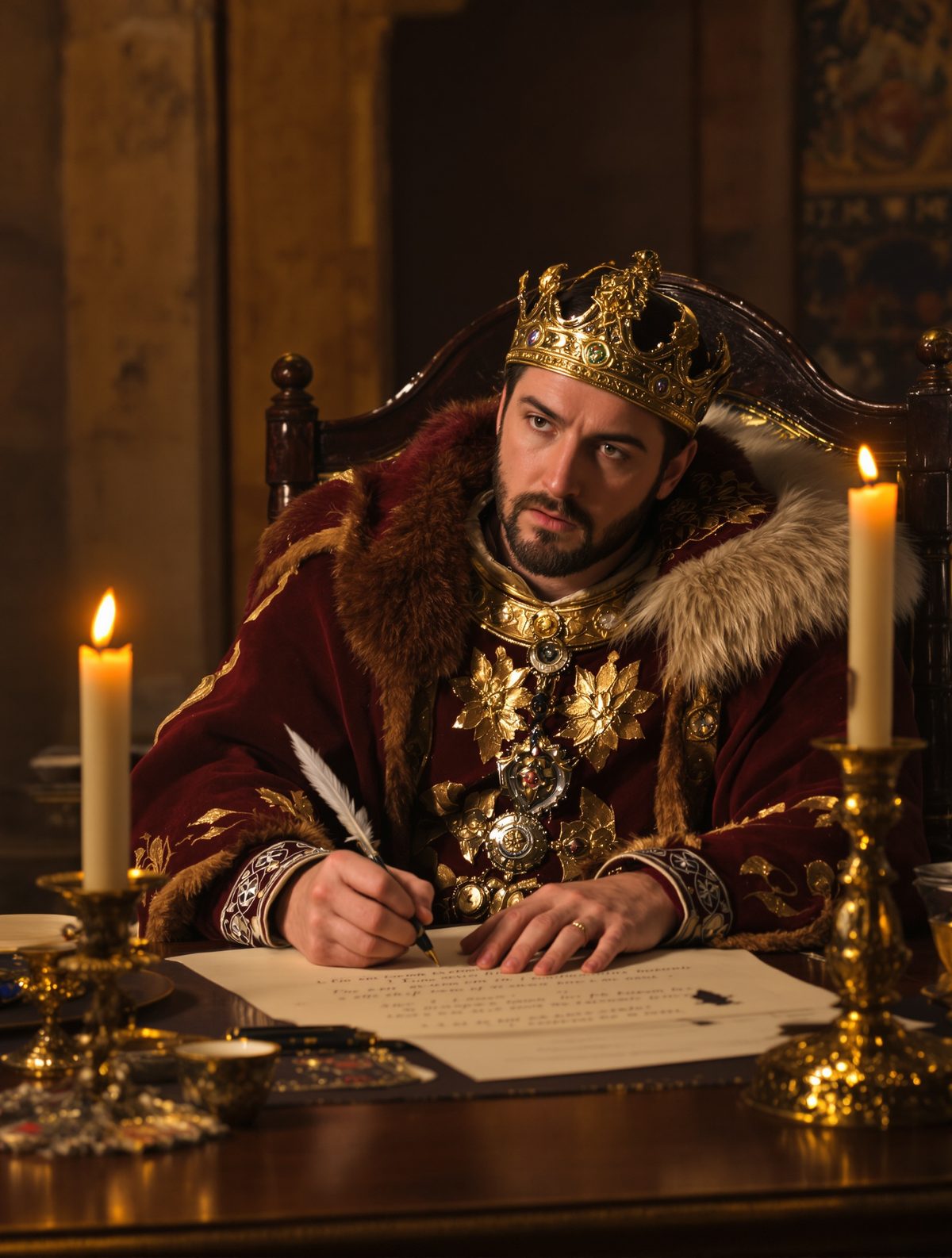
The warrior king who conquered Agincourt and brought France to its knees had an Achilles' heel that would have made his courtiers wince. Henry V, the legendary monarch who transformed England into a European superpower, couldn't string together a grammatically correct French sentence to save his crown. When it came to wooing his future bride, Princess Catherine of Valois, the man who had humbled her father's armies resorted to love letters so mangled in their French that they read more like the work of an earnest but hopeless language student than the correspondence of a conquering hero.
The Warrior King's Linguistic Battlefield
Henry V's reign from 1413 to 1422 marked one of the most militarily successful periods in English history. His victory at Agincourt in 1415 became the stuff of legend, immortalised centuries later by Shakespeare's stirring speeches about St. Crispin's Day. Yet this same king who could inspire thousands of men to charge into battle against overwhelming odds found himself utterly defeated by French conjugations and syntax.
The irony was not lost on contemporary observers. Here was a monarch who had made French territorial claims the centrepiece of his foreign policy, who spent years campaigning across Norman soil, and who ultimately forced the French crown to acknowledge him as heir to their throne—yet he struggled with the very language of the people he sought to rule. Court records suggest that Henry conducted most of his diplomatic negotiations through interpreters, despite having studied French as part of his royal education.
The linguistic challenges weren't entirely surprising for a medieval English king. While French had been the language of the English court since the Norman Conquest, by Henry's time it had evolved into what historians call Anglo-Norman, a distinctly English variant that bore little resemblance to the continental French spoken in Paris and Rouen. Henry's tutors had taught him this anglicised version, leaving him woefully unprepared for authentic French correspondence.
Love Letters That Lost in Translation
The most endearing evidence of Henry's linguistic struggles comes from his personal correspondence with Catherine of Valois, the French princess who would become his queen. These letters, preserved in various archives, reveal a side of the warrior king rarely seen in official chronicles—a young man genuinely smitten, trying desperately to express his feelings in his beloved's native tongue, and failing spectacularly.
Historical accounts describe letters peppered with elementary errors: verb tenses that shifted mid-sentence, gender agreements that would have made French grammar masters weep, and vocabulary choices that occasionally changed the meaning entirely. One particularly noted example involved Henry attempting to compliment Catherine's beauty but inadvertently comparing her to a horse due to a confusion between similar-sounding French words.
What makes these letters particularly fascinating is their genuine emotion despite the linguistic fumbling. Historians who have studied the correspondence note that Henry's sincerity shines through the grammatical chaos. His efforts to write in French, however imperfect, represented a significant gesture of respect toward Catherine's culture and heritage—something that would have been noted and appreciated at the French court.
The letters also reveal Henry's growing frustration with his linguistic limitations. In several instances, he appears to have started sentences in French before switching mid-thought to Latin, a language in which he was far more comfortable. Some letters contain marginal notes, suggesting he sought help from French-speaking members of his court, though he seems to have been too proud to let others compose his most personal sentiments.
Catherine's Gracious Response
Perhaps most remarkably, Catherine of Valois not only tolerated her suitor's linguistic struggles but appears to have found them endearing. Rather than responding in perfect French that might have highlighted Henry's inadequacies, her replies were written in a simplified style that matched his abilities. Some historians interpret this as evidence of genuine affection developing between the pair, despite their arranged marriage's political origins.
Catherine's decision to preserve these letters speaks volumes about their relationship. In an age when royal correspondence was often ceremonial and coldly formal, these imperfect but heartfelt messages represented something refreshingly human. The French princess, raised in the sophisticated court of Charles VI, could certainly have demanded more polished wooing, but she chose instead to appreciate the effort behind the errors.
Court observers noted that Catherine began making efforts to learn English around the same time, suggesting a mutual desire to communicate more effectively. This linguistic exchange became something of a private joke between the royal couple, with witnesses describing them attempting conversations in each other's languages with much laughter at the inevitable misunderstandings.
The Political Implications of Poor Grammar
Henry's French language struggles had implications beyond romantic correspondence. His inability to communicate effectively with his French subjects created practical challenges for governing conquered territories. Local administrators often found themselves in the awkward position of having to pretend they understood their king's mangled French pronouncements, leading to occasional policy confusion and implementation delays.
The situation became particularly delicate during formal ceremonies. When Henry was recognised as heir to the French throne under the Treaty of Troyes in 1420, he was required to make public speeches in French. Contemporary accounts suggest these occasions were ordeals for all involved, with Henry's pronunciation so poor that even sympathetic listeners struggled to follow his meaning.
Yet perhaps paradoxically, Henry's linguistic limitations may have enhanced his appeal among common English soldiers and subjects. Here was a king who, despite his classical education and royal upbringing, remained fundamentally English in his inability to master the traditional language of courtly sophistication. This linguistic nationalism would become increasingly important as England developed its own cultural identity separate from continental influences.
A Legacy Written in Broken French
Henry V's reign lasted only nine years, ending with his death from dysentery during the siege of Meaux in 1422. Catherine, by then his widow and Queen of England, carefully preserved their correspondence among her personal possessions. These letters survived various relocations and political upheavals, eventually finding their way into historical archives where they continue to charm and amuse scholars centuries later.
The story of Henry's terrible French offers a refreshingly human glimpse into medieval royal life, reminding us that even legendary kings struggled with everyday challenges. In our modern age of global communication and language-learning apps, there's something endearing about imagining one of history's greatest military leaders wrestling with verb conjugations and getting flustered over feminine and masculine nouns.
More profoundly, these imperfect love letters suggest that authentic emotion transcends linguistic barriers. Catherine's willingness to cherish Henry's flawed French correspondence over potentially more polished alternatives speaks to the timeless truth that sincerity often matters more than sophistication. In royal families today, where multilingual communication remains essential, Henry V's linguistic struggles serve as a gentle reminder that even crowns cannot guarantee linguistic competence—and that sometimes, the heart's message comes through despite the mind's grammatical failures.