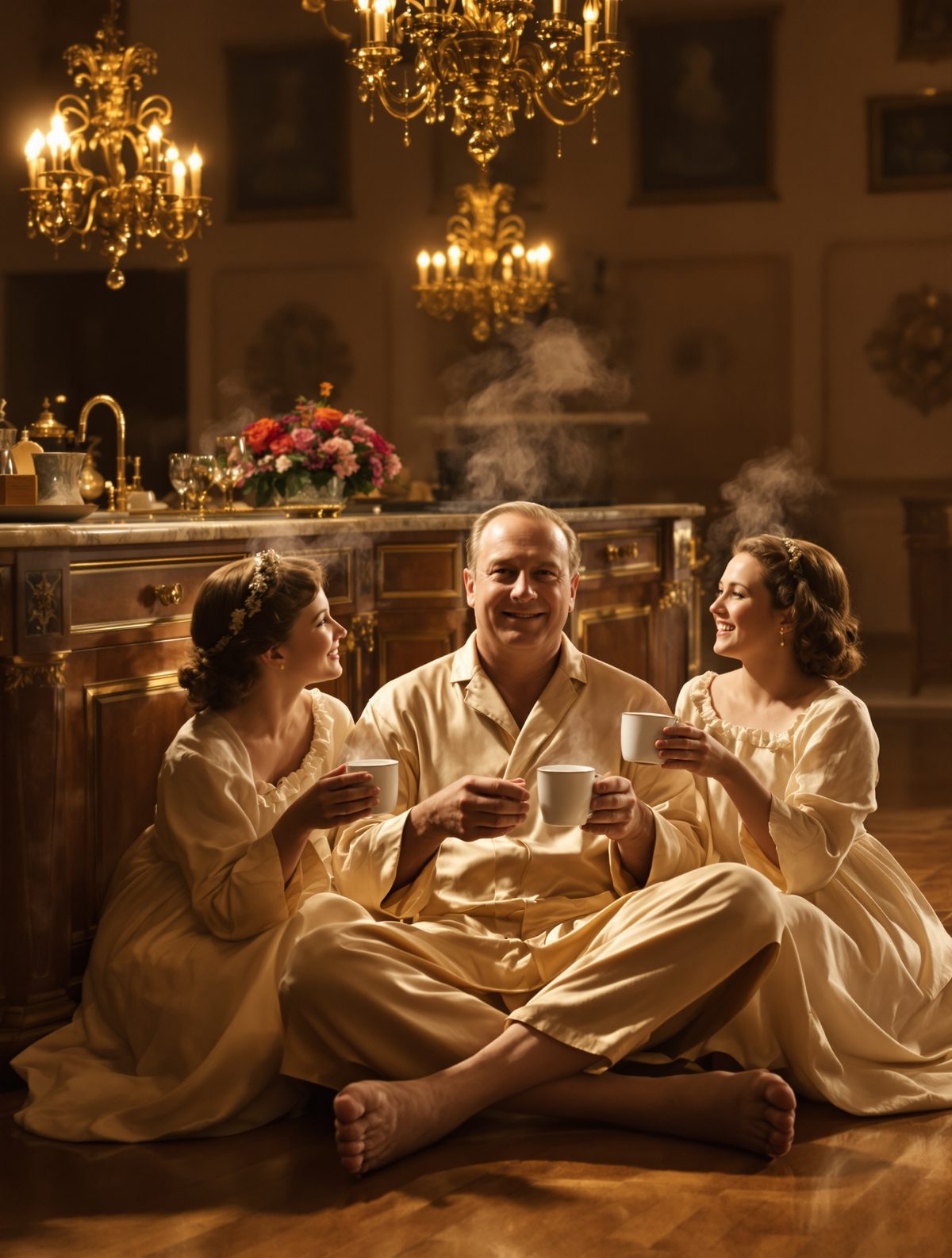
While London burned during the Blitz, the King of England had a secret ritual that no one knew about. Every single night at the stroke of midnight, he would disappear from his royal duties for thirty precious minutes with his two young daughters. As air raid sirens wailed across the capital and the weight of wartime leadership pressed upon his shoulders, King George VI found solace in the simplest of pleasures: making hot chocolate for Princess Elizabeth and Princess Margaret in the palace kitchen, their small circle of warmth defying the darkness that surrounded Britain.
This tender ritual, hidden from the eyes of courtiers and the public alike, reveals a profoundly human side of the monarch who never expected to wear the crown. In an era when royal children were typically raised by nannies and governesses, with formal meals taken in grand dining rooms, George VI chose to create something entirely different for his beloved "Lilibet" and "Margot."
A Father's Love in Wartime
The 1940s brought unprecedented challenges to the British Royal Family. When George VI ascended the throne in 1936 following his brother's abdication, he inherited not only a crown he never wanted but also a nation on the brink of its greatest trial. The shy, stammering king who had struggled with public speaking now faced the monumental task of leading Britain through World War II.
Yet amid the chaos of wartime Britain, family remained George VI's anchor. Princess Elizabeth was just fourteen when the war began, with ten-year-old Margaret at her side. The royal family's decision to remain at Buckingham Palace throughout the Blitz, despite government recommendations to relocate to Canada, demonstrated their commitment to sharing their people's struggles. As Queen Elizabeth (later the Queen Mother) famously declared, the princesses could not leave without her, she could not leave without the King, and the King would never leave.
The midnight hot chocolate ritual emerged from this atmosphere of shared resilience. Palace records and later testimonies from staff suggest that the King, often working until the early hours on war correspondence and meetings with military leaders, would make his way to the palace kitchens as Big Ben chimed midnight. There, he would quietly prepare hot chocolate—a luxury during wartime rationing—for his daughters.
The kitchen staff, initially startled to find their sovereign wielding a saucepan, soon grew accustomed to discovering the aftermath of these nocturnal gatherings: three cups left carefully washed in the sink, and sometimes cookie crumbs that told the tale of a father's midnight feast with his children.
Behind Palace Doors: A Different Kind of Royal Protocol
What made these encounters so remarkable was their complete departure from royal protocol. In the 1940s, the monarchy operated under strict formal structures. Meals were elaborate affairs with multiple courses, proper dress codes, and careful attention to precedence and etiquette. Children, even royal ones, were expected to maintain decorum at all times.
The midnight ritual shattered these conventions entirely. Here was the King-Emperor, defender of the faith and head of the Commonwealth, sitting cross-legged on the cold kitchen floor in his pajamas, sharing stories and comfort with his daughters. No servants attended them, no silver service was required—just a father, two daughters, and the simple pleasure of hot chocolate in chipped palace kitchen mugs.
Princess Margaret, known throughout her life for her vivid storytelling, would later hint at these precious memories in conversations with friends, though the full extent of the ritual only became clear through piecing together various palace accounts and staff recollections years later. The secrecy wasn't born of shame but of sanctuary—these thirty minutes belonged entirely to the family, untouched by the demands of crown and country.
Even during the most intense nights of the Blitz, when Buckingham Palace itself was bombed and the royal family took shelter in the palace's reinforced basement, the ritual continued. If they couldn't reach the kitchen safely, the King would prepare the hot chocolate in their makeshift shelter, maintaining this thread of normalcy amid the chaos.
The Human Cost of the Crown
Understanding the significance of these midnight moments requires appreciating the immense pressure George VI faced during the war years. A naturally private man thrust into an intensely public role, he struggled with the weight of kingship even before the added burden of wartime leadership. His famous stammer, which he worked tirelessly to overcome with the help of speech therapist Lionel Logue, was just one manifestation of the anxiety that plagued him throughout his reign.
The King's day began early with briefings from military commanders and government ministers. He met with Winston Churchill weekly, reviewed casualty reports, visited bombed areas of London, and toured factories and military bases to boost morale. Every public appearance required enormous personal effort, as he battled his natural shyness and speech difficulties to project the confidence and stability the nation needed.
Letters from this period, now housed in the Royal Archives at Windsor Castle, reveal a man acutely aware of his responsibilities but also deeply concerned about the impact of war on his family. The midnight ritual provided a respite from these pressures—a time when he could simply be "Papa" rather than "His Majesty."
For Princess Elizabeth and Princess Margaret, these moments offered something equally precious: unguarded time with their father. Elizabeth, already showing signs of the serious, dutiful nature that would define her later reign, was beginning to understand her destiny as future queen. Margaret, spirited and creative, brought levity to even the darkest moments. Together, they created a triangle of support that sustained the family through Britain's darkest hour.
Legacy of Love and Leadership
The hot chocolate ritual continued throughout the war years, only ending as the princesses grew older and their duties expanded. By 1947, as Princess Elizabeth prepared for her marriage to Prince Philip, the intimate kitchen gatherings had naturally evolved into other forms of family connection, though the bond forged during those midnight meetings remained unbreakable.
The impact of these moments extended far beyond their immediate comfort. For Princess Elizabeth, they provided a model of leadership that balanced public duty with private humanity. Throughout her long reign as Queen Elizabeth II, she would demonstrate the same commitment to family that her father showed during those wartime nights, understanding that personal relationships could coexist with—and indeed strengthen—royal responsibilities.
Palace staff from the era, in later interviews and memoirs, spoke of these discoveries with a mixture of surprise and deep affection. They witnessed a monarch who, despite the grandeur surrounding him, understood that love expressed simply and consistently could be the most powerful force of all.
The ritual also reflects something profound about the nature of comfort during crisis. While government ministers debated strategy and military commanders planned operations, the King of England found his strength renewed through the simplest acts of paternal love. In a kitchen that had prepared grand state banquets, the most important meal served was hot chocolate shared between a father and his daughters on the floor.
As we reflect on this hidden chapter of royal history, we're reminded that even within the most formal institutions, human connection finds a way to flourish. The King who helped lead Britain through its finest hour understood that true strength often comes not from grand gestures but from quiet moments of love shared in the darkness. Today, as we face our own uncertainties, there's something deeply reassuring about knowing that even kings found comfort in hot chocolate and the laughter of their children, proving that the most regal moments are often the most beautifully ordinary ones.