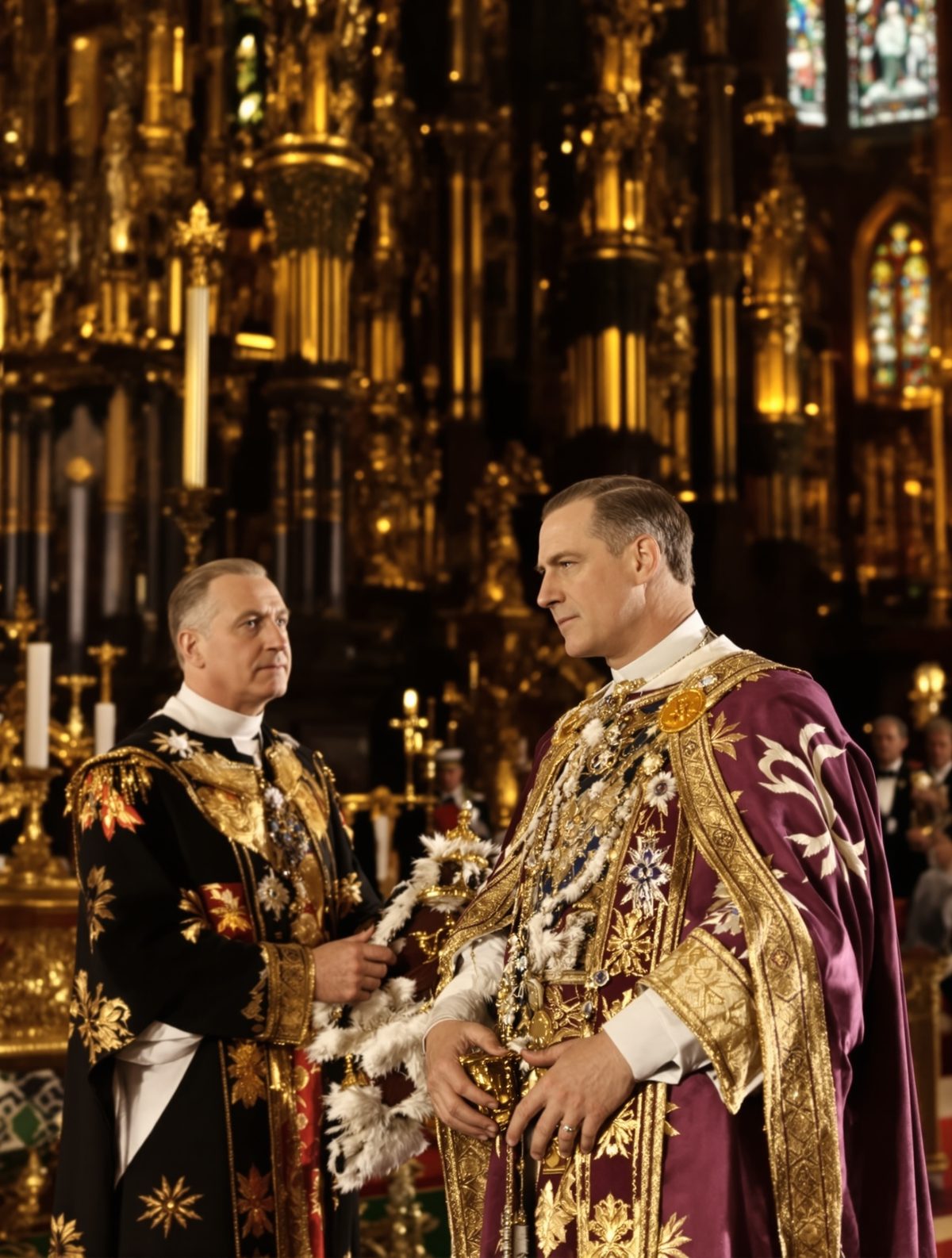
The magnificent gold of the St. Edward's Crown caught the light filtering through Westminster Abbey's ancient windows as Archbishop Cosmo Lang reached for what should have been the coronation oath card. Instead, his fingers found the wrong document entirely. For a heart-stopping moment on 12 May 1937, one of Britain's most sacred ceremonies teetered on the edge of disaster, and the reluctant King George VI faced his greatest test yet.
A Crown Never Meant to Be
King George VI — still known to his family as Bertie — had never expected to wear the Crown of St. Edward. Just months earlier, he had been the Duke of York, content to support his elder brother King Edward VIII from the sidelines. The shock of the Abdication Crisis had thrust him into a role he felt woefully unprepared for, plagued as he was by a severe stammer that made public speaking an ordeal.
The coronation, originally planned for Edward VIII, had been hastily reorganised for the new King and his beloved wife Elizabeth. Every detail mattered — from the precise positioning of the Stone of Scone beneath the Coronation Chair to the ancient words that would transform the nervous Duke into an anointed sovereign. The ceremony had been rehearsed countless times, yet no amount of preparation could have anticipated what was about to unfold.
The weight of history pressed down upon George VI as he approached the altar that May morning. Inside Westminster Abbey, 8,000 guests including foreign royalty, government officials, and peers of the realm watched in reverent silence. Outside, millions more listened on radio broadcasts that would carry this moment across the Empire and beyond.
When Ancient Ritual Meets Human Error
Archbishop Cosmo Lang, despite his years of experience and meticulous preparation, reached for what he believed was the coronation oath card. The document he grasped, however, was entirely wrong — some accounts suggest it may have been a different prayer or portion of the service. As he extended it toward the King, both men realised simultaneously that something was terribly amiss.
For thirty seconds that must have felt like an eternity, King George VI stood frozen at the altar. The silence in Westminster Abbey became deafening. Centuries of tradition seemed to hang in the balance as the newly crowned sovereign faced a moment that no amount of royal training could have prepared him for.
The King's mind raced. Should he wait for the correct card? Should he attempt to stumble through unfamiliar words? The eyes of his Empire were upon him, and any hesitation would be broadcast to millions. This was precisely the kind of public speaking nightmare that his stammer had always made him dread.
Then, in a moment that revealed the true steel beneath his gentle exterior, King George VI made a remarkable decision. Drawing upon the countless hours he had spent memorising the oath — perhaps driven by the very anxiety that plagued him — he began to whisper the ancient words from memory.
The Triumph of Preparation and Character
The King's voice, initially barely audible, grew stronger as he recited the solemn promises that would define his reign: to govern the peoples of the United Kingdom and his dominions according to their laws and customs, to cause law and justice to be executed in all his judgements, and to maintain the Protestant Reformed Religion established by law.
Archbishop Lang, recognising what was happening, quietly withdrew the incorrect card and allowed the King to continue. The ceremony proceeded without further incident, but those precious moments had revealed something profound about the man who had never wanted to be king.
The irony was not lost on observers — here was a monarch who struggled with speech, yet when the moment demanded it, he found the words that mattered most. His meticulous preparation, born partly from anxiety about his stammer, had actually saved the ceremony from potential embarrassment.
Queen Elizabeth, watching from her place nearby, must have felt immense pride in her husband's composure. She understood better than anyone the personal courage it had taken for him to speak those words clearly and confidently when everything seemed to be going wrong.
A Defining Moment for a Reluctant King
This small crisis and its resolution proved to be remarkably prophetic of George VI's entire reign. Time and again, he would face situations he felt unprepared for — from navigating the constitutional crisis left by his brother's abdication to leading the nation through the dark days of World War II. Yet consistently, when the moment demanded it, he found the strength and wisdom to rise to the occasion.
The coronation oath panic also highlighted the very human side of royal ceremonial. Behind all the ancient pageantry and golden regalia stood real people facing real pressures. The King's ability to maintain his composure while quietly solving the problem demonstrated the kind of steady leadership that would serve Britain so well in the challenging years ahead.
Perhaps most significantly, this moment marked the true beginning of George VI's transformation from reluctant Duke to confident King. The man who whispered the coronation oath from memory in 1937 would go on to deliver some of the most important royal broadcasts in British history, including his crucial speech to the Empire at the outbreak of World War II.
Legacy of a Moment's Grace
The story of the coronation oath mix-up remained largely private for years, shared only among those closest to the ceremony. When it eventually became known, it added another layer to the public's understanding of George VI as a monarch who combined deep humility with quiet determination.
Today, as we watch royal ceremonies unfold with seemingly effortless precision, it's worth remembering that behind every magnificent state occasion lie countless hours of preparation and the very real possibility that something might go wrong. The grace with which our royals handle such moments — following in the tradition established by George VI — speaks to the enduring strength of the institution itself.
That thirty seconds of silence in Westminster Abbey in 1937 ultimately became thirty seconds that defined a reign. When faced with unexpected crisis, the reluctant King chose quiet competence over panic, preparation over improvisation, and duty over personal comfort. In doing so, he set the tone not just for his own coronation, but for a reign that would see Britain through its finest hour.