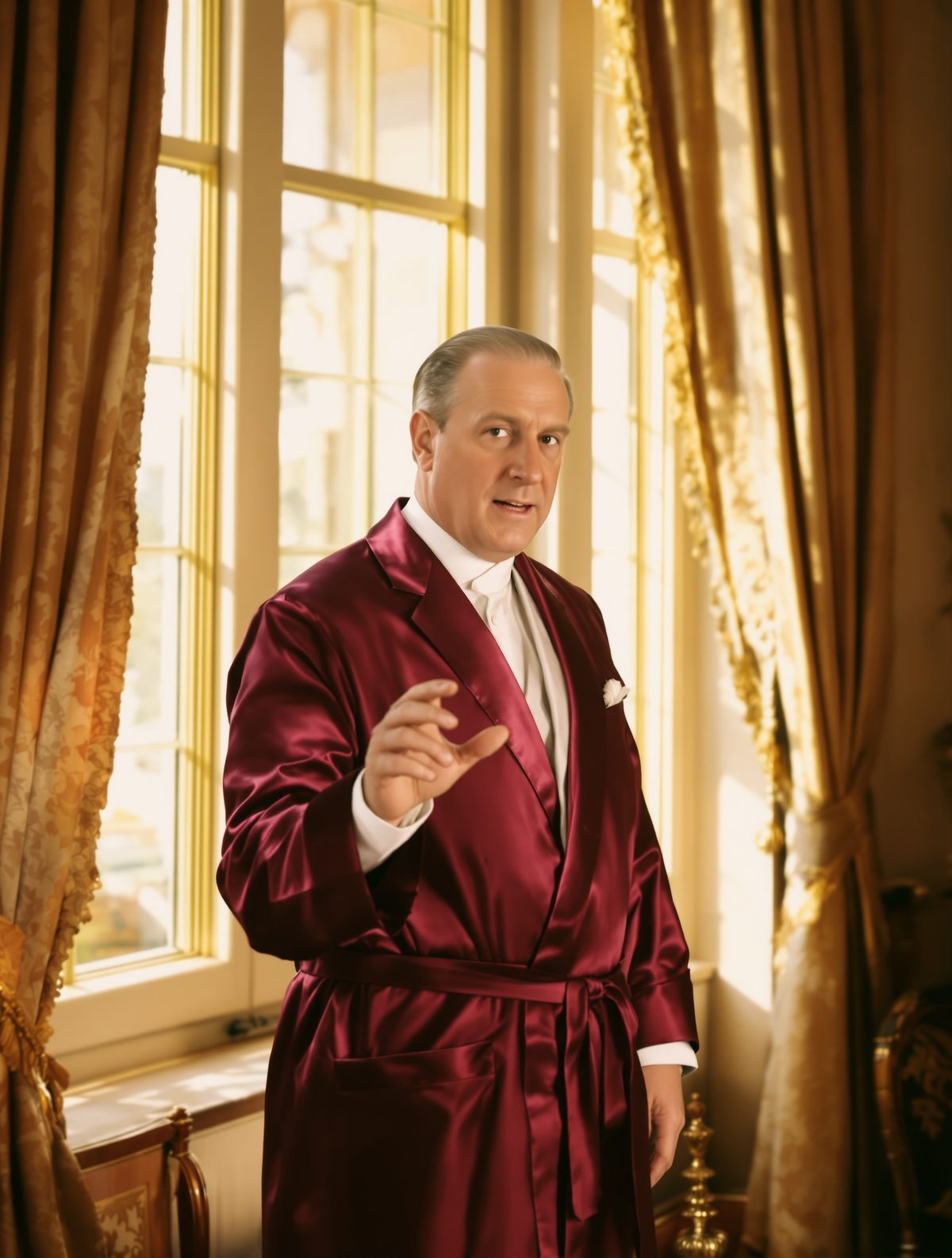
On the morning of 12 May 1937, as dawn broke over Buckingham Palace, a housemaid carrying fresh linens paused outside the King's private chambers. What she heard through the heavy oak door was extraordinary: two voices engaged in what sounded remarkably like the coronation ceremony itself. One belonged unmistakably to King George VI, but the other, speaking in solemn, ecclesiastical tones, was puzzling. When she pressed her ear closer, she realised with astonishment that the second voice belonged to the King's valet, Frank Hodgson, who was apparently performing the role of the Archbishop of Canterbury with theatrical gravitas that would have impressed any West End audience.
A King's Greatest Fear
To understand the significance of this remarkable scene, one must appreciate the profound anxiety that gripped George VI in the months leading to his coronation. The man who had never expected to wear the crown—and who had watched his brother Edward VIII abdicate less than six months earlier—was facing his greatest nightmare: a public ceremony of unprecedented grandeur, broadcast live to millions, where every stammered word would echo through Westminster Abbey.
The King's stammer had plagued him since childhood, a cruel irony for a man whose constitutional role demanded countless speeches and public addresses. While his work with speech therapist Lionel Logue had brought remarkable improvement, the coronation represented the ultimate test. Every pause, every hesitation would be magnified by the gothic acoustics of the Abbey and transmitted across the Empire.
Frank Hodgson, who had served the royal household for over two decades, understood his master's predicament better than most. The valet had witnessed the King's private struggles, had seen the frustration and determination in equal measure. More than a servant, Hodgson had become a trusted confidant, one of the few people before whom the King could display vulnerability without fear of judgment or gossip.
The Secret Rehearsal Unfolds
What palace staff discovered that coronation morning was a scene of touching intimacy and dedication. The King, already dressed in his ceremonial shirt and breeches, stood before a full-length mirror while Hodgson positioned himself as the Archbishop. Using a leather-bound book—reportedly a volume of Shakespeare rather than the actual service—Hodgson intoned the ancient words of the coronation oath with surprising solemnity.
The valet had fashioned a makeshift crown from a silver serving tray, complete with improvised jewels created from cut crystal inkwells arranged around the rim. His gestures, witnesses later recalled, demonstrated a remarkable understanding of the ceremony's choreography. He moved with the measured dignity befitting an archbishop, raising his arms in blessing and maintaining the grave countenance appropriate to crowning a sovereign.
The King responded to each prompt with careful enunciation, his voice growing stronger and more confident with each repetition. When Hodgson placed the improvised crown upon his master's head, the moment carried unexpected poignancy. Here was a man who had never sought the throne, practicing in private with his loyal servant, both of them understanding the weight of the moment that lay ahead.
Witnesses to History
The small audience of palace staff who glimpsed this extraordinary rehearsal were reportedly moved to tears. Among them was the same housemaid who had first overheard the practice, along with a footman delivering the King's morning correspondence and a secretary arriving for an early briefing. None interrupted the sacred ritual unfolding before them.
One observer later noted that what struck them most powerfully was not the humorous sight of a valet playing archbishop, but the profound trust between the two men. In an era when rigid protocol governed every aspect of royal life, this private rehearsal represented a remarkable breaking down of barriers—a king vulnerable before his servant, a servant rising to meet his master's desperate need.
The Power of Preparation
This coronation morning ritual revealed something profound about George VI's character: his willingness to do whatever was necessary to serve his country well, regardless of personal embarrassment or the breaking of conventional boundaries. The man who had trembled at the prospect of kingship was demonstrating the very qualities that would make him one of Britain's most beloved monarchs.
Hodgson's participation in this unusual rehearsal spoke volumes about the often-overlooked relationships between royalty and their household staff. The valet's intuitive understanding of what his master needed—not just technical assistance, but emotional support delivered with dignity and creativity—exemplified the best traditions of royal service.
The morning's preparation appeared to work its intended magic. When the actual coronation began just hours later, witnesses noted the King's remarkable composure. While he spoke carefully and deliberately, the crippling hesitation that had marked earlier public appearances was notably absent. The sacred words flowed with a conviction that belied his private fears.
A Legacy of Dedication
The story of this secret coronation rehearsal encapsulates something essential about the monarchy itself: the extraordinary human effort behind the pageantry and protocol. While millions witnessed the magnificent public ceremony, with its golden coaches and glittering regalia, few could appreciate the private struggles and small acts of devotion that made such grandeur possible.
Frank Hodgson continued to serve the King throughout the war years, maintaining the same discretion and loyalty that had characterised that remarkable coronation morning. The valet's willingness to step outside conventional boundaries when duty demanded it reflected the very spirit that would carry the royal family through Britain's darkest hour.
The touching scene in those private chambers reminds us that behind every moment of royal magnificence lies a very human story of preparation, anxiety, and mutual support. In our modern age, when we witness new generations of royalty navigating public duties and private challenges, we might remember that morning in 1937 when a king and his valet created their own small ceremony of confidence and courage. Sometimes the most profound moments of monarchy happen not in the public eye, but in the quiet spaces where duty meets humanity, and where loyal service transforms fear into strength.