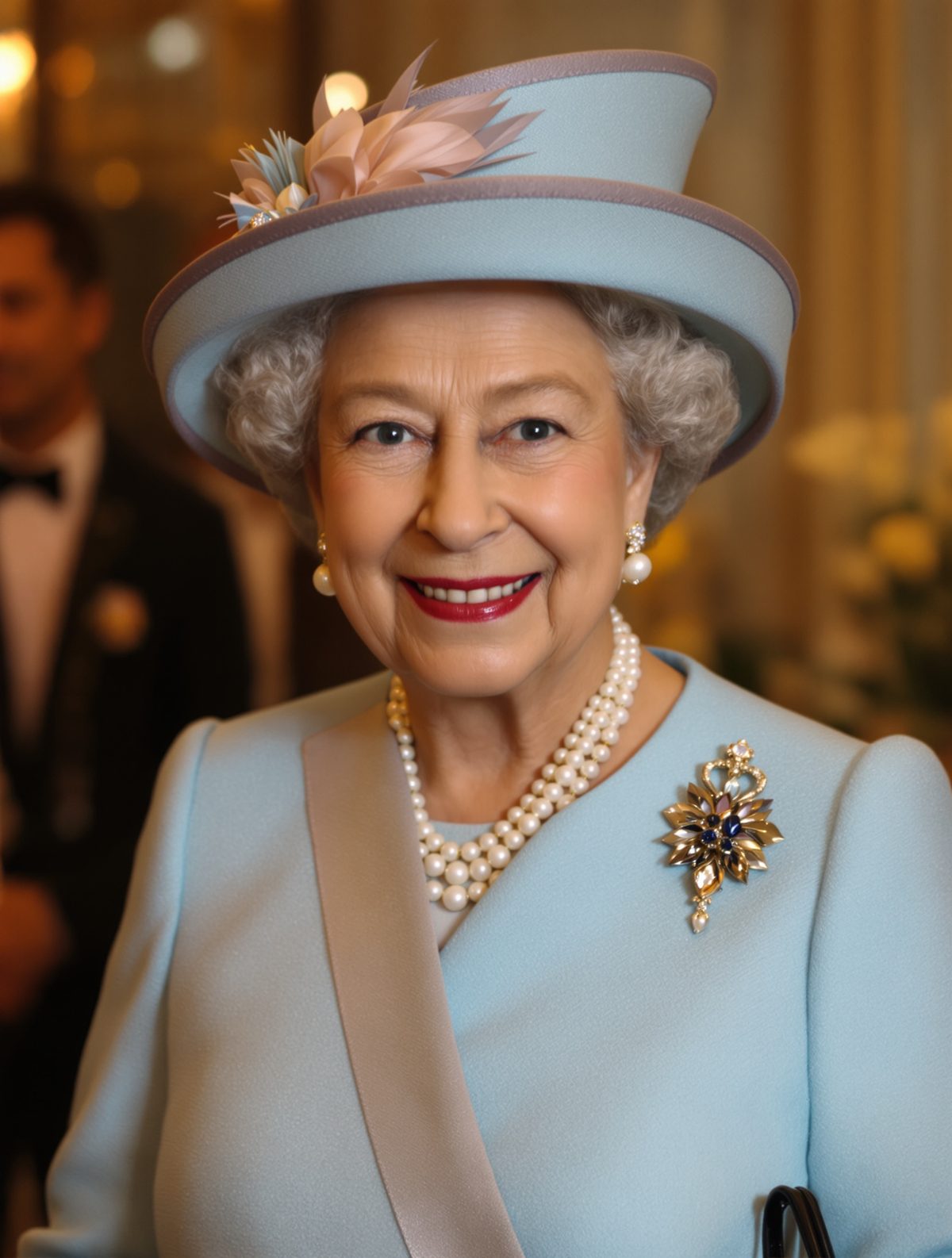
In the glittering world of royal protocol, where every gesture carries meaning and tradition governs each movement, Queen Elizabeth II mastered perhaps the most ingenious form of silent communication ever devised. Her beloved black Launer handbag — a constant companion for over seventy years — served as far more than a fashionable accessory. To those in the know, it was a sophisticated signalling system that could rescue Her Majesty from tedious conversations, summon her lady-in-waiting, or indicate when she was ready to gracefully exit an engagement. What appeared to be simple movements of a handbag were, in reality, a carefully choreographed dance of royal diplomacy.
The Birth of a Royal Communication System
The Queen's handbag code developed organically during the early years of her reign, born from practical necessity rather than deliberate design. As a young monarch thrust into countless public engagements, Elizabeth II quickly discovered that polite conversation could easily spiral into marathon discussions that threw her carefully timed schedule into chaos. Palace staff, ever attentive to their sovereign's needs, began to notice subtle patterns in how she handled her handbag during various situations.
The most famous signal became the arm switch — when the Queen moved her handbag from her left arm to her right, it was a clear message to her private secretary or lady-in-waiting that she wished to end the current conversation within the next few minutes. This elegant solution allowed Her Majesty to maintain her gracious demeanour while ensuring her engagements remained on schedule. Protection officers and staff members were trained to recognise this signal and would smoothly intervene with phrases like "Your Majesty, your next appointment is ready" or similar diplomatic interruptions.
The system proved so effective that it expanded to include additional signals. When the Queen placed her handbag on the ground, it indicated she was comfortable and happy to continue the conversation. However, if she began to fidget with the bag's handles or move it restlessly, staff understood she was becoming uncomfortable with the situation or the conversation's direction.
The Dinner Party Code That Amazed Palace Staff
Perhaps the most sophisticated element of the handbag code emerged during formal dinners and state banquets. The Queen's placement of her handbag on the dining table became a precisely timed countdown system that would have impressed military strategists. When her handbag appeared on the table, it signalled to her staff that she wished to leave within five minutes — a remarkably efficient way to coordinate the complex choreography required to conclude a royal gathering.
This system was particularly crucial during state visits, where the timing of the Queen's departure affected not only her own schedule but also diplomatic protocols involving heads of state and their extensive entourages. Palace staff would immediately spring into action upon seeing the handbag signal, discretely alerting security teams, preparing vehicles, and notifying other members of the royal household.
The dinner signal also extended to more intimate gatherings. Former palace staff have noted that even during private family meals or smaller receptions, the Queen would employ this handbag placement to indicate her intentions, allowing the household to operate with clockwork precision. The bag on the table meant business — everyone from the butler to the protection officers knew exactly what needed to happen next.
Launer London: The Perfect Partner in Protocol
The Queen's handbag code would never have been possible without the consistent design and quality of her beloved Launer handbags. Since the 1950s, Her Majesty carried variations of the same classic black leather design, ensuring that her signals remained recognisable regardless of the specific bag she chose for any given engagement.
Launer London, founded in 1941, became the Queen's preferred handbag maker after she discovered their craftsmanship in the early years of her reign. The company's classic designs perfectly suited both the Queen's practical needs and her sophisticated signalling system. The bags were substantial enough to be clearly visible to staff across crowded rooms, yet elegant enough to complement her carefully curated wardrobe.
The consistency of design was crucial to the handbag code's effectiveness. Protection officers and palace staff needed to be able to instantly recognise the Queen's signals regardless of lighting conditions, crowd density, or the specific venue. The distinctive shape and size of Launer handbags made them perfect tools for this discreet communication system.
Interestingly, the Queen reportedly owned more than 200 Launer handbags throughout her reign, though she tended to rotate between a smaller selection of favourites for public engagements. Each bag was meticulously maintained by palace staff, ensuring that her communication system never failed due to equipment issues.
Beyond the Signals: What the Queen Actually Carried
While the handbag's external movements conveyed important messages, the contents were equally fascinating and practical. The Queen famously carried remarkably ordinary items that revealed her down-to-earth personality beneath the royal grandeur. Her handbag typically contained reading glasses, mint lozenges, a small gold compact, and a tube of lipstick — the same essentials that any grandmother might carry.
However, some contents were uniquely royal. The Queen always carried a small camera to capture informal moments during her travels, and she kept a selection of photographs of her family. Perhaps most charmingly, she carried small bags of dog treats for her beloved corgis, ensuring she was always prepared for an impromptu moment with her four-legged companions.
The handbag also served a protective function beyond its communication role. In crowded situations, it provided a physical barrier that helped maintain the Queen's personal space while appearing entirely natural. Protection officers appreciated this additional layer of security, as the handbag's position could also signal the Queen's comfort level in any given situation.
The Human Touch Behind Royal Precision
The handbag code ultimately revealed something profoundly human about Queen Elizabeth II — her desire to maintain control over her time and interactions while never appearing rude or dismissive. This delicate balance between royal duty and personal comfort characterised her entire approach to monarchy.
Former palace staff have spoken with admiration about the Queen's consideration in developing and using these signals. Rather than relying on verbal commands or obvious gestures that might embarrass her guests, she created a system that allowed conversations to end naturally and elegantly. It was quintessentially Her Majesty — practical, thoughtful, and utterly dignified.
The code also demonstrated the remarkable teamwork between the Queen and her household staff. This wasn't a one-way system of royal commands, but rather a collaborative effort that required training, attention, and mutual respect. Protection officers, private secretaries, and ladies-in-waiting all played crucial roles in making the system work seamlessly.
As we reflect on Queen Elizabeth II's remarkable seven-decade reign, her handbag code stands as a perfect metaphor for her approach to monarchy itself. Like the institution she served so faithfully, it was traditional yet adaptable, formal yet surprisingly practical, and always conducted with grace and dignity. In a world of constant communication and digital signals, there's something deeply satisfying about remembering a time when a simple movement of a handbag could convey volumes — and when royal duty was performed with such thoughtful precision that even a fashion accessory became an instrument of impeccable diplomacy.