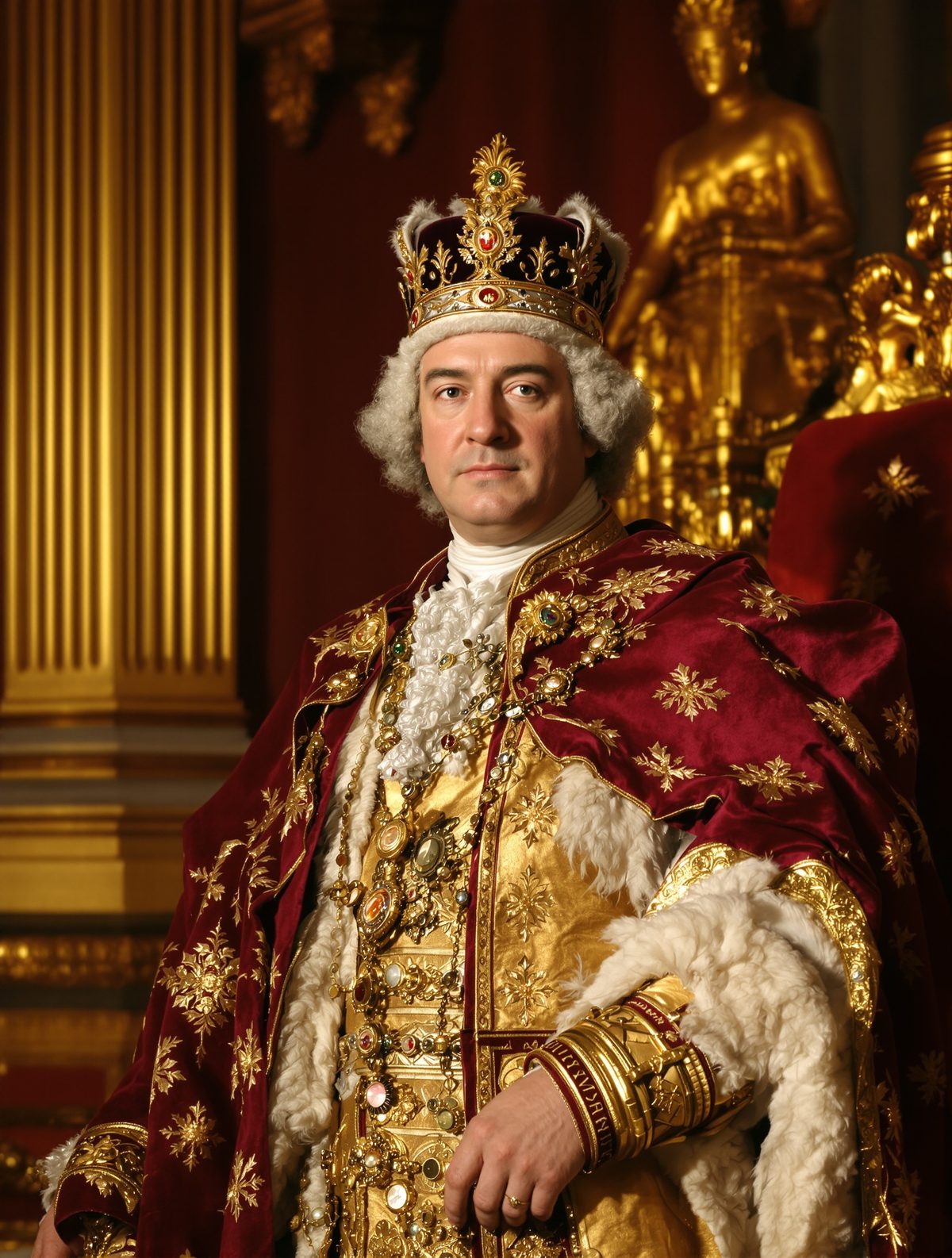

The palace servants whispered among themselves as they hurried through the opulent corridors of St. James's Palace. Where was His Majesty? King George III had developed a peculiar habit of disappearing each afternoon, leaving his bewildered courtiers to wonder if their sovereign had taken leave of his senses. Little did they know that beneath their very feet, in the forgotten basement chambers of the royal residence, the King of Great Britain and Ireland was engaged in the most unroyal activity imaginable—crafting exquisite furniture with his own hands, sawdust dusting his royal breeches and wood shavings clinging to his powdered wig.
The Mystery of the Missing Monarch
In the 1760s and 1770s, the court of King George III was a world of rigid protocol and ceremony. Every moment of the sovereign's day was typically accounted for, from morning audiences with ministers to evening entertainments. Yet something extraordinary began happening during these early years of George's reign—the king would simply vanish.
Court officials would arrive for scheduled meetings only to find the royal apartments empty. Equerries searched the palace gardens, thinking perhaps His Majesty had taken an impromptu constitutional. Ladies-in-waiting peered into drawing rooms and libraries. The mystery deepened when guards confirmed the king had not left the palace grounds.
For weeks, this peculiar pattern continued. George III would fulfill his morning duties with characteristic diligence—reviewing correspondence, meeting with government officials, attending to the business of the realm—but come afternoon, he would disappear as surely as if he had been spirited away by palace ghosts.
The young king's passion for punctuality and duty made these disappearances all the more baffling. This was, after all, the monarch who would later be known for his devotion to agricultural improvement and scientific inquiry. His attention to detail was legendary, his sense of responsibility unwavering. Where could he possibly be going?
The Shocking Discovery in the Palace Depths
The truth emerged quite by accident when a persistent courtier, determined to locate his sovereign for an urgent matter, followed the faint sound of rhythmic tapping echoing through the palace's lower levels. What he discovered in the basement workshops would have scandalized previous generations of royalty.
There sat King George III, stripped of his elaborate court dress and wearing simple working clothes, bent over a carpenter's bench with intense concentration. Wood shavings carpeted the floor around him as he carefully shaped what appeared to be the leg of an elegant chair. His hands—hands that signed royal proclamations and held the orb and scepter at his coronation—were calloused from honest labor.
The king had transformed a series of basement rooms into a fully equipped cabinet-making workshop, complete with workbenches, hand tools, and carefully selected timber. This was no amateur's dabbling—George III had clearly invested considerable time and effort in mastering the ancient craft of woodworking.
When confronted by his astonished courtier, the king showed no embarrassment. Instead, he proudly displayed his work: beautifully crafted chairs, small tables, and decorative boxes that demonstrated genuine skill and artistic sensibility. He had been quietly pursuing this passion for months, finding in the honest work of his hands a respite from the weighty responsibilities of the crown.
Breaking Royal Convention
To understand just how revolutionary this hobby was, one must appreciate the rigid social conventions of 18th-century monarchy. Kings were expected to engage in noble pursuits—hunting, music, perhaps scholarly endeavors—but never manual labor. The very idea of a monarch working with his hands was considered beneath the dignity of the crown.
Previous British sovereigns had maintained careful distance from anything resembling common work. Even artistic pursuits were typically limited to patronage rather than practice. Yet here was George III, defying centuries of royal precedent with each stroke of his plane and turn of his chisel.
The king's fascination with craftsmanship reflected his broader intellectual curiosity. This was a monarch genuinely interested in how things worked, how they were made, and how they could be improved. His workshop became a sanctuary where he could engage with the material world in ways his royal position typically prevented.
Remarkably, George III's furniture was of exceptional quality. Contemporary accounts suggest his pieces demonstrated both technical proficiency and aesthetic sophistication. He wasn't merely playing at being a craftsman—he had developed genuine expertise that would have impressed professional cabinet-makers of the era.
The Therapeutic Power of Creation
Beyond the shock of royal convention-breaking, George III's woodworking revealed something deeply human about the young monarch. In an age when kings were expected to be remote figures of divine authority, here was tangible evidence of a ruler seeking authentic connection with the creative process.
The king found in his workshop something that no amount of royal privilege could provide: the simple satisfaction of creating something beautiful and useful with his own hands. Each finished piece represented hours of focused concentration, a meditative escape from the relentless pressures of governing an expanding empire.
This hands-on approach to creation may have provided crucial mental and emotional benefits for a king who would later struggle with periods of illness. The workshop offered structure, purpose, and tangible achievement—elements that royal life, for all its grandeur, sometimes lacked.
George III's furniture-making also demonstrated his characteristic thoroughness. Just as he would later throw himself into agricultural experiments at Windsor, earning the nickname "Farmer George," his approach to woodworking was methodical and dedicated. He didn't simply dabble; he committed himself to mastering the craft.
A Legacy Hidden in Plain Sight
While George III's political legacy remains complex—he was, after all, the king who "lost" the American colonies—his secret passion for furniture-making reveals admirable qualities often overlooked by history. His willingness to break with convention, his appreciation for skilled craftsmanship, and his desire to create rather than merely consume speak to a character of surprising depth and authenticity.
The king's basement workshop challenges our assumptions about royal life in the 18th century. Beneath the elaborate ceremonies and rigid protocols lived a man eager to engage with the world in fundamental, creative ways. In choosing to work with his hands, George III demonstrated a form of courage that had nothing to do with military valor and everything to do with personal authenticity.
Today, as we watch modern royals navigate their own relationship with tradition and personal fulfillment, George III's secret hobby feels remarkably contemporary. His willingness to pursue genuine passion despite social expectations offers a timeless reminder that even those born to the most extraordinary circumstances must find their own paths to purpose and satisfaction. In the quiet rhythm of saw and plane, in the satisfaction of wood transformed into beauty, King George III discovered something no crown could provide—the irreplaceable joy of creation itself.