In 1969, the young Prince Charles walked a path unfamiliar to the heirs of the British throne. With the weight of tradition balanced on his shoulders, he embarked on a daunting journey at the tender age of twenty—a journey into the heart of Welsh identity. Given eight weeks, no professional tutor, just a valet, a phrasebook, and the eyes of a scrutinizing nation, the Prince had to prove himself. This wasn’t just an academic endeavor; it was a personal mission to establish a genuine connection with the Welsh people.
The Challenge of a Lifetime
The announcement was made with typical royal stoicism. Prince Charles, first in line to the throne, was to be invested as the Prince of Wales. But in a gesture underscoring respect and acknowledgment, Queen Elizabeth II decreed that her son must learn Welsh. It might seem a task of insurmountable odds for those unfamiliar with its lyrical yet complex syntax. Yet, there was little room for hesitation. In spring 1969, the young princeling left the familiar corridors of Cambridge and journeyed to Aberystwyth University, ready to immerse himself in studies with the most limited resources.
The intrigue of this chapter in the Prince’s life was how it diverged from the glamorous image of royalty that many held. Instead of lavish banquets and ceremonial events, the Prince encountered a small, timeless town that spanned an earnest bond of history and culture. He traded his regal surroundings for the modest setting of a university lectured by Dr. Edward Millward, an ardent Welsh nationalist committed to the protection of the Welsh language.
Immersion and Ambition: A Unique Education
The challenge had a sense of urgency: a nation awaited. For eight weeks, Prince Charles delved into daily lessons, forsaking the comforts afforded to him as a royal. His learning environment had a quaint charm, marked not by the elaborate grandeur of the Crown but by momentous posters reminding him of the rich tapestry of Welsh history.
This crash course was unlike any before or after. Instead of a structured curriculum or detailed itinerary, Charles relied on his loyal valet, a leather-bound phrasebook, and a steely resolve. He was driven not simply by duty but by sincere respect for the culture he was to represent. As anyone who has studied language knows, the art lies far beyond vocabulary—it’s in the music of tones, the dance of dialects, and the heart where true understanding dwells.
Stepping Out as a Defender of the Language
The light on the horizon was the looming Investiture ceremony at Caernarfon Castle. The world watched, social and political tensions palpable. Although Charles was acutely aware of how symbolism could speak volumes, he approached this ceremony with a quiet confidence.
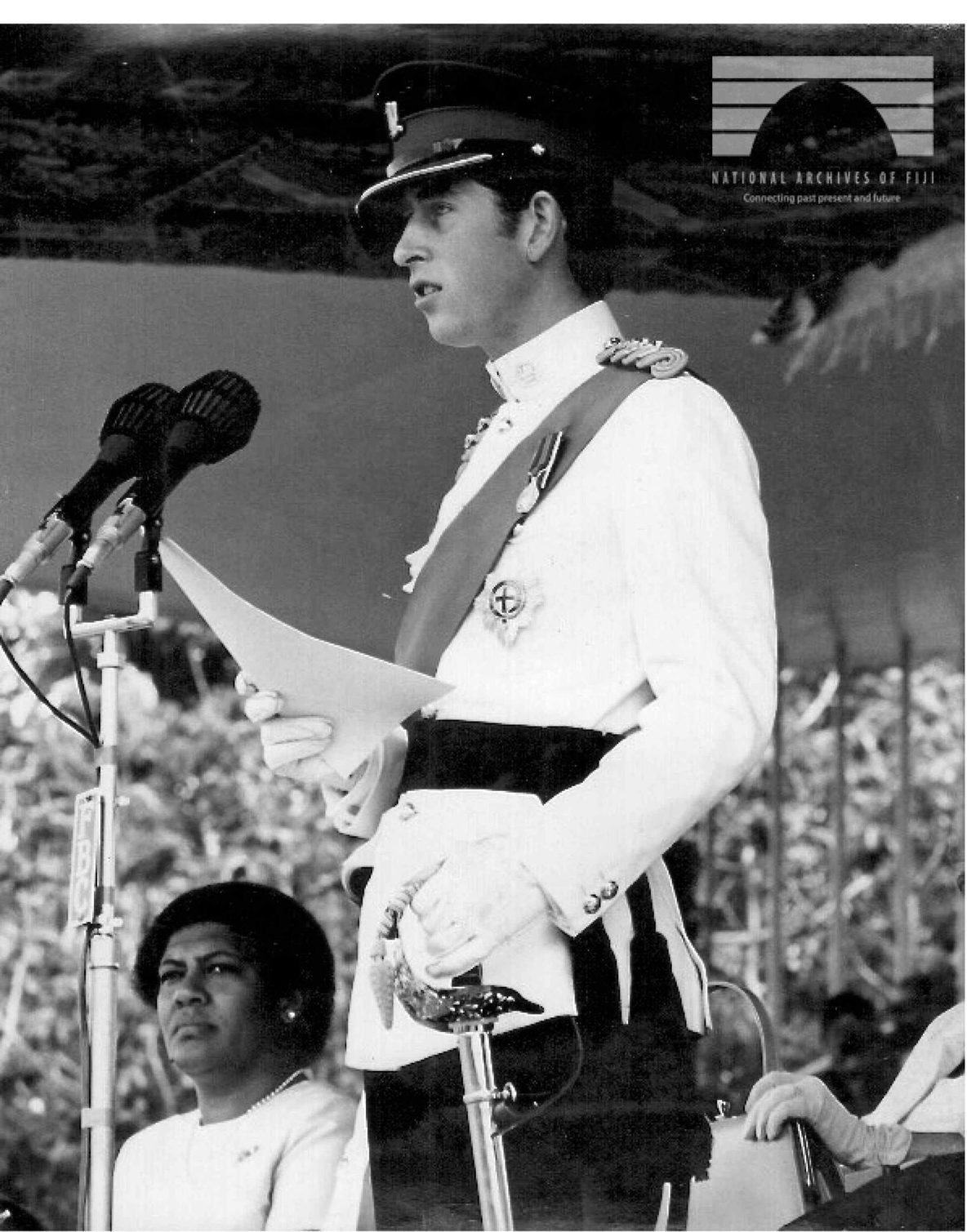
On July 1, 1969, Prince Charles stood in front of thousands, beneath the weathered stone walls echoing tales of battles long past, and delivered a speech in Welsh that resonated deeply with those present. The moment was immortalized not just by the spectacle, but by the sincerity carried in the young Prince’s words. For many, it was a gesture of goodwill, a symbol of unity. Charles hadn’t merely fulfilled a duty; he had attempted to understand and honor a distinct culture through its own language.
The Prince's speech struck a chord. Here was the heir to the British throne not asserting dominion, but extending an olive branch, validating Welsh heritage in its own tongue. Tears welled in the eyes of those gathered. It was the moment that silenced every critic and moved the nation.
A Look Back with Pride
The narrative of Prince Charles at Aberystwyth is both fascinating and telling. It echoes the monarchy’s evolving role—a formation of tradition and modernity, rooted yet responsive. The episode is remembered fondly as a testament to Charles’s personal dedication and as a bridge connecting the British monarchy with the cultural richness of the communities it serves.
In today’s world, language remains a powerful symbol of identity. Prince Charles’s determination to embrace Welsh traditions continues to resonate as a noteworthy chapter in royal engagements; it was an act that set a precedent for future generations aiming to engage with diverse cultures earnestly.
This story of regality and resilience serves as a poignant reminder that beyond titles and triumphs lies a young man who dared to understand—a small yet ambitious step that embraced the spirit of a proud nation.
These moments in history remind us of the enduring power of respecting one’s neighbors and acknowledging their heritage. The legacy of Prince Charles’s learning journey remains an inspiring beacon of unity and understanding, threading the past into the fabric of the present.
📷 Photo: National Archives of Fiji. Public domain via Wikimedia Commons.