She was just 27 years old, and the weight of an empire rested in her hands — literally. When the Sovereign's Orb was placed in Queen Elizabeth II's palm during the coronation ceremony, the solid gold sphere weighed nearly three pounds. This was not merely an object of regalia but a symbol of continuity and responsibility. As the young Queen grasped the orb, something unfolded in that seemingly fleeting moment — a pause, a breath — revealing the resolute strength of character that would define her reign.
The Unforgettable Coronation Day
On June 2, 1953, anticipation electrified the air of Westminster Abbey as the world gathered to witness the coronation of Queen Elizabeth II. The grand yet solemn ceremony was the pinnacle of royal tradition. Surrounded by the grandeur of the Abbey and the dignitaries from nations afar, the young Queen stood amid centuries of history, bearing the profound legacy of a lineage that had weathered numerous storms.
The coronation was an orchestration of meticulous detail, bound by ceremonial customs that carried both profound meanings and expectations. Among these rituals, the moment when the Sovereign’s Orb was placed in the monarch’s hand stood as timeless. Flecked with jewels, the orb encompasses the cross atop a sphere, symbolizing the Christian world; it carries the weight not only literally but as an emblem of spiritual and temporal power.
As Archbishop Geoffrey Fisher tendered her the orb, Queen Elizabeth appeared collected. Yet, unexpectedly, an unguarded moment passed where she briefly closed her eyes, just for a breath, absorbing the magnitude of the instant. This pause, imperceptible to some, reverberated with meaning to those who observed closely.
Understanding the Young Queen
It was a scene etched in history, reflective of the human beneath the crown. To understand why this moment mattered, one must consider Elizabeth's journey to the throne. Crowned a monarch within a world still recuperating from the bounds of war, she had been groomed for her role as Britain's symbol of continuity and stability.
Yet, Elizabeth was not just another heir in line. As a child, she displayed a profound sense of duty and discipline, cultivated lovingly by her parents King George VI and Queen Elizabeth. Through her formative years, though she was permitted moments of carefree delight, there remained an underpinning understanding of her destined future.
By 27, Elizabeth had already encountered wars and learned the demands of royalty. Her husband, Prince Philip, stood by her side as a steadfast support. Together, they represented hope and modernity — a royal pair providing reassurance to the British public yearning for prosperity in peace.
The Ceremony: Sum of Ritual and Significance
The coronation itself was a carefully choreographed affair, a blend of ancient and new. For the first time, it was televised, bringing the ceremony into homes across Britain and beyond. Families gathered around black-and-white screens, entranced by the spectacle and its promise of renewal.
Westminster Abbey, the site of the coronation, imbues a reverberating sense of majesty and history. Here, the music echoed through the high gothic arches, drawing all present into a moment of collective awe. Everything about the day bespoke continuity from the velvet and ermine of the royal robes to the solemn chants of the choirs.
It was amidst this grandeur that Elizabeth took the coronation oath, pledging to uphold the laws of God and the realm. As the symphony of ritual unfolded, the orb was delivered into her hands — weighty in more ways than one. Herein lay the visual testament to the faith placed in her, an object to be borne forward into the annals of history.
The Heart of the Queenly Era
Elizabeth’s silent pause, her steadying resolve, was a hallmark that would characterize her ensuing reign. Accustomed to reserve, her expressions did not often betray inner thoughts, but this moment revealed a personal interaction with her responsibilities. Within her grasp lay not only a bejeweled sphere but also the essence of an evolving empire.
Through decades of service, Queen Elizabeth would navigate global transformations with a steady hand. She became a comforting constant through political upheavals, social change, and family challenges, embodying resilience and grace.
The stoicism she exhibited at her coronation was only the start of a journey defined by adapting tradition to embrace contemporary values. Under her reign, the Commonwealth grew, and Britain's monarchy transitioned from imperial roots to a more inclusive, modern entity.
Carrying the Legacy Forward
Queen Elizabeth II's coronation was more than a rite of passage; it marked the genesis of an era that would bind past and future together. In a single, unguarded breath, she validated both the weight of her royal heritage and her capacity to carry its challenges beyond Westminster's hallowed halls.
Today, as we reflect upon her life and reign, the resonance of that moment endures. It reminds us of the potent blend of symbolism and substance that defines a monarchy resilient through time. At heart, her steadfast commitment remains a beacon, not merely for a nation but for the enduring spirit of duty and unity — lessons that resonate amid modern complexities as powerfully as they did in 1953.
With every coronation ceremony, a torch is passed — and with Elizabeth II, it was borne brightly, reflecting the light of history and the promise of the future.
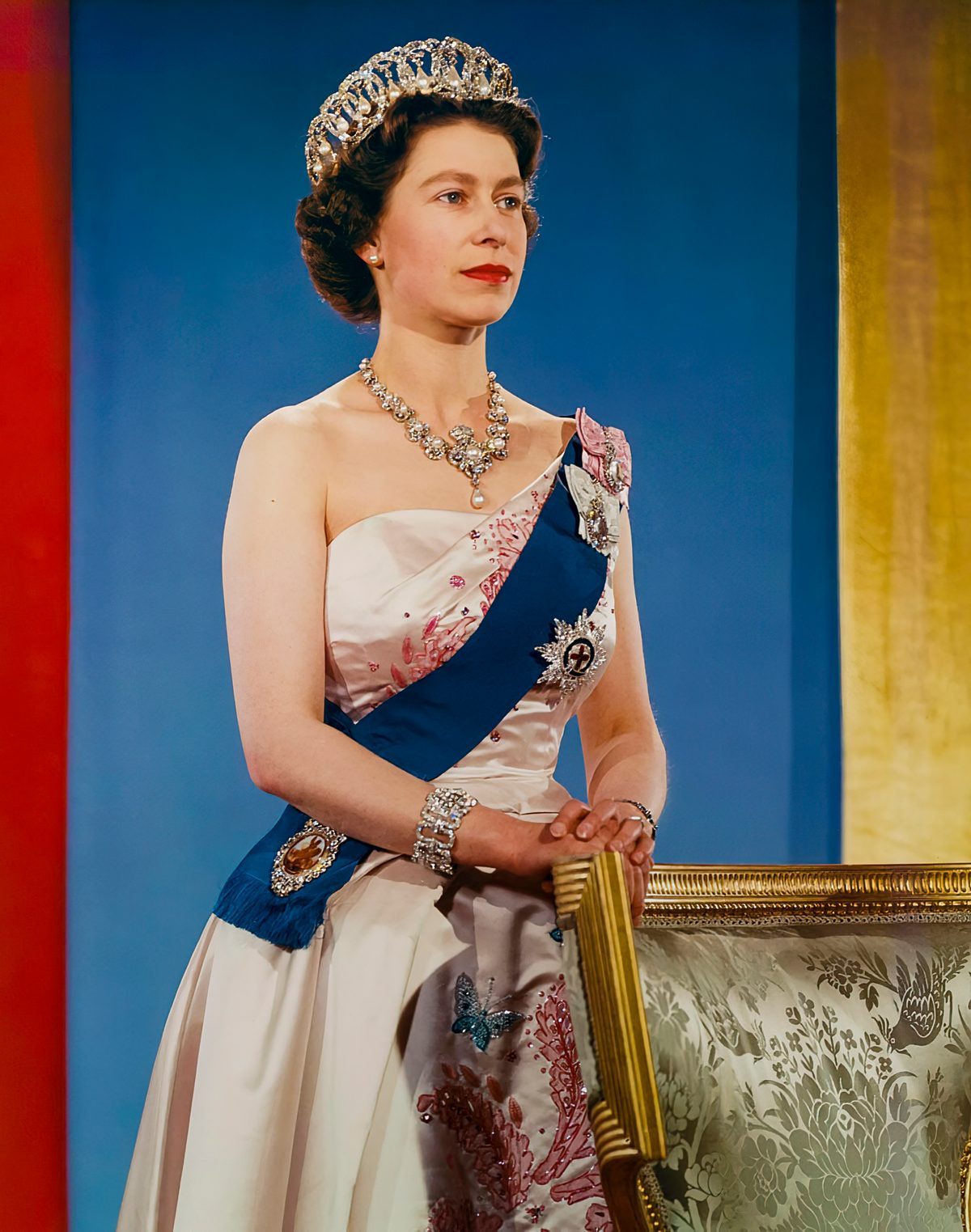
📷 Photo: Donald McKague. Public domain via Wikimedia Commons.