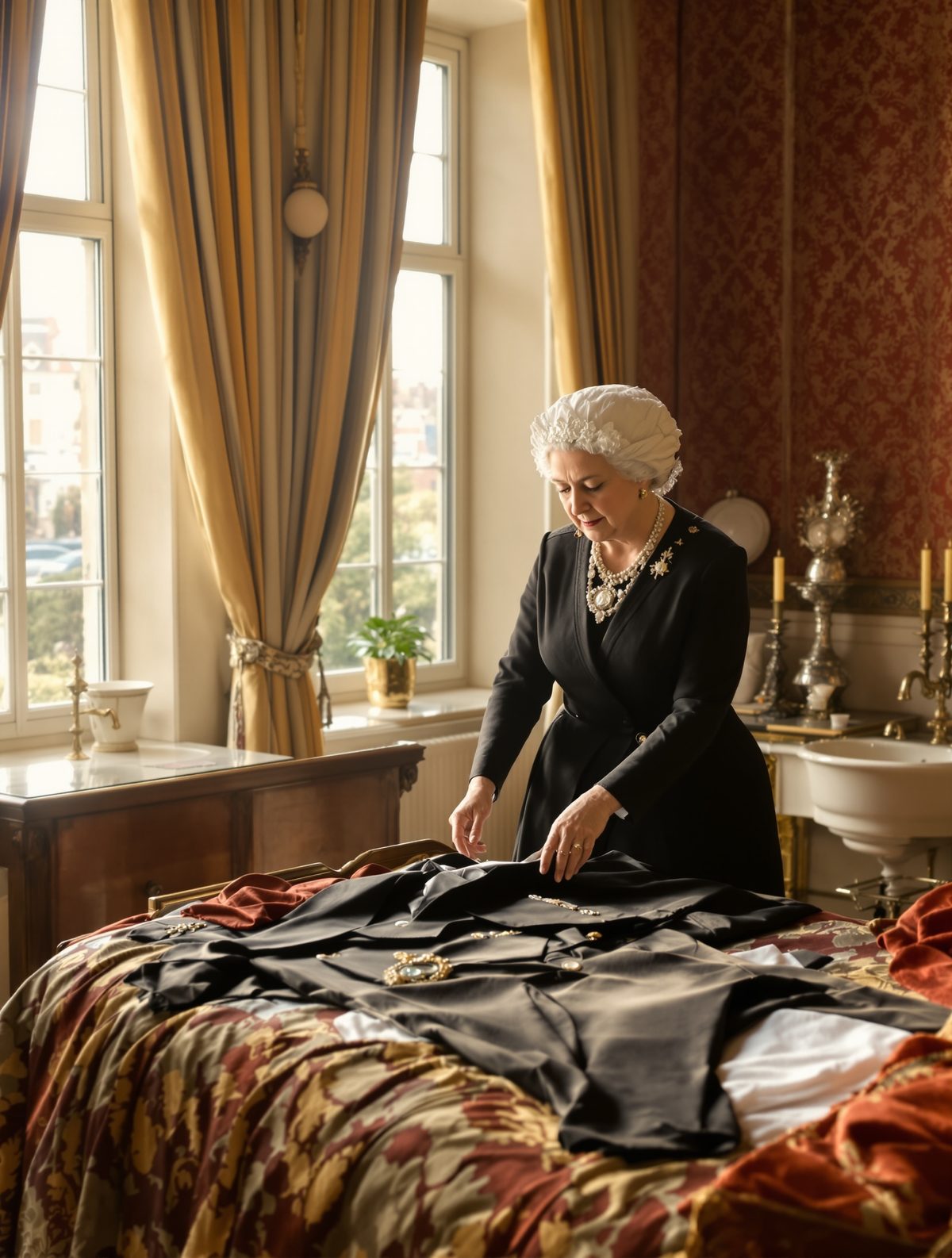
Every morning for nearly four decades, the servants at Windsor Castle performed a ritual that would break the hearts of even the most stoic observer. In the Blue Room where Prince Albert had drawn his last breath, they would lay out fresh clothes as though he were about to dress for the day. Clean water filled his washbasin, soap waited by the washstand, and his beloved possessions remained exactly where he had left them on that devastating December day in 1861. Queen Victoria, the woman who ruled an empire spanning a quarter of the globe, could not bear to let go of the one man who had truly ruled her heart.
A Love That Conquered the Crown
To understand the depth of Victoria's devotion, one must first appreciate the extraordinary partnership she shared with Prince Albert of Saxe-Coburg and Gotha. When they married in 1840, Victoria was already three years into her reign, a young woman thrust into unimaginable responsibility. Albert became far more than her consort—he was her intellectual equal, her trusted advisor, and the anchor that steadied her often tempestuous nature.
Together, they transformed the monarchy from an institution mired in scandal and excess into a beacon of moral respectability and progressive ideals. Albert's influence extended into every corner of Victorian society, from his championing of the arts and sciences to his vision for the Great Exhibition of 1851. More intimately, their marriage produced nine children and demonstrated to their subjects what a loving, devoted partnership could look like.
Victoria herself wrote extensively about their happiness in her journals, describing Albert as "my beloved Albert, my life, my all." She relied on his judgment so completely that barely a decision was made without his counsel. When typhoid fever claimed his life at just 42, Victoria didn't simply lose a husband—she lost half of herself.
The Blue Room Becomes a Shrine
The room where Albert died at Windsor Castle was immediately transformed into something approaching a sacred space. Victoria decreed that everything should remain exactly as it was at the moment of his passing, and this wasn't merely about preserving a few sentimental objects. The Blue Room became a meticulous recreation of a life interrupted, maintained with an attention to detail that bordered on the mystical.
Each morning, the Queen's devoted servants would enter the Blue Room with the same reverence they might show entering a cathedral. Albert's nightclothes from December 14, 1861, were carefully replaced with fresh garments. His personal effects—his watch, his rings, his beloved collection of books and papers—were dusted and arranged precisely as he had left them. The bed was made with crisp linens, as though he might return from a morning walk in the gardens.
Perhaps most poignantly, hot water was brought to his washstand daily, accompanied by fresh towels and his favorite soap. Victoria's instructions were exacting: everything must be ready should Albert need it. The servants, bound by loyalty and perhaps their own understanding of grief's strange logic, never questioned these orders. They simply obeyed, year after year, decade after decade.
A Widow's Devotion Beyond Death
Victoria's daily ritual extended far beyond the Blue Room itself. She began each day by visiting Albert's rooms, often spending long moments in silent communion with his memory. She would examine his clothes, touch his belongings, and speak to him as though he were present. Staff reported seeing her lips moving in quiet conversation, though none dared to intrude upon these private moments.
The Queen's devotion manifested in countless other ways throughout the castle and beyond. She ordered that Albert's room at Balmoral be maintained in identical fashion, creating multiple shrines to their shared life. His study remained exactly as he had left it, with papers still scattered across his desk and his pen lying where he had placed it for the final time. Even his walking sticks stood ready by the door.
Victoria wore black mourning dress for the remaining 39 years of her life, but her commitment to preserving Albert's presence went far beyond symbolic gestures. She continued to have dinner set for two, with Albert's place meticulously arranged across from her own. His photograph accompanied her everywhere, and she slept beside a plaster cast of his hand until her own death in 1901.
The Court That Dared Not Speak
For the servants and courtiers who witnessed this daily ritual, Victoria's devotion created a peculiar atmosphere within the royal households. The entire court learned to navigate around the Queen's grief with extraordinary delicacy. Staff members developed an almost supernatural ability to anticipate her needs while maintaining the fiction that Albert might return at any moment.
The ritual became so embedded in palace life that new servants were trained in its precise execution as though it were any other royal protocol. Housemaids learned the exact placement of Albert's brushes on his dressing table. Valets understood which clothes were to be selected for each day of the week. The entire household staff became custodians of a love story that refused to acknowledge death's finality.
Remarkably, this arrangement continued even as the decades passed and new generations of servants arrived at the palace. The ritual outlasted multiple changes in household staff, surviving wars, political upheavals, and the natural evolution of royal life. It became as fundamental to Windsor Castle's daily rhythm as the changing of the guard or the preparation of the Queen's morning tea.
A Legacy of Eternal Devotion
When Victoria finally joined her beloved Albert in death in January 1901, she was found clutching his photograph and wearing her wedding ring alongside a ring that had belonged to him. In her final instructions, she requested to be buried with numerous mementos of their life together, ensuring that even in death, they would never truly be parted.
The daily ritual that had sustained her for four decades finally came to an end, but its legacy speaks to something profoundly human about love's refusal to accept loss. Victoria's morning ritual wasn't simply about preserving the past—it was about maintaining a connection that transcended physical death. In preparing Albert's clothes each day, she was preparing for a reunion she never stopped believing would come.
Today, visitors to Windsor Castle can still see the Blue Room where this remarkable ritual took place, though it has long since been restored to other purposes. Yet Victoria's decades-long devotion continues to move people across the world, reminding us that some loves are indeed strong enough to conquer death itself. In an age where relationships are often treated as temporary conveniences, Queen Victoria's unwavering commitment to her beloved Albert stands as a testament to the transformative power of true partnership—a love story that began in the drawing rooms of Victorian England and echoes still in the hearts of all who believe that some bonds are simply eternal.