In the misty pre-dawn hours of the 1780s, something extraordinary was happening within the walls of Windsor Castle. While his courtiers slept and the palace lay in hushed silence, King George III would slip away from the grandeur of his royal chambers to find solace in the most unexpected of places. What Queen Charlotte discovered when she followed her husband's mysterious morning disappearances would not only explain his remarkable periods of clarity during his struggles with mental illness, but would also breathe new life into their enduring royal marriage.
The King's Mysterious Dawn Ritual
For months, Queen Charlotte had noticed her husband's peculiar habit. Every morning, just as the first pale light crept across the castle grounds, King George III would quietly dress himself—not in his usual royal finery, but in simple, practical clothes more befitting a country gentleman than a monarch. Palace servants whispered among themselves about the King's early morning wanderings, but none dared to follow or question their sovereign.
The 1780s were particularly challenging years for the royal family. King George III had begun experiencing the first serious episodes of what historians now believe may have been bipolar disorder or porphyria, conditions that would later earn him the unfortunate moniker of "the mad king." These mysterious morning absences coincided with some of his most lucid and peaceful periods, leaving both his physicians and his devoted wife puzzled about their cause.
Queen Charlotte, deeply concerned for her husband's wellbeing and their relationship, finally resolved to uncover the truth. One crisp morning in 1784, she quietly followed the King as he made his way through the castle's corridors, past the ornate state rooms, and out into the sprawling grounds of Windsor.
A Royal Discovery Among the Vegetables
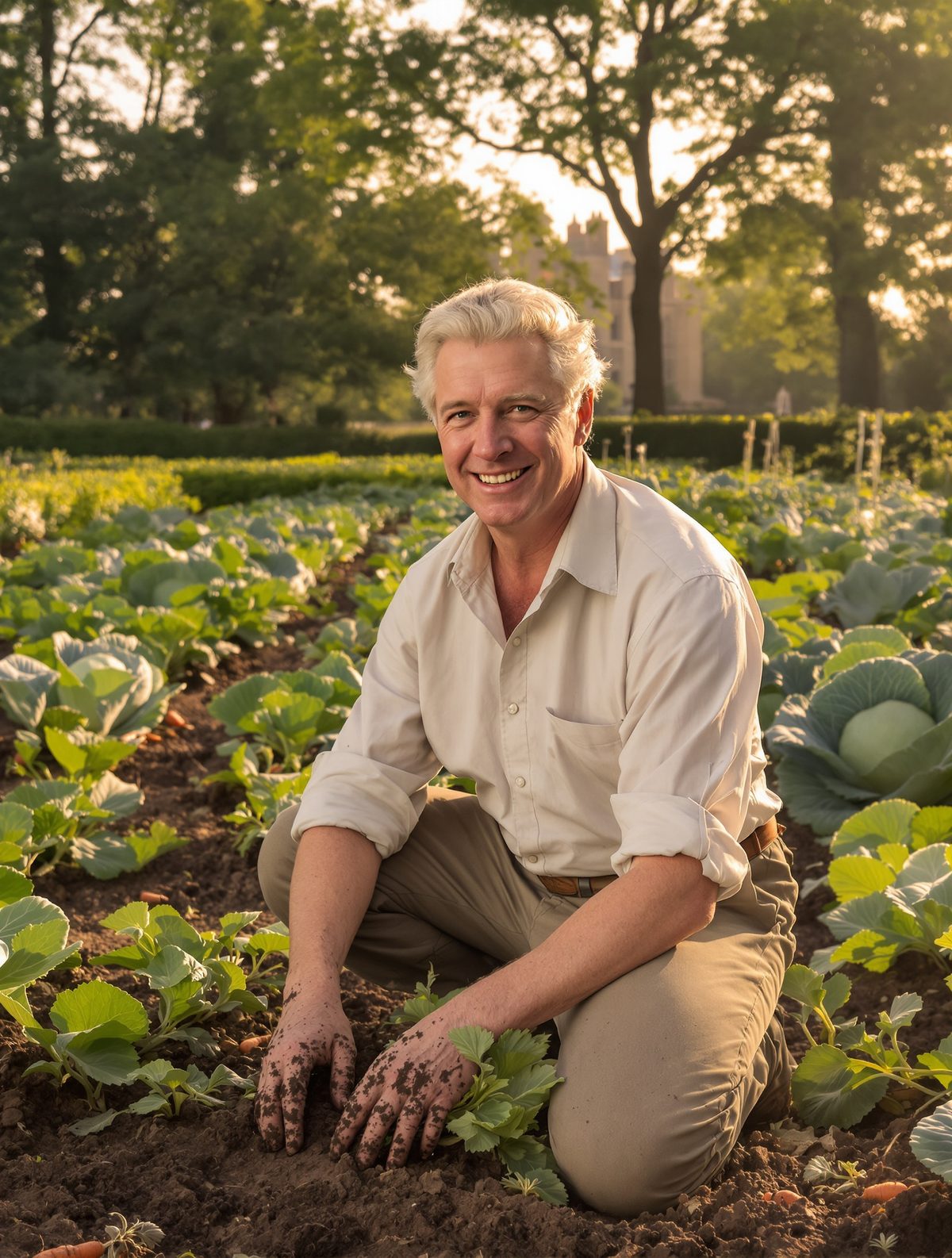
What Queen Charlotte found when she followed the winding path through Windsor's gardens was a sight that would have astonished anyone who knew the formal, protocol-bound world of the Georgian court. There, in a secluded corner of the castle grounds, was her husband—the King of England—kneeling in the rich, dark soil with his hands deep in the earth, tending to neat rows of vegetables with the care and attention of a devoted gardener.
The King had created his own private sanctuary: a kitchen garden where he grew carrots, cabbages, turnips, and beans. His hands, usually gloved and pristine, were dirty with honest soil. His face, so often marked by the strain of kingship and illness, showed a serenity that Charlotte hadn't seen in months. Here, among his vegetables, George III had found something that all the court physicians and treatments had failed to provide—peace of mind.
Rather than interrupt this precious moment, Queen Charlotte watched from a distance as her husband worked methodically through his garden. She observed how his movements became more relaxed, how the tension seemed to leave his shoulders as he pruned, weeded, and watered his plants. The King talked softly to his vegetables—not in the rapid, sometimes incoherent manner that marked his episodes of illness, but in the gentle, measured tones of a man completely at ease.
The Healing Power of Simple Pleasures
When Queen Charlotte finally revealed that she had discovered his secret, King George III's reaction was telling. Rather than embarrassment at being found engaging in such "common" work, he showed genuine excitement at sharing his passion with his wife. The King explained how working with his hands, feeling connected to the earth and the cycle of growth, brought him a clarity and calmness that nothing else could provide.
This revelation marked a turning point in their marriage. Queen Charlotte began joining her husband in his morning garden sessions, and together they cultivated not only vegetables but a new intimacy in their relationship. The garden became their private retreat from the pressures of court life, a place where they could simply be George and Charlotte rather than King and Queen.
The therapeutic benefits of gardening were not lost on the royal physicians of the time. Dr. Francis Willis, one of the King's doctors, noted in his records how the monarch's condition improved markedly during periods when he was able to maintain his gardening routine. The physical exercise, the satisfaction of nurturing growing things, and the meditative quality of working with soil and plants provided a natural treatment that complemented the medical care of the era.
Palace records from this period show that the King's vegetable garden became increasingly elaborate, eventually including greenhouses and experimental plots where he tested new varieties of crops. His interest in agriculture would later influence his support for agricultural improvements throughout Britain, earning him the affectionate nickname "Farmer George" among his subjects.
A Marriage Renewed in the Garden
The shared mornings in the garden transformed the royal couple's relationship in ways that extended far beyond those dawn hours. Queen Charlotte later wrote to her daughter about how these simple moments of working side by side had given her insights into her husband's character that years of formal court life had never revealed. She discovered his gentle nature with growing things, his methodical mind applied to practical problems, and his deep satisfaction in creating something beautiful and useful.
The garden also provided the royal couple with a common project that brought them joy during difficult times. When the King experienced episodes of illness, Queen Charlotte would tend their garden alone, maintaining it as a symbol of hope for his recovery. When he returned to lucidity, the sight of their thriving plants seemed to anchor him and provide evidence of continuity and care during his absent periods.
Their children, too, were eventually welcomed into this special world. The young princes and princesses learned to garden alongside their parents, creating memories that would influence their own relationships with nature and simple pleasures throughout their lives. Princess Elizabeth, in particular, became an accomplished gardener, a skill she attributed to those magical mornings watching her parents work together in perfect harmony.
A Timeless Royal Legacy
The story of King George III's secret garden therapy reveals something profoundly human about monarchy itself. Behind the crowns and ceremonial duties, royal couples face the same fundamental challenges as any marriage: finding ways to connect, to support each other through difficulties, and to discover shared joys that strengthen their bond.
Today, as we witness modern royals like the Prince and Princess of Wales teaching their children to garden, or see King Charles III's lifelong passion for organic farming and environmental stewardship, we can trace a direct line back to those dawn hours when George III found healing among his vegetables. The therapeutic power of gardening, the importance of simple pleasures, and the value of shared quiet moments away from public scrutiny remain as relevant to royal marriages today as they were over two centuries ago.
Queen Charlotte's decision to follow her husband into the garden, and her willingness to join him in his unconventional therapy, speaks to the kind of devotion and adaptability that has sustained royal marriages through the centuries. Sometimes the most profound acts of love are found not in grand gestures, but in the quiet willingness to kneel beside someone in the dirt and help them tend the things that bring them peace.