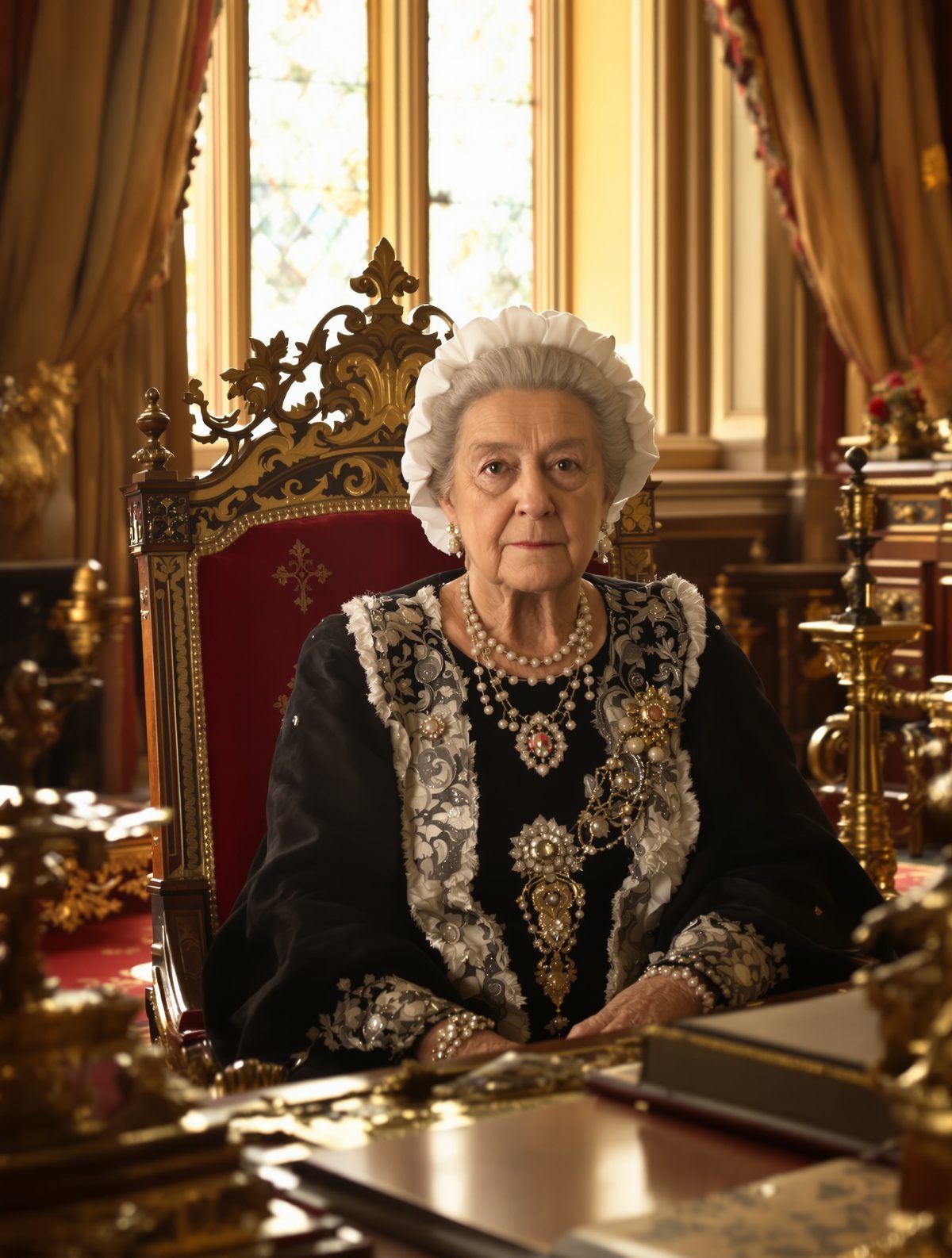
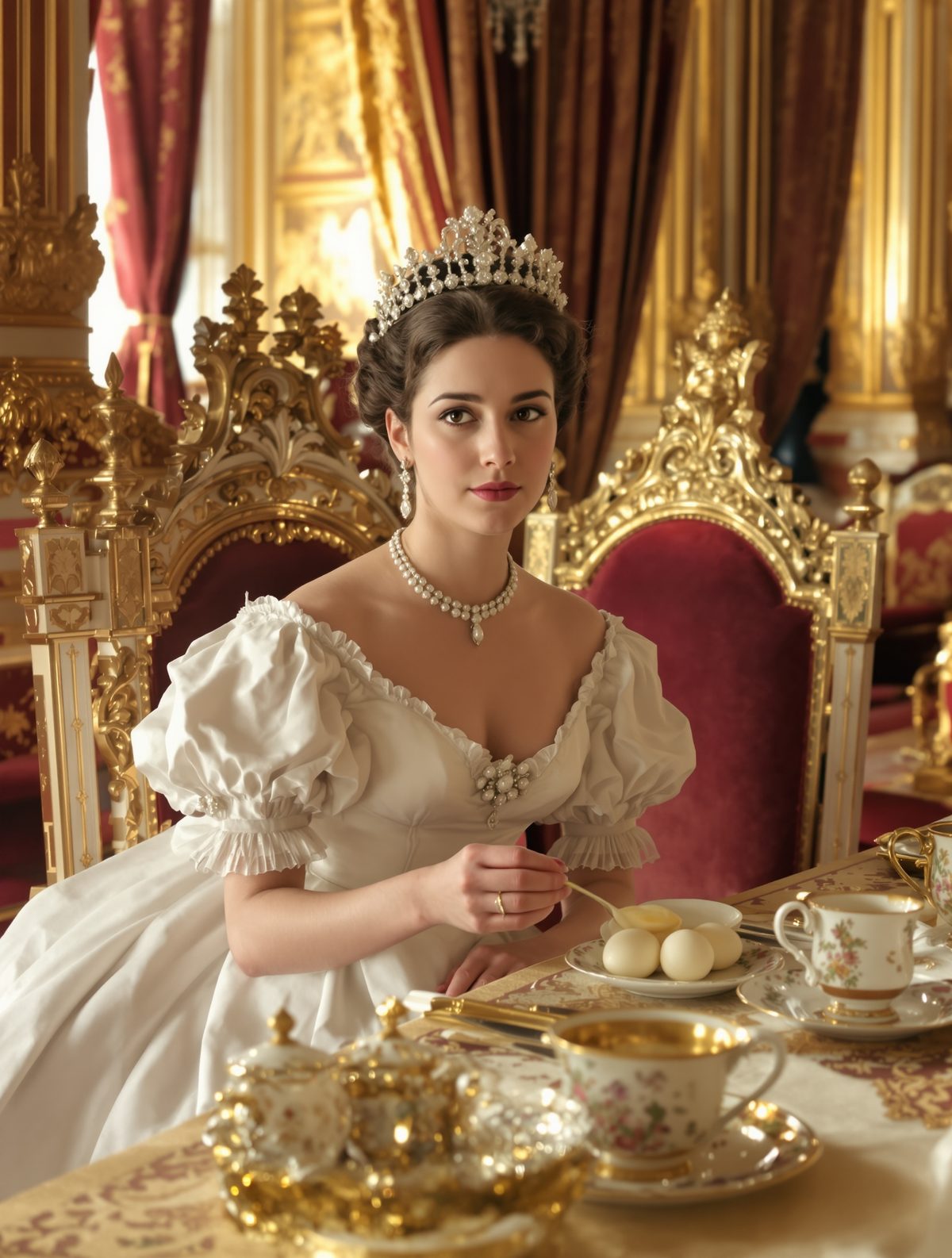
In the grey dawn of 28 June 1838, as servants scurried through the corridors of Buckingham Palace preparing for the most magnificent ceremony in decades, an eighteen-year-old girl did something utterly scandalous. Queen Victoria, on the morning she would be crowned sovereign of the greatest empire on earth, calmly walked to her dining room and demanded breakfast. Not a ceremonial morsel or delicate refreshment, but a proper, hearty meal of boiled eggs and buttered toast. The palace staff were aghast—queens simply did not eat on coronation morning.
A Young Queen's Practical Approach
Victoria's insistence on breakfast revealed something fundamental about her character that would define her remarkable sixty-three-year reign: she was refreshingly practical, even when tradition demanded otherwise. While her courtiers expected the solemn fasting and prayerful contemplation befitting such a sacred occasion, the young queen had different ideas entirely.
Standing barely five feet tall and weighing less than eight stone, Victoria understood her own needs better than her well-meaning attendants. The coronation ceremony would last several grueling hours, beginning with the procession to Westminster Abbey at half past ten in the morning and continuing well into the afternoon. She would need sustenance for the ordeal ahead, regardless of what protocol dictated.
The queen's lady-in-waiting, the Duchess of Sutherland, reportedly looked on in barely concealed horror as Victoria settled herself at the dining table with the same matter-of-fact determination that would later see her through wars, political crises, and personal tragedies. This was not how queens were supposed to behave, the duchess's expression seemed to say. But Victoria had never been particularly concerned with how she was supposed to behave.
Breaking Centuries of Royal Tradition
The tradition of pre-coronation fasting stretched back centuries, rooted in the medieval belief that monarchs should approach their anointing in a state of spiritual purification. Previous sovereigns had spent their coronation mornings in prayer and contemplation, taking perhaps only water or wine before the sacred ceremony. Even Victoria's immediate predecessor, her uncle William IV, had observed this custom during his coronation in 1831.
But Victoria represented a new generation of monarchy—one that would challenge many established customs with pragmatic common sense. Born into an era of rapid social and technological change, she seemed instinctively to understand that some traditions served no useful purpose beyond their own perpetuation.
The palace staff's shock was perhaps understandable given the rigid ceremonial expectations of the Georgian court. For decades, royal behaviour had been governed by increasingly elaborate protocols, many of which seemed designed more to emphasize the monarch's otherworldly status than to serve any practical function. Victoria's simple request for eggs and toast cut through this ceremonial complexity with startling directness.
The Coronation Day That Changed Everything
Fortified by her controversial breakfast, Victoria faced her coronation with characteristic composure. The ceremony itself would prove nearly as unconventional as her morning meal, though not entirely by choice. The Archbishop of Canterbury placed the ring on the wrong finger, causing the young queen considerable pain. The elderly Lord Rolle literally rolled down the steps of the throne while paying homage, prompting Victoria to rise and meet him halfway—another breach of protocol that won hearts throughout the abbey.
Contemporary accounts suggest that Victoria's practical approach to the morning served her well during these challenging moments. While she might have felt faint or overwhelmed if she had fasted, her sensible breakfast gave her the energy to navigate the ceremony's various mishaps with grace and even humor. She famously wrote in her journal that evening about the day's events with remarkable sang-froid, noting the various mistakes as if they were merely interesting observations rather than disasters.
The five-hour ceremony, which included the three-hour service at Westminster Abbey followed by the procession back to Buckingham Palace, vindicated Victoria's insistence on proper nourishment. Witnesses reported that she appeared fresh and alert throughout, even as some of the older peers and clergy seemed to wilt under the strain.
A Breakfast That Defined a Reign
Victoria's coronation breakfast became something of a palace legend, whispered about by servants and courtiers for years afterward. But what initially scandalized her staff would come to be seen as perfectly characteristic of a monarch who consistently prioritized substance over ceremony throughout her long reign.
This practical approach would serve her well in the decades that followed. Victoria would go on to modernize countless aspects of royal life, from embracing new technologies like the telegraph and railway to insisting on more sensible court dress for her ladies-in-waiting. She understood, perhaps better than any monarch before her, that the Crown's power lay not in mystical symbolism but in its ability to adapt and remain relevant to changing times.
The young woman who calmly ate her boiled eggs while her staff fretted about protocol would later become the queen who gave her name to an entire era. She would reign through the Industrial Revolution, the expansion of the British Empire, and unprecedented social change, always maintaining that same practical wisdom that had led her to fuel up properly before her coronation.
Even her approach to widowhood after Prince Albert's death in 1861 reflected this same practical nature. While she grieved deeply and withdrew from public life for several years, she never stopped working, managing state affairs from Windsor Castle and Balmoral with the same methodical attention to detail that had characterized her coronation morning routine.
The Legacy of Royal Common Sense
Looking back on Victoria's breakfast rebellion from our modern perspective, it's striking how her instinctive understanding of her own needs foreshadowed the more accessible monarchy we know today. The queen who insisted on proper nourishment before her coronation was the same woman who would later delight in simple pleasures like Highland dancing and seaside holidays, always remaining fundamentally human despite her exalted position.
Her descendants have inherited this practical streak in various ways. The current royal family's approach to modernizing traditions—from televised coronations to walkabouts among crowds—echoes Victoria's willingness to prioritize effectiveness over empty ceremony. The young queen who shocked her staff with boiled eggs would undoubtedly recognize the pragmatic spirit behind today's more informal royal engagements and streamlined ceremonies.
Victoria's secret coronation breakfast reminds us that even the most solemn royal occasions are, at their heart, human experiences. Behind the pageantry and protocol, monarchs are people who need sustenance, rest, and practical preparation for the challenges they face. Perhaps that's the most enduring lesson from that dawn morning in 1838: sometimes the most radical thing a queen can do is simply take care of herself.