Against the backdrop of a war-torn world seeking hope, few stories emerged from the British monarchy during World War II as intriguing as that of young Princess Elizabeth. In 1945, at an age when many modern-day royals were blissfully cocooned in the comforts of palace life, Elizabeth, in a remarkable display of dedication and humility, joined the Auxiliary Territorial Service (ATS) as an ordinary recruit. With no special privileges accorded to her status and earning a standard Army wage, this choice not only endeared her to the public but showcased a remarkable side of the monarchy that many rarely see. This was the story of Elizabeth Windsor, before she was Queen, blending in, quite literally, under the hoods of trucks and greasy overalls.
The Royal Enlistment
The year was 1945, and the Second World War was drawing to a close. The United Kingdom had been enduring the hardships of war, and morale was a crucial aspect of the home front. In this atmosphere of uncertainty and determination, Princess Elizabeth, heir presumptive, made a decision that would surprise and inspire many, both then and now. She expressed her desire to contribute to the war effort in a tangible way, not merely through the ceremonial roles often reserved for royals.
With King George VI's cautious approval, Elizabeth joined the ATS, the women's branch of the British Army, at the tender age of 19. The news was met with both admiration and some skepticism. Could a princess, raised in the elegance of Buckingham Palace, truly perform the gritty, demanding work required of ATS members? Yet Elizabeth was not one to shy away from hard work or let her royal status interfere with a patriotic duty. Her enrollment was a testament to her character, a reflection of her sibling-like bond with the British public who had shared in the trials and tribulations of wartime Britain.
The Daily Grind of Princess Elizabeth
The ATS was not a place of glamour; it was a place of work, learning, and communal living. Princess Elizabeth was assigned the service number 230873, and as a Second Subaltern, she embarked on a rigorous training regime. Far from the opulent surroundings of royal life, she donned a khaki uniform, identical to the ones worn by thousands of other women across Britain. Every day, she tackled tasks that would daunt many: changing enormous truck tires, learning how to strip engines, and reading complex maps — essential skills for the mechanics and drivers of Army vehicles.
Despite her unique status, Elizabeth earned the same 20 shillings a week as her fellow recruits. She shunned any special treatment, seeking instead to fully embrace the experience of her peers. Amazingly, it wasn't until the second day that other women in the ATS realized they were working alongside the future Queen of England. Her fellow ATS members later recalled with fondness her humility and determination. To them, Elizabeth was just another member of the Nissen hut community, albeit one with an unmistakable calm demeanor under pressure, which would characteristic of her later reign.
The revelation of her identity undeniably shifted her fellow recruits’ perception, yet it's a testament to her character that she was accepted as one of their own, a symbol of common purpose rather than privilege.
A Royal Legacy in the Making
The experience within the ATS left an indelible mark on Princess Elizabeth, shaping her in ways that would resonate throughout her life. It is said that her time in the service solidified an already profound sense of duty and an understated but steadfast resolve. This exposure to military life also broadened her understanding of logistics and operations, skills that would serve her well as she transitioned to life as a constitutional monarch.
Within the context of the royal court, this unconventional episode helped forge Elizabeth’s reputation as a monarch who valued duty above all. It was a manifestation of the steadfast commitment to service that her father, King George VI, embodied. Elizabeth's decision to serve brought the monarchy closer to the people during one of history's most challenging times, breaking down barriers that seemed insurmountable in an era where royals and commoners lived in very different worlds.
The Unfading Influence of Wartime
As the dust settled post-war and Elizabeth transitioned from Princess to Queen, the echoes of her wartime service lingered, revealing themselves in numerous ways throughout her reign. Those who observed her in the political arena often remarked on her practical approach to problem-solving and her innate ability to connect with citizens across the Commonwealth. It was as if the young woman who had learned to navigate the intricacies of a military workshop could effortlessly navigate the complexities of ruling a kingdom.
Elizabeth's commitment to public service significantly bolstered the monarchy's standing, casting the Crown not just as a symbol of history and tradition but as an active participant in the life and struggles of the nation. Her choice to serve in the ATS remains a poignant reminder of her unique blend of humility and leadership, qualities that have endeared her to generations.
Looking to the present, as the world continues to face its own challenges, Elizabeth's example serves as a beacon of how dedication, humility, and shared sacrifice can unite and inspire. Her wartime service exemplifies key values that remain relevant — resilience, community, and an unwavering sense of duty. As we reflect on her legacy, we see not only the monumental pages of royal history but also the personal stories of a young woman stepping off the throne to muck in with the rest.
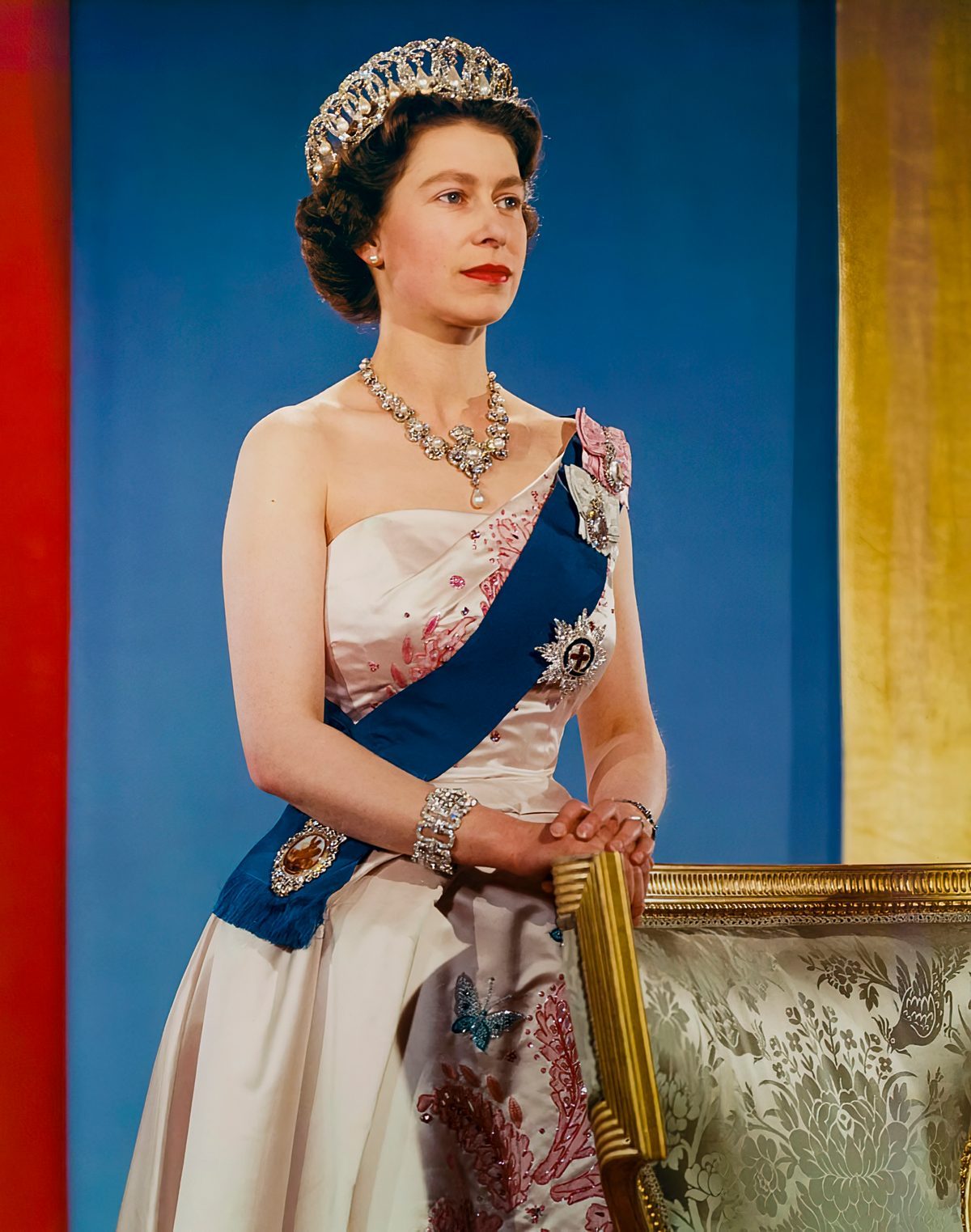
📷 Photo: Donald McKague. Public domain via Wikimedia Commons.