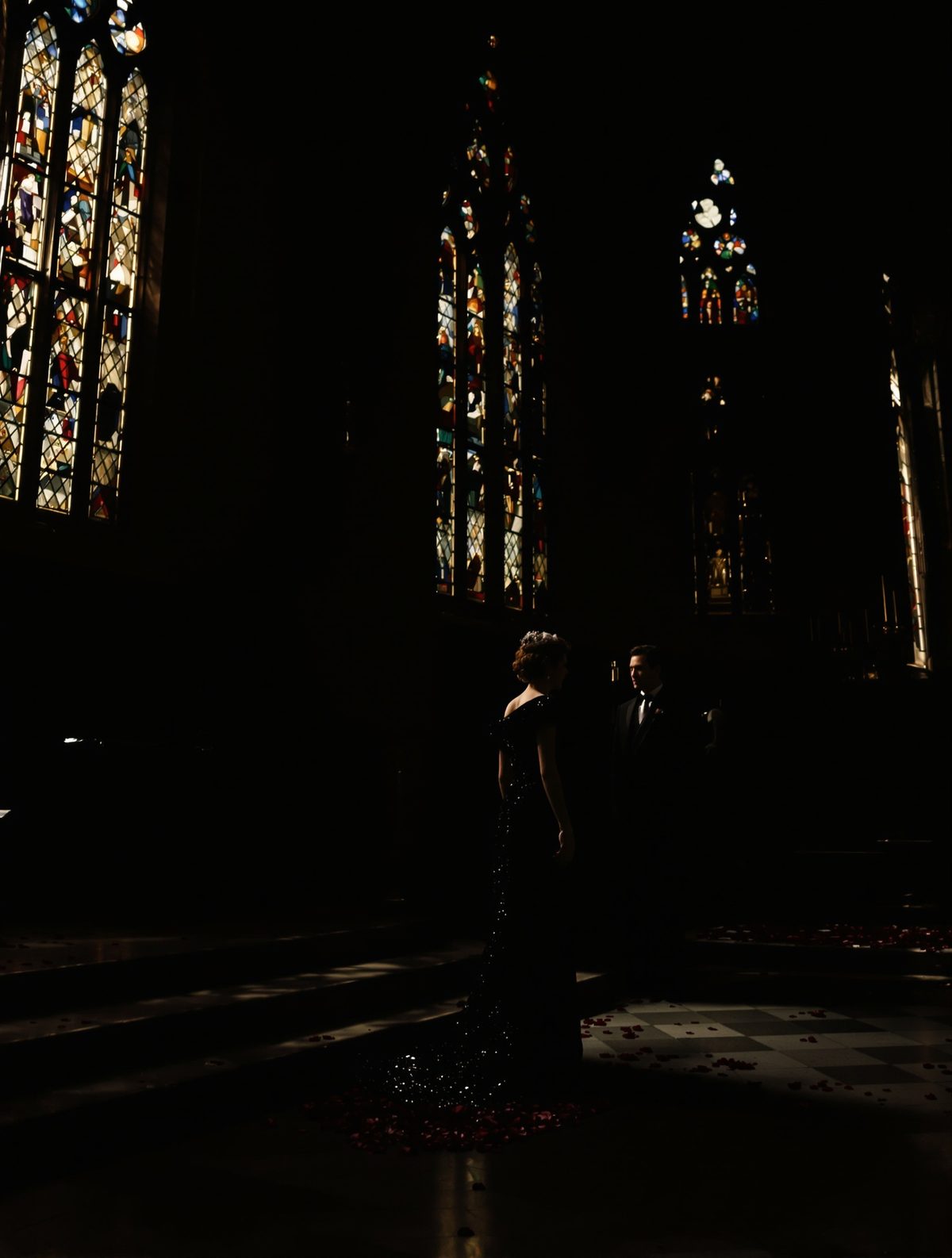
The pale November moonlight cast long shadows through Westminster Abbey's ancient stones as a solitary figure slipped through the side entrance. It was past midnight on November 30th, 1953, and Princess Margaret Rose, the Queen's younger sister, had come to say goodbye to a dream that had captivated the world and torn apart the British establishment. What she did in those hallowed halls during the darkest hours before dawn would remain one of the royal family's most poignant and closely guarded secrets.
A Love That Shook the Crown
By 1953, Princess Margaret's romance with Group Captain Peter Townsend had become the most scandalous love affair of the decade. The decorated war hero, sixteen years her senior and divorced with two children, represented everything the rigid protocols of the 1950s monarchy could not accept. Yet their connection was undeniable—forged during wartime when Townsend served as equerry to King George VI, and deepening after the King's death when Margaret found solace in his steady presence during her grief.
The relationship had simmered beneath the surface of court life for years, hidden in plain sight through stolen glances at royal functions and carefully orchestrated private meetings. But a single, telling gesture at the Queen's coronation in June 1953—Margaret brushing a piece of fluff from Townsend's uniform with unmistakable intimacy—had exposed their secret to the world's press. Suddenly, the princess who had always lived in her sister's shadow found herself at the center of a constitutional crisis that threatened the very foundations of the modern monarchy.
The Weight of Duty and Desire
The weeks following the coronation had been a torment of royal meetings, constitutional consultations, and agonizing deliberations. Under the Royal Marriages Act of 1772, Margaret needed her sister's consent to marry before age 25. More crucially, as Supreme Governor of the Church of England, the Queen could hardly approve her sister's marriage to a divorced man when the Church's doctrine forbade such unions.
The proposed compromise was cruel in its clarity: Margaret could marry Townsend, but she would forfeit her place in the line of succession, lose her royal income, and likely face exile from Britain. The princess, then just 23, found herself caught between the man she loved and the duty that had defined her existence since birth. Palace insiders later recalled how she grew increasingly withdrawn during this period, her famous vivacity dimmed by the impossible choice before her.
The establishment's position was unforgiving. Prime Minister Winston Churchill, Archbishop of Canterbury Geoffrey Fisher, and the Cabinet made their opposition clear. They remembered all too well the abdication crisis of 1936, when Margaret's uncle King Edward VIII had chosen love over duty, creating a constitutional earthquake that had thrust her father onto the throne. The monarchy, still rebuilding its reputation after that trauma, could not weather another scandal so soon.
A Midnight Pilgrimage to Love's End
As December approached, Margaret knew her public decision could wait no longer. The world's media camped outside every royal residence, parsing every public appearance for clues about her choice. It was then, according to accounts that emerged decades later from palace staff, that she made her extraordinary nocturnal journey to Westminster Abbey.
How exactly she gained entry remains unclear—royal prerogative likely opened doors that would have remained closed to others. But enter she did, sometime after midnight, accompanied only by her thoughts and the crushing weight of impending loss. The Abbey, that ancient sanctuary where British monarchs had been crowned for nearly a thousand years, where she had so recently watched her sister accept the crown, became the stage for her most private moment of anguish.
What transpired in those sacred spaces can only be pieced together from fragments—the testimony of a night janitor who discovered rose petals scattered before the altar the following morning, and the whispered recollections of Margaret herself, shared with only her closest confidantes in later years. According to these accounts, she stood where brides had stood for centuries and spoke words that would never be officially recorded—private vows to a love that could never be publicly declared.
The rose petals, discovered by the Abbey's caretaker the next morning, told their own story. Margaret had always favored roses—they adorned her personal stationery and filled her private apartments. That she had brought them to scatter in this holiest of places suggested a ceremony both deeply personal and profoundly final.
The Public Face of Private Heartbreak
Hours after her midnight vigil, Margaret returned to the harsh realities of royal duty. Her famous statement, released on October 31st, 1955, was a masterpiece of dignified resignation:
"I would like it to be known that I have decided not to marry Group Captain Peter Townsend. I have been aware that, subject to my renouncing my rights of succession, it might have been possible for me to contract a civil marriage. But mindful of the Church's teachings that Christian marriage is indissoluble, and conscious of my duty to the Commonwealth, I have resolved to put these considerations before others."
The statement, crafted with input from palace officials, presented duty triumphant over desire. But those who knew Margaret well could read between the lines. This was not merely a princess choosing protocol over passion—it was a young woman recognizing that the cost of love, in her unique circumstances, was simply too high to bear.
Townsend, gentleman to the end, accepted the decision with quiet dignity. He would later marry Marie-Luce Jamagne in 1959 and rarely spoke publicly about his relationship with Margaret. The princess herself would eventually marry photographer Antony Armstrong-Jones in 1960, a union that brought its own complications and ultimately ended in divorce—ironically making Margaret the first senior royal to divorce since Henry VIII.
The Legacy of a Midnight Secret
Margaret's secret ceremony in Westminster Abbey represents more than just a romantic gesture—it symbolizes the profound personal sacrifices demanded by royal duty. In choosing to say her private vows in the Abbey, she perhaps sought to sanctify a love that the establishment would never officially bless, to claim for herself a moment of spiritual union that the constitutional monarchy denied her.
The story remained buried in palace lore for decades, emerging only through careful piecing together of staff recollections and Margaret's own carefully guarded reminiscences in later life. It adds another layer to our understanding of a princess who, throughout her life, struggled to balance personal happiness with public duty—often unsuccessfully, but always with a fierce independence that both charmed and frustrated the establishment.
Today, as we witness a royal family more willing to prioritize personal happiness—from Prince Harry's choice to step back from royal duties for love and mental health, to changing attitudes toward divorce within the monarchy—Margaret's midnight vows seem both heartbreaking and prophetic. She paid the price for loving in the wrong era, but her sacrifice helped pave the way for future generations of royals to make choices she never could. In the end, her secret ceremony stands as testament to love's enduring power, even when duty demands its denial.