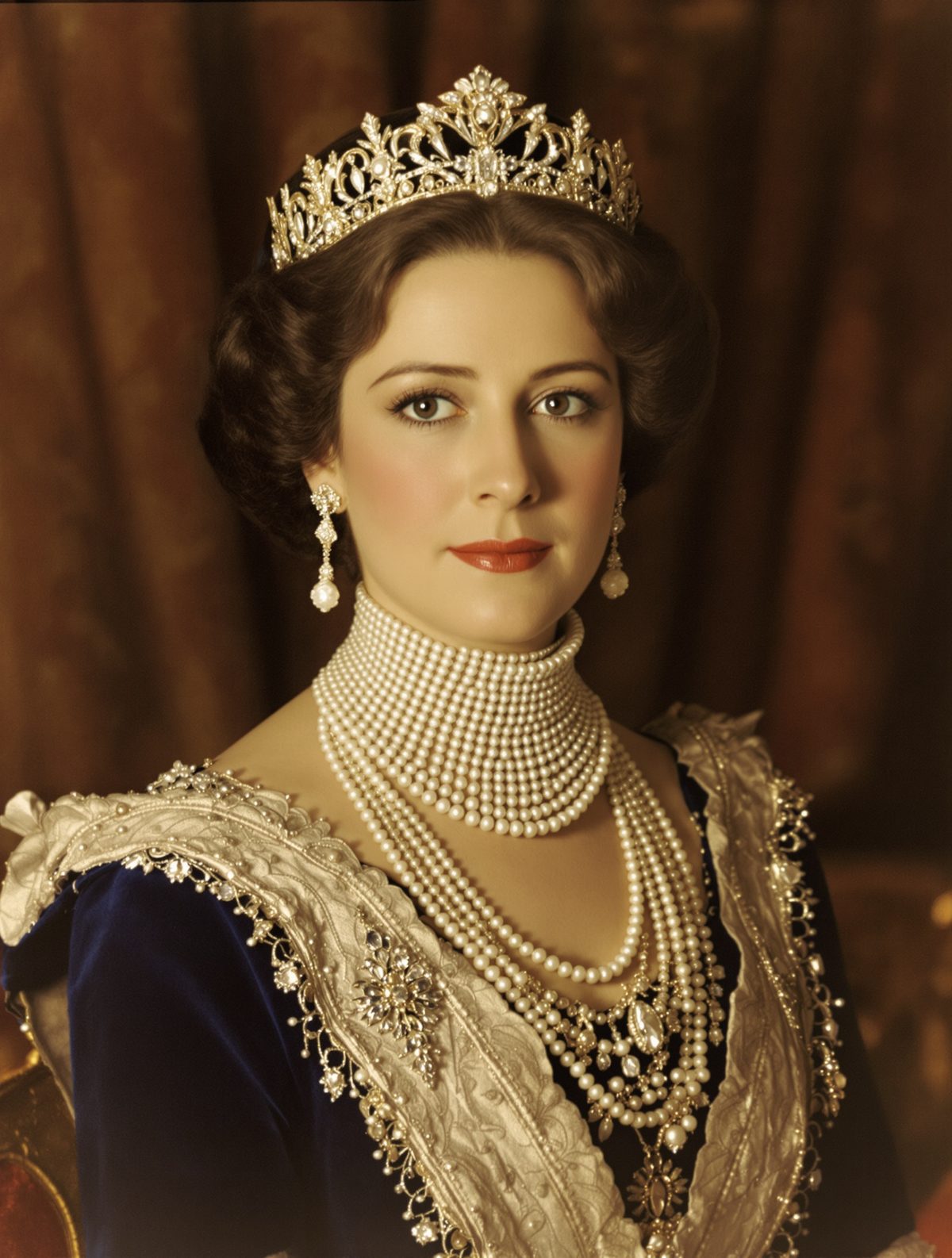
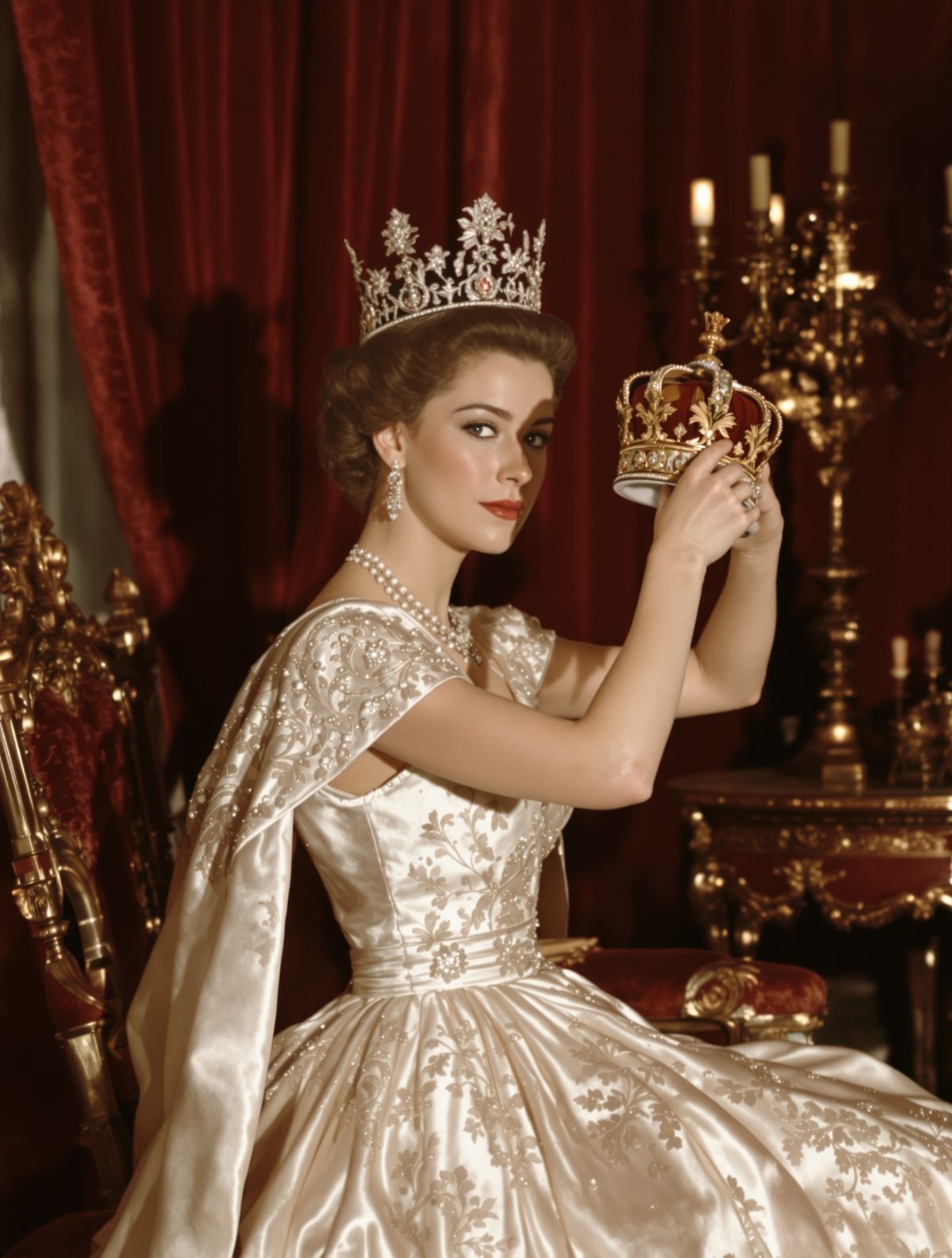
Behind the closed doors of Buckingham Palace in the spring of 1953, a young Princess Elizabeth was preparing for the most momentous day of her life. At just 27 years old, she would soon be crowned Queen in Westminster Abbey before millions of subjects around the world. But what few knew was that weeks before the grand ceremony, the future monarch was secretly rehearsing with the actual Crown Jewels—a practice that nearly ended in catastrophe when the weight of St. Edward's Crown proved almost too much to bear.
The Weight of History
St. Edward's Crown, the centrepiece of any coronation, is no mere ceremonial ornament. Crafted for the coronation of Charles II in 1661, this magnificent symbol of monarchy weighs an imposing five pounds and stands nearly a foot tall. Made of solid gold and adorned with semi-precious stones, the crown represents over a thousand years of British royal tradition. For Princess Elizabeth, who stood barely five feet four inches tall and possessed a naturally slender frame, the crown represented not just the weight of gold and gems, but the literal weight of the monarchy itself.
The young Princess understood that her coronation would be the first to be televised, watched by an estimated 277 million people worldwide. There could be no stumbles, no moments of uncertainty, and certainly no suggestion that she might not be physically capable of bearing the crown. This determination led to her insistence on what palace insiders described as rigorous preparation using the actual regalia, rather than the lighter replicas typically used for rehearsals.
Secret Palace Rehearsals
In the privacy of the palace's state rooms, Princess Elizabeth began her clandestine practice sessions. These weren't the formal dress rehearsals that would later take place at Westminster Abbey, but rather intimate preparation sessions attended only by her most trusted ladies-in-waiting and a handful of senior palace staff. The Princess was known for her meticulous attention to detail—a trait that would serve her well throughout her long reign—and she was determined to master every aspect of the ceremony.
During these sessions, she would practice the precise movements required during the coronation: the measured walk down the abbey's nave, the moment of kneeling, and crucially, the bearing of St. Edward's Crown during the ceremony's climactic moments. Palace staff later recalled that the Princess approached these rehearsals with characteristic seriousness, understanding that any misstep would be magnified on the world stage.
The crown itself was transported from the Tower of London under heavy guard for these sessions—an extraordinary security measure that underscored the importance placed on these secret preparations. Few realized that the future Queen was literally learning to carry the weight of the monarchy on her shoulders.
A Moment of Crisis
It was during one of these intensive practice sessions that disaster nearly struck. As Princess Elizabeth rose from the coronation chair with St. Edward's Crown placed upon her head, the full weight of the ancient symbol proved overwhelming. Palace staff watched in horror as the young woman began to sway, her face draining of color as she struggled to maintain her composure.
The five-pound crown, sitting atop her carefully styled hair, created an unnatural center of gravity that threatened to topple her backward. For several terrifying moments, it appeared that the future Queen might actually faint, sending the precious crown crashing to the palace floor. The ladies-in-waiting rushed forward, ready to steady their mistress, while staff members positioned themselves to catch the invaluable regalia should it fall.
What followed was a testament to the Princess's remarkable inner strength and determination. Rather than removing the crown immediately, she insisted on continuing the rehearsal, gradually building up her tolerance for its weight. Palace sources later described her grit during this period as extraordinary, noting that she refused to show weakness even in the privacy of these practice sessions.
Building Royal Resilience
The near-disaster prompted a complete rethinking of the preparation process. Palace staff consulted with the coronation committee, medical advisors, and even theatrical professionals to devise strategies that would help the Princess manage the crown's weight during the actual ceremony. These included strengthening exercises for her neck and shoulders, practice sessions of gradually increasing duration, and careful consideration of the crown's placement and balance.
The Princess herself reportedly spent hours each day in the weeks leading up to the coronation wearing the crown while conducting routine activities—reading state papers, walking through the palace corridors, and even during some of her lighter official duties. This intensive preparation regime, though exhausting, gradually built up her physical tolerance for the weight and helped her develop the poise that would become her hallmark.
Perhaps most remarkably, despite the physical challenges, Princess Elizabeth never once suggested using a lighter replica for the actual ceremony. Her commitment to authentic tradition—even at personal cost—demonstrated the deep sense of duty that would characterize her entire reign. Palace staff noted that she seemed to view mastering the crown's weight as her first test as monarch, one she was determined to pass with flying colors.
Triumph on Coronation Day
When June 2, 1953, finally arrived, those secret rehearsals proved their worth. The newly crowned Queen Elizabeth II bore St. Edward's Crown with remarkable grace throughout the lengthy ceremony, showing no sign of the struggles she had endured during preparation. The months of secret practice had transformed a potentially embarrassing moment into a display of royal dignity that captivated the world.
The coronation was hailed as a triumph, marking the beginning of a new Elizabethan age. Few viewers watching the ceremony could have imagined the intensive preparation that lay behind the Queen's serene composure as she received the crown that had nearly overwhelmed her just weeks earlier. The image of the young monarch, steady and dignified beneath the weight of St. Edward's Crown, became one of the defining moments of the 20th century.
Those secret rehearsals in the palace's private chambers revealed something profound about the future Queen's character—her willingness to face challenges head-on, her determination to master her role completely, and her understanding that being monarch meant carrying burdens others could scarcely imagine. The near-disaster with St. Edward's Crown became, in retrospect, the perfect preparation for a reign that would require her to bear far heavier weights than gold and precious stones. It was a lesson in resilience that would serve her well through decades of service, proving that true majesty lies not in never stumbling, but in rising stronger each time.