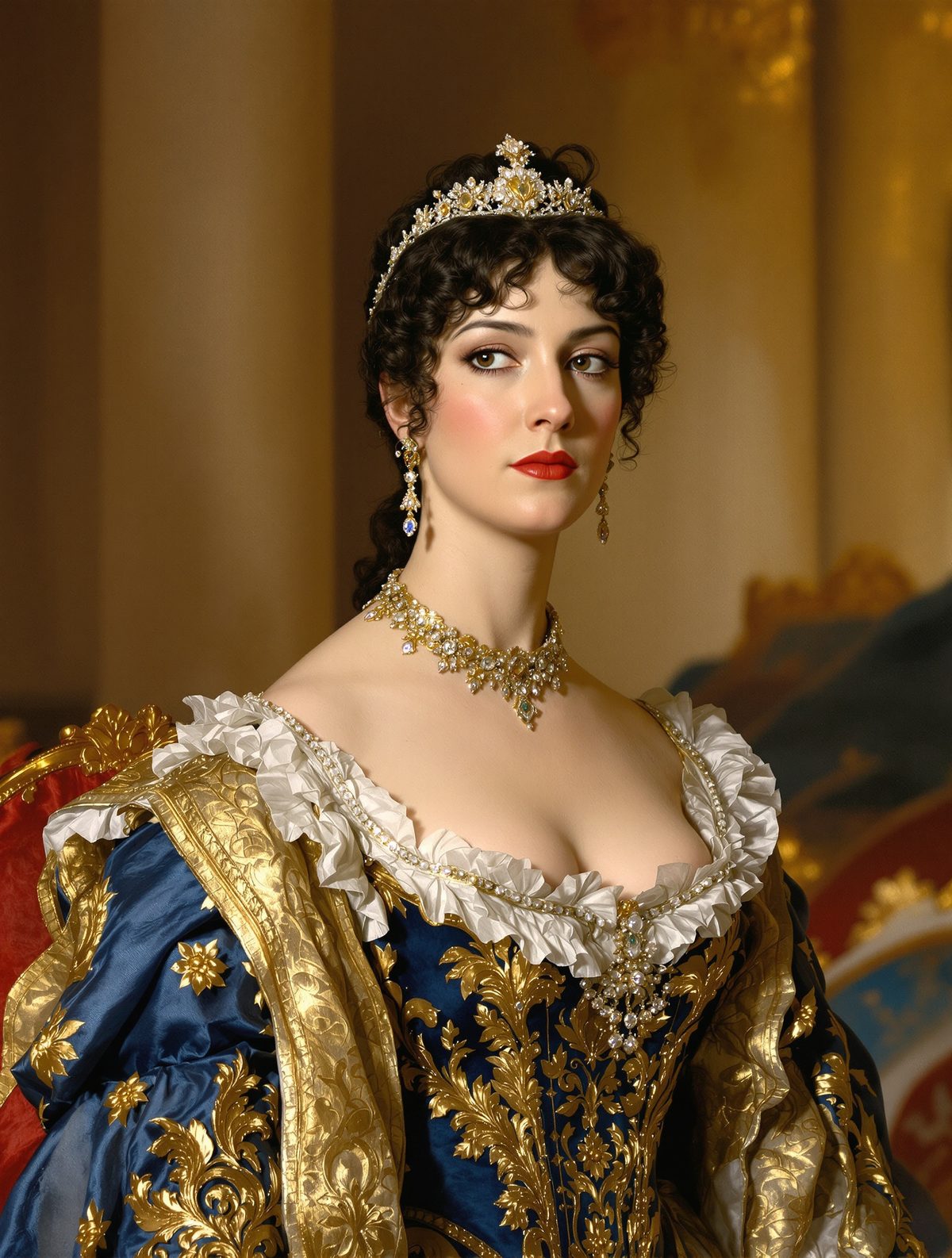
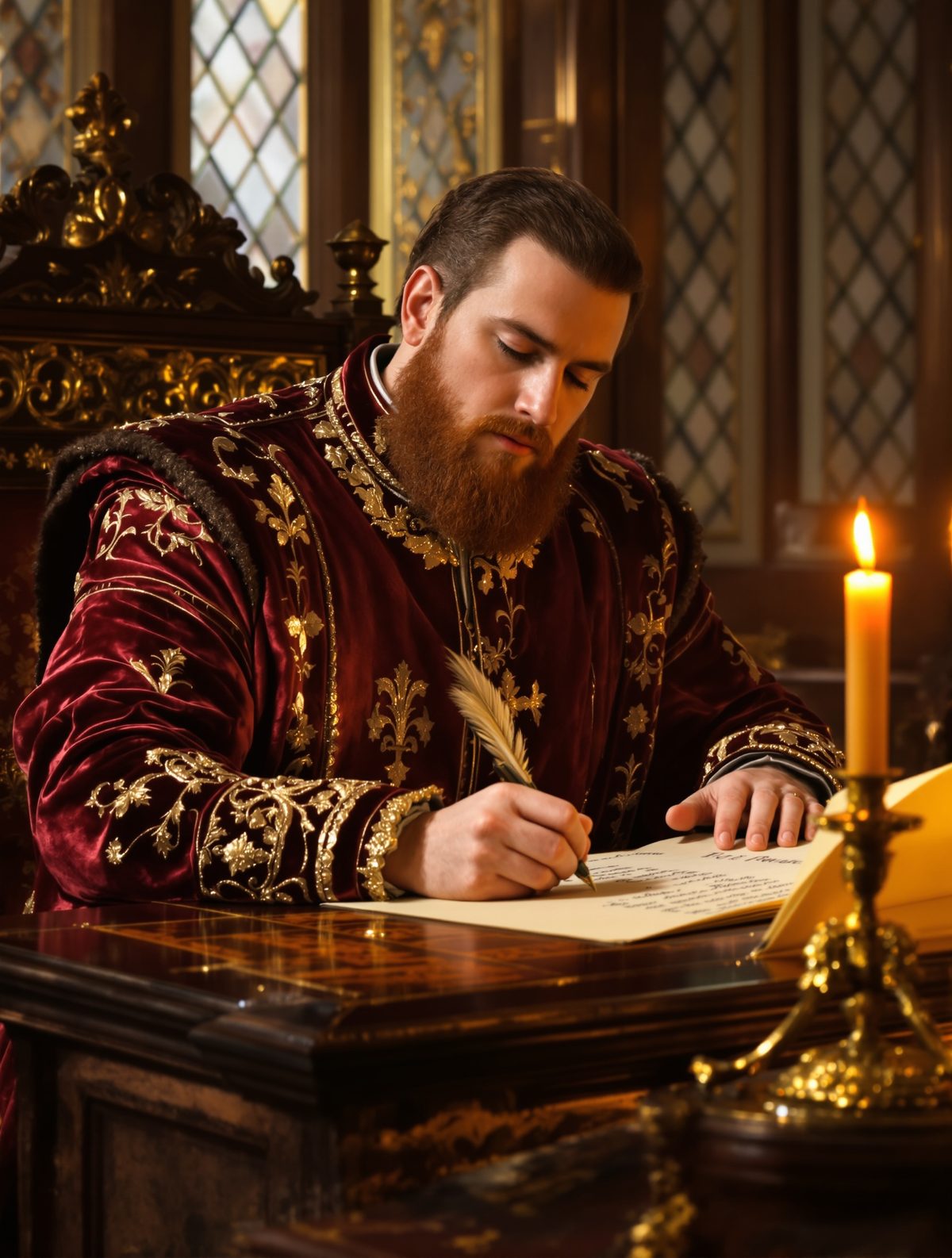
In the hushed reading rooms of the British Library, scholars can hold a piece of parchment that reveals one of history's most surprising secrets: beneath the crown of England's most infamous king beat the heart of a passionate poet. Long before Henry VIII became the fearsome monarch who would reshape English religion and execute two wives, he was a lovesick young man penning tender verses by candlelight, his quill scratching out heartfelt declarations of devotion to the woman who had captured his soul—Anne Boleyn.
The manuscript, written in Henry's own unmistakable hand around 1520, contains seventeen songs and poems that offer an intimate glimpse into the private chambers of Tudor romance. Among these precious verses lies the haunting refrain: "As the holly groweth green and never changeth hue, so I am, ever hath been, unto my lady true." These words, preserved for five centuries, remind us that even kings are not immune to love's sweet torment.
A Renaissance Prince in Love
When Henry VIII ascended to the throne in 1509, he was everything a Renaissance monarch should be—tall, athletic, intellectually gifted, and devastatingly handsome. The eighteen-year-old king could joust with the finest knights, debate theology with learned bishops, and charm courtiers in multiple languages. Yet despite his marriage to Catherine of Aragon, it was Anne Boleyn who would inspire him to pour his deepest emotions onto parchment.
The surviving manuscript, known to historians as "Henry VIII's Songbook," contains music and lyrics that the king composed himself. Unlike the formal court poetry of the era, these pieces pulse with genuine emotion. Henry wasn't simply following literary convention—he was baring his soul. The careful formation of each letter in his distinctive handwriting suggests these weren't hastily scribbled notes, but precious compositions he crafted with deliberate care.
Court records from the 1520s paint a picture of a king transformed by love. Witnesses described how Henry would spend hours at his writing desk, often working late into the night by flickering candlelight. The usually gregarious monarch would disappear from court festivities, preferring the solitude of his private chambers where he could give voice to his yearning through verse and song.
The Poetry of a Future Tyrant
What makes these love poems so extraordinary is the stark contrast they reveal between the tender young man who wrote them and the ruthless king he would become. The verses showcase Henry's considerable literary talents—he was, after all, one of the most educated monarchs in English history, fluent in Latin, French, and Spanish, with a deep appreciation for music and poetry.
One particularly moving piece begins: "Though some say that youth ruleth me, I trust in age to tarry..." These lines carry an almost prophetic quality when we consider how dramatically Henry's character would darken with time. The young king who wrote so eloquently of eternal devotion would later order Anne Boleyn's execution on trumped-up charges of adultery and treason.
The musical notations accompanying many poems suggest Henry intended them to be performed—perhaps sung beneath Anne's window or played during intimate court gatherings. Several courtiers' diaries mention the king's habit of serenading his beloved, accompanying himself on the lute, his rich voice carrying the melodies he had composed in her honor.
Anne Boleyn: Muse to a King
To understand the power of these poems, we must appreciate the remarkable woman who inspired them. Anne Boleyn was no ordinary court beauty. Having spent several years at the sophisticated French court, she possessed an intelligence, wit, and cultural refinement that set her apart from other English noblewomen. She could discuss theology, philosophy, and politics with equal facility—qualities that clearly captivated the intellectually curious Henry.
The king's verses reveal his fascination with Anne's complexity. Unlike his earlier, more conventional romantic poetry, the pieces written for Anne explore themes of spiritual as well as physical love. Some scholars suggest this reflects Anne's own religious interests; she was known to own several reformist texts and engaged seriously with the theological debates of her time.
Palace records indicate that Henry would often present his finished poems to Anne in beautifully illuminated manuscripts, bound in silk and adorned with gold leaf. These weren't casual love notes but precious gifts befitting a king's devotion. Anne, by all accounts, treasured these offerings, keeping them in a special casket in her private apartments.
The Survival of Royal Romance
That any of Henry's personal writings survived the tumultuous centuries following his reign borders on the miraculous. The manuscript likely escaped destruction because it was preserved in the royal music collection rather than among personal papers that might have been deemed too dangerous to keep after Anne's execution. During the English Civil War, when many royal artifacts were destroyed or scattered, this humble songbook somehow found its way into private hands before eventually reaching the British Library.
Modern analysis of the parchment and ink has confirmed the manuscript's authenticity, while handwriting experts have verified that the careful script is indeed Henry's own. The survival of these intimate writings allows us to glimpse the private man behind the public crown—a reminder that even the most powerful rulers experience the universal human emotions of love, longing, and vulnerability.
Conservation efforts ensure that future generations will be able to study these remarkable documents. The British Library has created high-resolution digital copies, allowing scholars worldwide to examine every pen stroke and musical notation without handling the fragile originals.
A King's Heart Revealed
These five-hundred-year-old love poems offer something increasingly rare in our modern world: authentic emotion preserved in time. Henry's verses remind us that behind the iconic image of the corpulent, wife-killing tyrant was once a young man capable of profound tenderness and artistic creation. His promise to remain "green and never changeth hue" in his devotion speaks to the eternal human desire for lasting love, even as we know how tragically that promise would be broken.
The manuscript serves as a poignant reminder of love's transformative power—and its fragility. In Henry's careful handwriting, we see evidence of a man willing to risk everything for passion, to reshape an entire kingdom's religious foundations for the woman who inspired his most beautiful poetry. That such intimate expressions of royal love have survived the centuries adds another layer of romance to an already extraordinary tale.
Perhaps most remarkably, these poems allow us to connect across five centuries with the raw emotions of kingship. They remind us that beneath every crown lies a human heart, capable of both soaring poetry and devastating cruelty. In our modern age of instant communication and disposable relationships, there's something deeply moving about a love so profound it inspired a king to pick up his pen and create something beautiful—something that would outlast kingdoms, outlast dynasties, and outlast even the memory of the tragic end that awaited both poet and muse.